Starch Browning
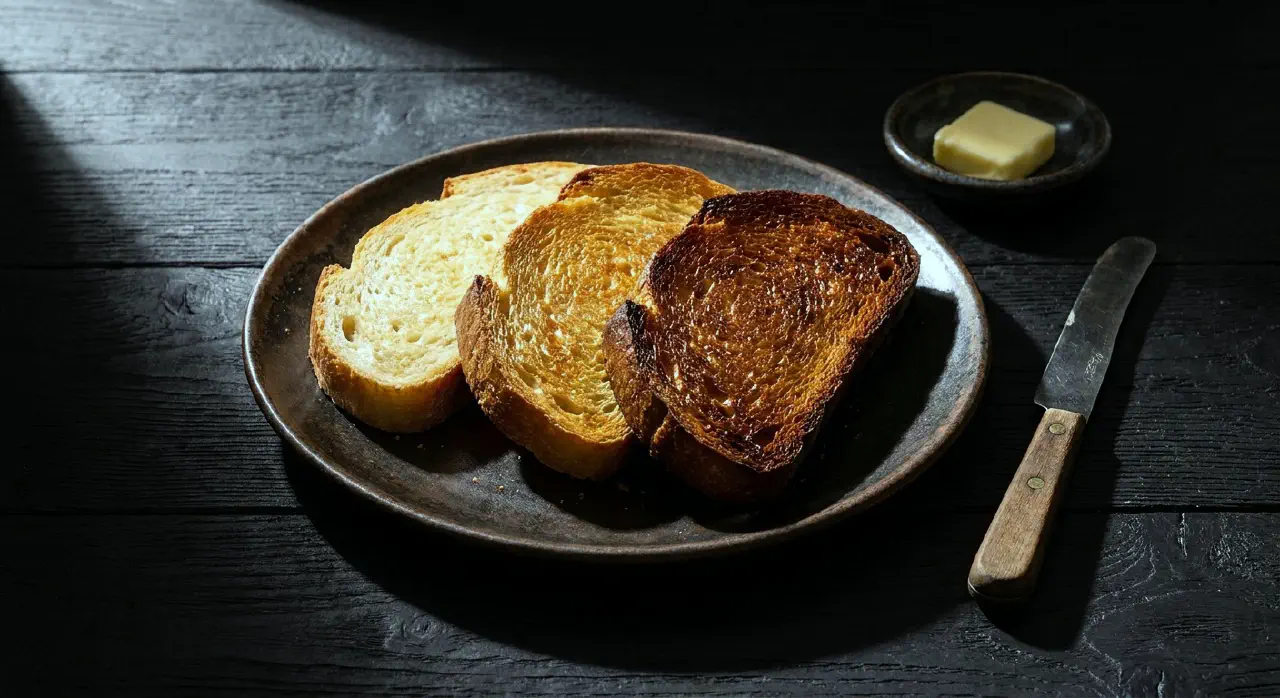
Starch-heavy foods - breading, flour coatings, roux - need significantly higher temperatures to brown than proteins. While steak begins Maillard browning at ~140°C, breaded cutlets require 180–190°C because starch must first undergo dextrinization before browning can proceed. This gap is why improperly cooked breaded foods turn out pale and greasy.
The Temperature Gap
Proteins brown starting ~140°C because amino acids and sugars are readily available for Maillard reactions. Starch-dominant foods require ~180–190°C because long-chain starch polymers must first be broken down into shorter, more reactive dextrins before any significant browning reactions can occur. This intermediate step of dextrinization adds a thermal barrier that pure protein foods skip entirely.
The Starch Browning Sequence
Phase 1 (~100°C+, 2–5 minutes): Surface water boils away. The surface is too wet for browning to occur; Maillard reactions cannot proceed in the presence of excessive moisture.
Phase 2 (~150–180°C, 3–8 minutes): Dry heat breaks long starch chains into shorter dextrins - a process called dextrinization. Dextrins are slightly sweeter and significantly more reactive than native starch.
Phase 3 (180–200°C, 2–5 minutes): Dextrins undergo Maillard-type reactions and caramelization → golden, crispy, deeply flavored crust forms.
The Breading Paradox
At 160°C, starch never activates fast enough - water evaporates slowly, the surface stays porous, and oil soaks in readily. Result: pale, greasy sponge. At 190–195°C, water flashes to steam creating internal pressure that pushes oil away. The surface sets and seals fast, preventing oil penetration. Result: crisp, golden, low-oil crust. Counterintuitively, higher temperature = less oil absorption because speed defeats porosity.
Flour Coating on Delicate Foods
Light flour dredge on fish requires 185°C - hot enough to push flour past the pasty stage into full dextrinization and browning, cool enough to avoid burning butter (which carbonizes at ~175°C). This narrow window explains why pan-fried fish often fails: too low a temperature and the flour stays pale and soggy; too high and the butter browns before the flour does.
Engineering Dark Roux
Roux is the most starch-heavy kitchen operation. Temperature milestones:
- White/blond roux: 100–120°C, 2–3 minutes. Minimal browning, used for béchamel or white sauces.
- Brown roux: 150–170°C, 5–8 minutes. Golden color, nutty flavor, used for gravy and darker sauces.
- Dark roux: 190°C, 3–5 minutes. Deep mahogany color, complex roasted flavor. At 190°C, the temperature acts as a hard ceiling preventing accidental carbonization while driving steady progressive browning.
Holding dark roux at 190°C for extended periods is safe; the temperature is high enough for flavor development but low enough to avoid the bitter compounds of true burning.
See also
starch-gelatinization, carbohydrate-overview, maillard-reaction, caramelization, crust-engineering, deep-frying, precision-cooking, cooking-temperatures