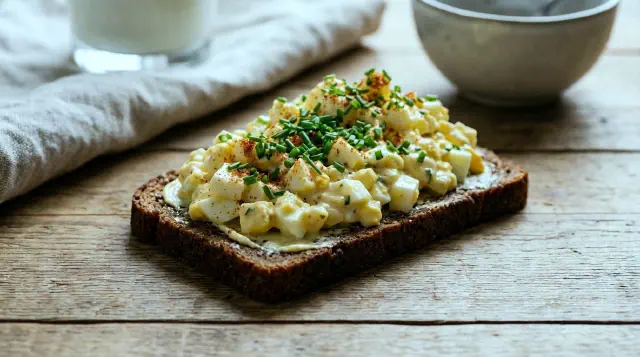
Air Fryer Hard-Boiled Eggs
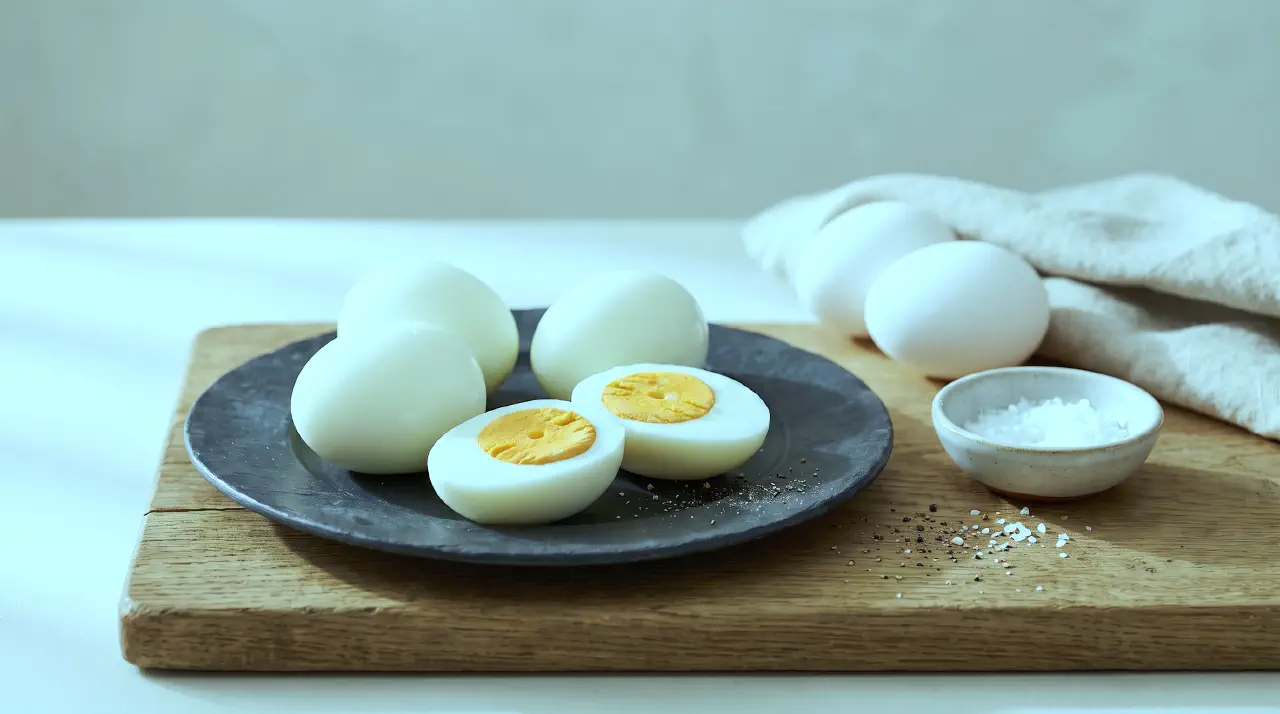
Air Fryer Hard-Boiled Eggs
Air fryer hard-boiled eggs are whole eggs cooked in their shells in a countertop air fryer, dry - no water, no oil. Hot circulating air cooks the egg through the shell while it sits in a single layer in the basket, so the only equipment involved is the air fryer itself.
The shell often picks up small brown or tan spots where it touches the hot metal of the basket. That’s cosmetic and vanishes once you peel the egg. If a white looks faintly golden rather than pure white, the egg ran a little long - that’s a Maillard reaction from overcooked sugars in the white, not a food-safety problem, and moving the eggs to an ice bath promptly keeps it from happening.
This is a modern convenience method, not a heritage recipe - there’s no traditional version to be faithful to, just a reliable protocol that swaps a pot of boiling water for a basket of hot air. Air fryers vary a lot in wattage, so the exact timing needs to be dialed in per unit; testing a single egg before committing a full batch is worth the extra few minutes.
Serve the eggs plain with salt and pepper, or use them anywhere a boiled egg goes - sliced onto a salad, mashed into egg salad, or peeled and eaten on their own.
Ingredients
Serves 6
- 6 large eggs, cold from the refrigerator
- Ice and cold water, for the ice bath
- Salt and black pepper, to serve (optional)
Directions
Set the cold eggs straight from the fridge into the air-fryer basket in a single layer, spaced so they aren’t touching or crowded. No preheating is needed at this temperature. If you like, sit the eggs on a small rack, a trivet, or a sheet of air-fryer parchment - it cuts down on shell spots and stops the eggs rolling around.
Air fry at 250°F (120°C). For a soft, runny-to-jammy yolk with set whites, run 12–13 minutes - this isn’t a true runny soft-boil, since dry air heat sets the white fully. For a jammy medium center, run 14–15 minutes. For a firm, fully hard-boiled yolk, run 16–17 minutes.
While the eggs cook, fill a large bowl with cold water and plenty of ice.
The moment the timer ends, lift the eggs straight into the ice bath with tongs. Leave them there at least 5 minutes, up to about 10, until they’re fully cooled. Don’t skip this - it stops the cooking and makes the eggs much easier to peel.
To peel, crack the shell gently all over and roll the egg under light palm pressure, then start peeling from the wide end, where the air pocket sits. The membrane should come away with the shell. Serve right away, or refrigerate.
Notes
Test one egg first. Air fryers range from about 1200 to 1700 watts, and that difference changes cook time - run a single egg to calibrate your unit before doing a full batch. Basket-style air fryers peel more easily than toaster-oven styles.
For easier peeling, use eggs that are 7–10 days old rather than very fresh, and start with a clean, oil-free basket - oil left on the shell makes peeling harder.
If your air fryer won’t go below about 300°F (150°C), or you want it faster, run 300°F (150°C) instead: about 11 minutes for medium-to-hard, about 13 minutes for firmly hard-boiled, then ice bath as above. There’s less margin for error at this temperature, so calibrate carefully.
Brown spots on the shell are harmless - they come from contact with hot metal or a dirty basket - and disappear once you peel the egg. Browned patches on the white itself mean the egg overcooked; cool it sooner next time.
Whole eggs cooked in the shell in an air fryer don’t explode the way they can in a microwave or a forgotten stovetop boil.
Cooked eggs keep about a week in the fridge, peeled or unpeeled. Unpeeled keeps best; if peeled, keep them submerged in cold water changed daily, or wrapped in a damp paper towel in an airtight container. Cooked yolks freeze for up to about 3 months; freezing whites isn’t recommended.
See Also
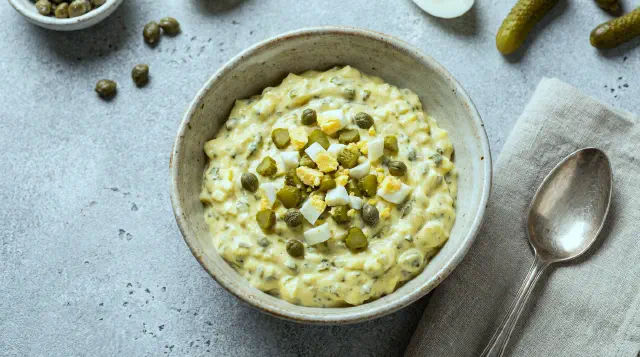
Sauce Gribiche