Sous Vide Asparagus
Sous Vide Asparagus
Asparagus has a narrow window between crunchy and mushy, and a pot of boiling water blows past it fast. Spears at the edge of the bunch finish before the thick ones in the middle do, so by the time the last stalk turns tender the first ones are already limp. A water bath removes the guesswork: every spear sits at the same exact temperature for the same amount of time, and the bath itself is forgiving enough that a few extra minutes barely change the result.
The bath runs far hotter than any sous vide meat or fish, which is the part that surprises people who know the technique from steak. Asparagus needs that heat to break down the pectin in its cell walls; below roughly 183°F (84°C) the spears stay crunchy almost indefinitely, no matter how long they sit in the water. Fifteen minutes at that temperature gets a standard spear to crisp-tender, tender enough to eat but still holding its snap and its clean, grassy-sweet flavor, since the sealed bag never lets that flavor bleed into surrounding water the way a pot of boiling water does. The bath alone never browns anything, though, so any char or color comes from a separate step afterward, a quick sear or a blast under the broiler.
Asparagus itself is an old European spring vegetable, one of the first things out of the ground once the weather turns. Sous vide is the newer half of this pairing, a precision method borrowed from restaurant kitchens and made practical at home once immersion circulators became affordable. Putting the two together doesn’t change what asparagus is, just how evenly it gets cooked.
This is as much a technique as a finished dish, and it fits easily alongside whatever else is going on in the kitchen. Add the bagged spears to a water bath that’s already holding a steak or a piece of fish for its last fifteen minutes, since most proteins cook well below asparagus’s target range, and both come out together. Serve it hot with the butter it cooked in, sear it hard for a plate that needs more color, or shock it cold and dress it with a mustard vinaigrette for a composed salad in the style of French leeks vinaigrette.
Ingredients
Serves 4
- 450 g green asparagus, tough ends trimmed
- 1/2 tsp kosher salt
- 1/4 tsp black pepper, freshly ground
- 14 g unsalted butter, cut into small pieces, for the bag, optional
- 1 garlic clove, thinly sliced (or a strip of lemon zest), for the bag, optional
- lemon juice, to taste
- flaky salt, to taste
- 5 g unsalted butter (or olive oil), for searing, optional
Directions
Snap or cut off the tough, woody bottom of each spear, about 1 to 2 inches (2.5-5 cm), where it naturally breaks. For spears thicker than a pencil, peel the lower two-thirds with a vegetable peeler for a more even, tender bite.
Preheat the water bath to 185°F (85°C).
Arrange the trimmed asparagus in a single layer in a vacuum-seal bag or a zip-top freezer bag. Season with the salt and pepper, then tuck in the butter pieces and the garlic or lemon zest if using. Seal with a vacuum sealer on its moist or gentle setting, or use the water-displacement method for a zip-top bag. If the spears are thick and cut sharply at the base, double-bag them so a cut end doesn’t puncture the seal.
Submerge the bag and cook for 15 minutes for medium spears. Pencil-thin asparagus is done in as little as 10 to 12 minutes, while very thick spears can take 30 to 45 minutes to cook through without overcooking the outside. The asparagus is ready when a knife tip meets little resistance but the spear still holds its shape and snap; a few extra minutes past the target won’t ruin it.
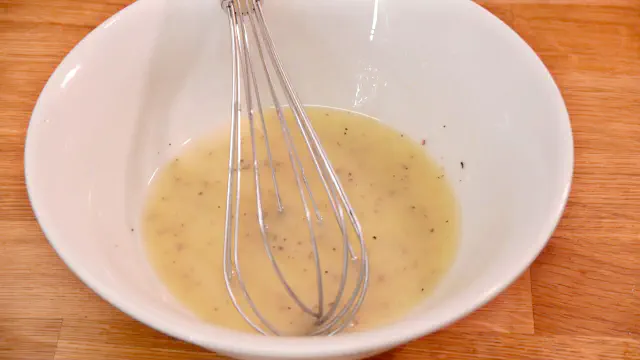
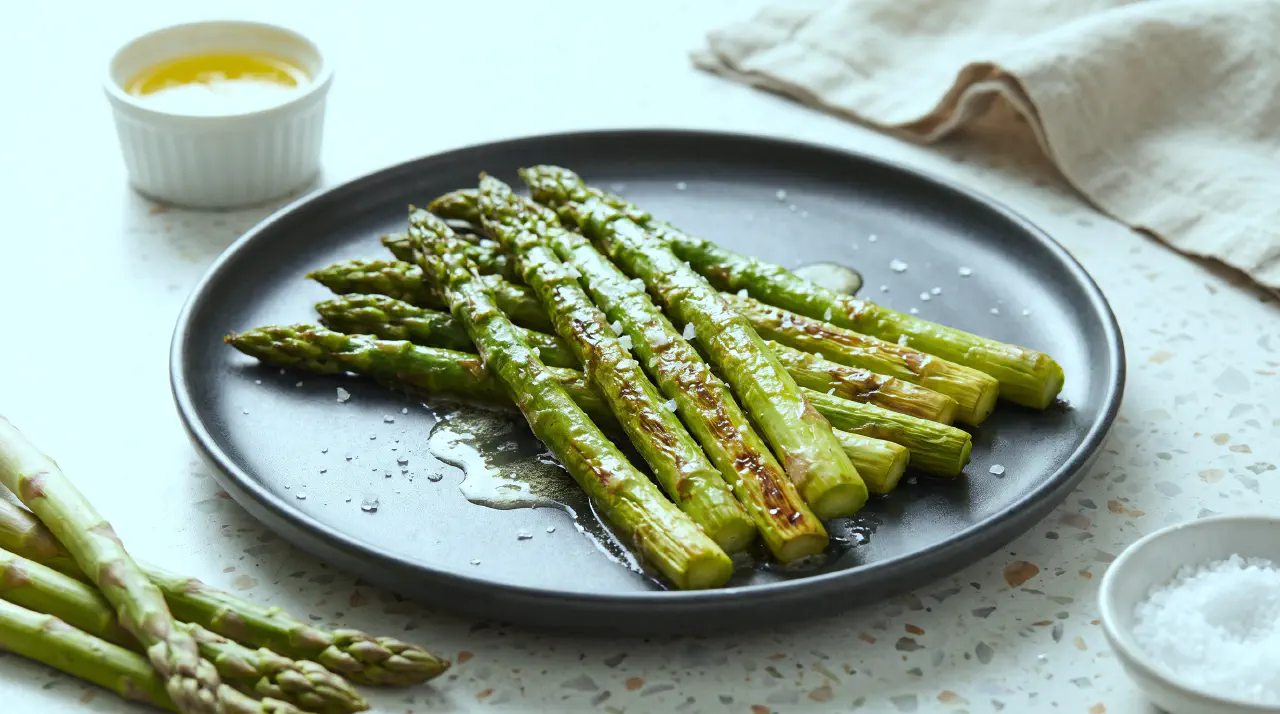
To serve immediately, open the bag, lift out the asparagus, and drizzle it with the butter cooking liquid left behind. For color, pat the spears dry and sear them in a very hot skillet with the extra butter or oil for 1 to 2 minutes, turning, until lightly charred in spots. For a cold, composed version, shock the spears in an ice bath for a minute, then dress them with a mustard or tomato-basil vinaigrette once cooled.
Finish with a squeeze of lemon juice and a pinch of flaky salt just before serving.
Notes
183-185°F (84-85°C) is unusually high for sous vide, well above any protein temperature, because vegetable cell walls need that heat to break down pectin. Below this band, asparagus stays crunchy almost indefinitely no matter how long it holds in the bath; there’s no equivalent to slow-cooking a tough cut of meat into tenderness at a lower setting.
Spear thickness decides the time, not the clock alone. A recipe that gives a single flat number without accounting for thickness is the most common way this dish goes wrong: thin spears turn mushy at a time that leaves thick ones undercooked. Judge by diameter and check for the knife-tip give described above.
There’s no food-safety hold time to worry about here, unlike sous vide meat or fish. The temperature and time are chosen purely for texture, so there’s no minimum pasteurization window to hit.
Butter in the bag is entirely optional. Cooking the spears bare and dressing them afterward, with a vinaigrette, melted butter, or good olive oil, works just as well and is what several well-tested recipes do instead.
See Also
Air Fryer Asparagus
Asparagus Soup
Steak - Cooking Methods Guide