Sous Vide Bacon
Sous Vide Bacon
Bacon fried in a pan is a gamble. Thin edges burn before the fat under the thick side has rendered, strips curl away from the heat, and the whole stovetop ends up spattered with grease. Cooking the bacon in a water bath first removes the guesswork: the strip comes up to temperature slowly and evenly, with time to render its fat and relax its texture, long before it ever touches a hot pan.
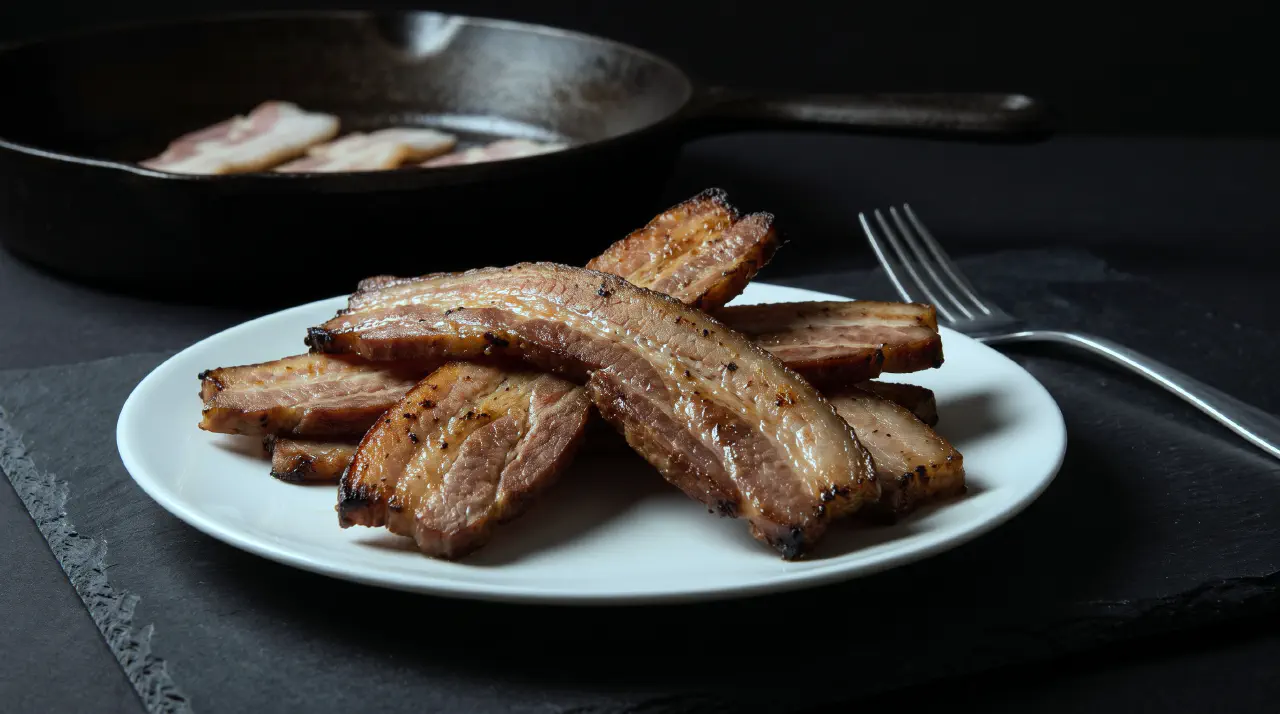
The bacon goes into a sealed bag straight from the package, no seasoning or prep needed, and holds in water set to 145°F (63°C). That single temperature works for a quick weekday strip or a thick, confit-like slab meant for a sandwich; only the time in the bath changes. A short hold of about 8 hours gives a familiar crisp-strip texture, while pushing toward 24 hours breaks the fat and connective tissue down further, for bacon so tender it can fall apart under a fork before it ever hits the skillet. The final sear, hard and fast in a hot pan, is what builds the brown crust; sous vide alone never browns anything. The result is rich, salty, smoky bacon with an even crust and no burnt spots.
Bacon itself is centuries old, a salt-cured cut of pork belly that started as a way to preserve meat through winter long before refrigeration existed. Sous vide is the newer piece of the pairing, a precision-cooking method borrowed from professional kitchens and made practical at home once immersion circulators became affordable. Putting the two together doesn’t change what bacon is, just how gently and evenly it gets there.
This is a batch-cooking technique as much as a single breakfast recipe. The bath pasteurizes the meat well before it’s fully tender, so it’s safe to hold for days if timing needs to stretch, and the cooked bacon keeps in the fridge for up to a week or in the freezer for months, ready to reheat and crisp to order. It suits a lazy weekend breakfast with eggs and toast just as well as a batch of BLTs, where a thicker, longer-cooked slab holds up better to slicing than a standard fried strip.
Ingredients
Serves 4
- 450 g thick-cut bacon, cured (smoked or unsmoked, to preference)
- neutral oil, for the pan (optional, bacon renders its own fat)
Directions
Preheat a water bath to 145°F (63°C). This single temperature is the consensus setting for bacon, balancing rendered fat against a lean section that still stays moist.
Seal the bacon in a vacuum bag, or in a heavy zipper-lock bag using the water-displacement method to press the air out before sealing. If the bacon came from the store already vacuum-sealed, it can go into the bath in its original, unopened packaging.
Submerge the bag and cook for 8 to 24 hours. About 8 hours, roughly overnight, is the easy default for a standard crisp-strip texture. Push toward 24 hours for a thicker slab or a deliberately confit-like, fall-apart texture, useful when the bacon will be sliced thick for a sandwich. The bath is pasteurized enough to hold safely for up to 8 days if this is being used as a make-ahead technique.
Remove the bag from the bath. Use the bacon right away, or chill it in an ice bath and refrigerate for up to a week, or freeze it for several months. From frozen, thaw overnight in the fridge, or drop the sealed bag back into a 145°F (63°C) bath for about 20 minutes.
To serve, separate the bacon into strips, or slice a cooked slab into pieces. Heat a skillet or griddle over medium-high heat, with a light coating of oil if the pan needs it.
Sear the first side for 2 to 4 minutes, until deeply browned and crisp, pressing gently with a spatula for even contact with the pan. Flip and cook the second side briefly, 15 seconds to 1 minute, just long enough to set the color.
Drain the bacon on paper towels and serve immediately.
Notes
To cure bacon from scratch instead of buying it, rub a 2 lb (900 g) piece of skinless pork belly with kosher salt at 1.5-2.5% of its weight, Prague Powder #1 at 0.25% of its weight, and 1-2 tablespoons of brown sugar. Prague Powder #1 is a curing salt containing sodium nitrite; it is not optional or substitutable with plain salt, since it’s what keeps the meat safe from botulism over a long, low-temperature cook. Vacuum-seal the belly with the cure and refrigerate for 5 to 7 days, flipping occasionally, then rinse thoroughly and pat dry. A tablespoon of liquid smoke added to a fresh bag before the sous vide step stands in for real smoking. From there, the same 145°F (63°C) bath applies, run closer to 24 hours to account for the belly’s thickness.
145°F (63°C) is a deliberate compromise, not the only option. 135°F (57°C) gives a firmer bite with more chew and less rendered fat, while 155°F (68°C) renders the fat fully but can dry out the leaner sections. The longer bath times beyond what’s needed to heat the bacon through aren’t a food-safety measure - the meat is pasteurized well before 6 hours - they’re purely a texture choice.
Canadian bacon takes the same 145°F (63°C) bath but for only 45 minutes to 8 hours, since it’s leaner and thinner and turns dry and stringy if held as long as regular bacon. Sear one side only.
Without a stovetop, the bacon crisps just as well under a broiler: 400°F (204°C) on a rack near the top, 2 to 4 minutes, watched closely so it doesn’t scorch.
See Also
Air Fryer Bacon
Beef Cuvette - Red Meat Sous Vide
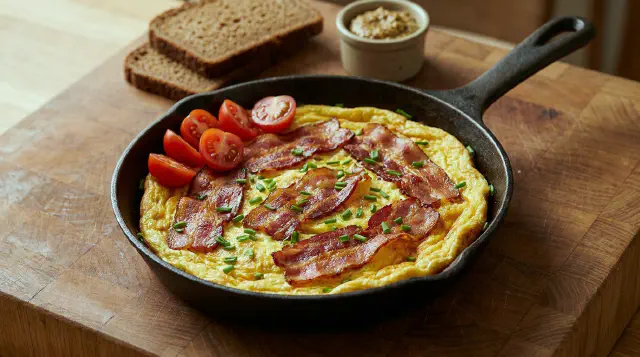
Danish Bacon Omelette