Sous Vide Beef Burgers
Sous Vide Beef Burgers
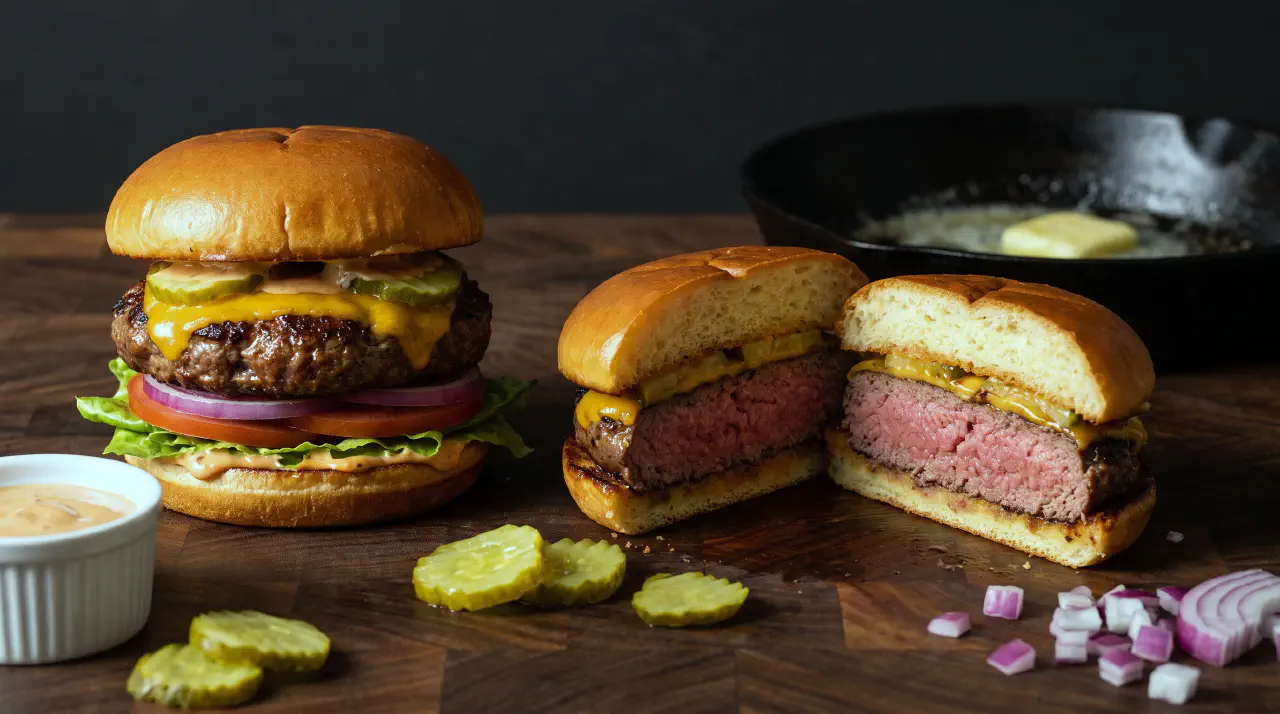
Sous vide turns the humble hamburger patty into a controlled experiment, and the payoff is a patty that’s the same color from edge to edge instead of gray a half-inch in and pink only at the very center. The idea is simple: season plain ground beef, bag it, hold it in a precisely heated water bath until it’s exactly as done as you want it everywhere at once, then sear it hard and fast for the crust. Nothing about the ingredient list changes here - this is still just beef, salt, and pepper - only the cooking does.
Fat content matters more in this method than in a pan-fried burger, since the meat spends an hour sitting in warm water rather than caramelizing over direct heat. An 80/20 lean-to-fat blend keeps the patties from turning dry or mealy; leaner beef has less margin for error here. Shape the patties loosely and handle the meat as little as possible - sous vide will not fix a patty that’s been packed too tight, and an overworked patty comes out of the bag dense no matter what temperature it cooked at.
Ground beef also needs a more careful hand than a whole steak. Grinding spreads any surface bacteria through the whole patty instead of leaving it on the outside, so the combination of temperature and time is what makes the meat safe to eat, not just done - a shorter float at the same number on the dial is not the same recipe. Home sous vide cooks chasing the consistency restaurant kitchens get from immersion circulators worked out exactly how long each temperature needs to hold to pasteurize a patty fully, which is why the numbers below are specific rather than approximate.
The sear at the end is non-negotiable, and it should be violent: thirty seconds to a minute a side in a screaming-hot pan, just long enough to build a deep, savory crust before the interior moves at all. Melt a slice of cheese into the crust right after the flip, toast the bun in the same butter, and build the burger with whatever you’d put on any other one - lettuce, tomato, onion, pickles, a sauce or two. The bath’s forgiving hold time is the other advantage of the method: the patties can sit an extra hour without harm, which makes this an easy weeknight burger to time around the rest of a meal - fries, coleslaw, a simple salad - rather than the other way around.
Ingredients
Serves 4
- 680 g ground beef, 80/20 lean-to-fat, in 4 equal portions (170 g each)
- kosher salt, to taste
- black pepper, freshly ground, to taste
- 15 ml neutral oil, for searing
- 30 g unsalted butter, for searing and toasting buns
- 4 slices melting cheese (American, cheddar, or Gruyère), optional
- 4 hamburger buns
- toppings, as desired (lettuce, tomato, onion, pickles, condiments)
Directions
Divide the beef into four 170 g (6 oz) portions. Handle it gently - toss each portion lightly between your hands to loosely gather it, then press it into a patty a little wider than the bun without compacting or overworking the meat. Season both sides generously with salt and pepper.
Bag the patties one to a bag using the water displacement method rather than a vacuum sealer; vacuum pressure will crush a loosely packed patty and toughen it. Lower each open zip-top bag slowly into the water bath so the water pressure pushes the air out, then seal it just above the waterline.
Set the sous vide circulator to 137°F (58°C) and cook the bagged patties for 1 hour. That temperature lands solidly at medium, and by the hour mark it comfortably clears the time needed to pasteurize ground beef all the way through - grinding spreads surface bacteria through the meat, so time at temperature matters here in a way it doesn’t for a whole steak. The patties can sit in the bath well past the hour, up to about 4 hours total, without overcooking, since the water itself can’t get hotter than what you set it to.
Lift the patties out, open the bags, and pat them completely dry with paper towels - any surface moisture left behind will steam instead of sear, and you won’t get a crust. Season lightly again if you like. Heat a cast-iron or stainless skillet (or a grill with the coals banked to one side) until just smoking, add the oil and a knob of the butter, and sear the patties hard and fast, 45 seconds to 1 minute per side. Lay the cheese on right after the flip so it melts in the residual heat, covering the pan briefly if it needs help.
Toast the buns cut-side down in the remaining butter in the same hot pan. Rest the burgers for a minute, then build them on the toasted buns with whatever toppings you like.
Notes
For other doneness levels, adjust the bath and hold accordingly, all for 40 minutes to 4 hours: 120–126°F (49–52°C) for rare, 130–133°F (54–56°C) for medium-rare, 137°F (58°C) for medium (the default above), 144°F (62°C) for medium-well, 155°F (68°C) for well-done.
Ground beef needs more care around pasteurization than a whole cut like a steak, because grinding distributes any surface bacteria through the meat rather than leaving it on the surface. At 137°F (58°C), an hour is more than enough. For a pinker result at 131°F (55°C), give it a minimum of 2½ hours to reach the same safety margin. Below 130°F (54°C), even extended time won’t reliably pasteurize the meat - only attempt that with very fresh, high-quality beef, and skip it for pregnant, elderly, very young, or immunocompromised eaters.
An egg, about one per four patties, can be mixed into the beef as a binder for a firmer, meatloaf-like texture. It’s a minority approach; plain seasoned beef with no binder is the more common route and what this recipe uses.
Chilling the dried, cooked patty in an ice bath for 15 to 30 minutes before searing improves crust formation if you have the time, but patting dry and searing right away works fine too.
See Also
Air Fryer Hakkebøf (Danish Beef Patties)
Air Fryer Hamburgers
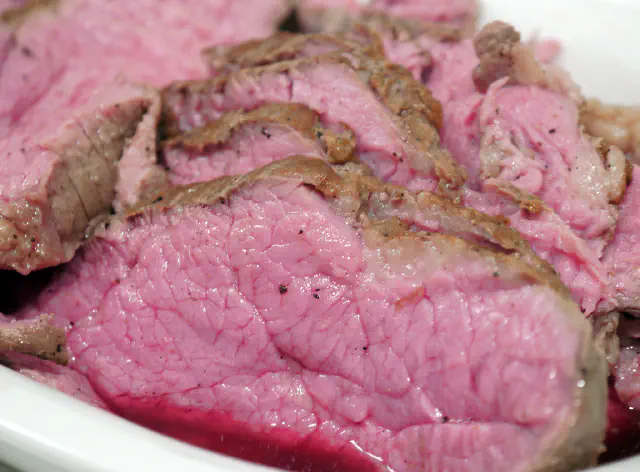
Beef Cuvette - Red Meat Sous Vide