Sous Vide Beef Tenderloin Roast
Sous Vide Beef Tenderloin Roast
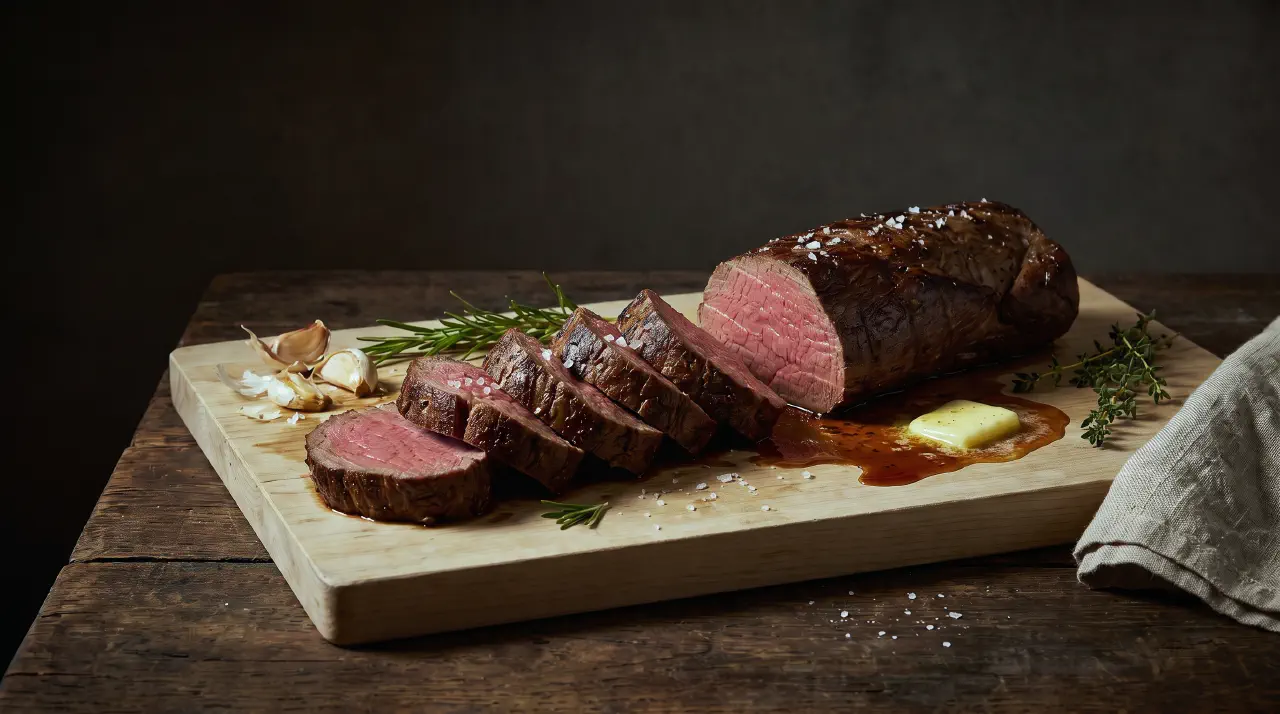
A whole beef tenderloin is trimmed of silverskin, tied into an even cylinder, and salted well ahead of time. It goes into the water bath with garlic and fresh rosemary and thyme, then finishes in a screaming-hot skillet with butter spooned over the crust until it browns hard on the outside.
Sous vide solves the one real problem with roasting a whole tenderloin in the oven: getting a thick, evenly round piece of meat to the same doneness from edge to center without overshooting the ends. The water bath holds the whole roast at exactly the temperature you want it done, for as long as it takes to heat through, and there is no window to miss. The sear afterward is just for color and crust - the meat underneath is already at temperature, so it only needs a few minutes of real heat, not a slow finish.
The result is rosy pink all the way through, with no gray overcooked band under the crust, and a beefy but mild flavor that carries butter and garlic well. Because tenderloin has almost no fat and no connective tissue, the whole point of the cook is to heat it gently to a precise doneness rather than to tenderize it - pushed too far, or held too long in the bath, it turns dry and chalky instead of more tender.
Whole tenderloin roast is a holiday centerpiece - the same cut chateaubriand and beef Wellington are built from, served here in its simplest form rather than wrapped in pastry. It suits a table where you want a single showpiece roast rather than individual steaks, sliced into rounds at the table. A potato gratin, roasted root vegetables, and a red wine pan sauce or horseradish cream all sit well next to it.
Ingredients
Serves 6-8
- 1.1 kg whole beef tenderloin roast, center-cut, trimmed of silverskin and chain, tied at intervals with kitchen twine
- 1 tbsp kosher salt
- flaky salt, to finish
- 1 tsp black pepper, freshly cracked
- 2 tbsp oil (neutral or olive), for searing
- 4 tbsp unsalted butter, for basting
- 4 garlic cloves, smashed
- 4-5 sprigs fresh rosemary
- 4-5 sprigs fresh thyme
Directions
Pat the tied roast dry and season it all over with the kosher salt. Set it uncovered on a wire rack over a tray and refrigerate for up to 24 hours - this dry brine seasons the meat through and dries the surface for a better sear later. If you are short on time, salt it and let it sit at room temperature for at least 45 minutes instead.
Preheat a water bath to 133°F (56°C). Season the roast with the black pepper, then place it in a vacuum bag or a zip-top bag with two of the smashed garlic cloves and half the rosemary and thyme sprigs. Seal the vacuum bag, or seal the zip-top bag using the water-displacement method.
Submerge the bag and cook for 2 hours 45 minutes. The roast will not overcook by sitting a little longer at this temperature, but do not push it past about 4 hours - tenderloin has no connective tissue to benefit from extra time, and long past this point the texture turns mealy instead of more tender.
Lift the roast out of the bag and set the bag juices aside if you want to make a pan sauce. Pat the roast very thoroughly dry with paper towels - any surface moisture will steam instead of sear.
Heat a large cast iron skillet over high heat until the oil is just smoking. Sear the roast on all sides, about 4 to 5 minutes total, until it is deeply browned.
Add the butter, the remaining garlic, and the remaining rosemary and thyme to the pan. Tilt the pan and spoon the foaming butter over the roast continuously for 1 to 2 more minutes.
Move the roast to a cutting board, tent it loosely with foil, and let it rest for 10 minutes. Remove the twine, slice into rounds ¾ to 1 inch thick, season with flaky salt, and serve.
Notes
- For a rarer roast, hold the water bath at 125°F (52°C) instead - at this lower temperature the bath needs at least 2 hours to pasteurize the meat and should not run past 2.5 hours total.
- A larger 4-5 lb (1.8-2.3 kg) roast needs more time in the bath - 3 to 4 hours rather than 2 hours 45 minutes.
- For a festive crust instead of a plain sear, roll the hot, oiled roast right after searing in a mix of finely chopped rosemary, thyme, coarse black pepper, and poppy seeds, pressing gently so it sticks, before slicing.
- For a pan sauce, sauté a minced shallot in the reserved basting butter, deglaze with a splash of dry red wine and the reserved bag juices, and reduce by half. Finish by swirling in a knob of cold butter.
See Also
Beef Cuvette - Red Meat Sous Vide
Creamed Horseradish
Rib-Eye Steak