Cacio e Pepe
Prep 15 min Total 25 min
Cacio e Pepe - kvalifood.com
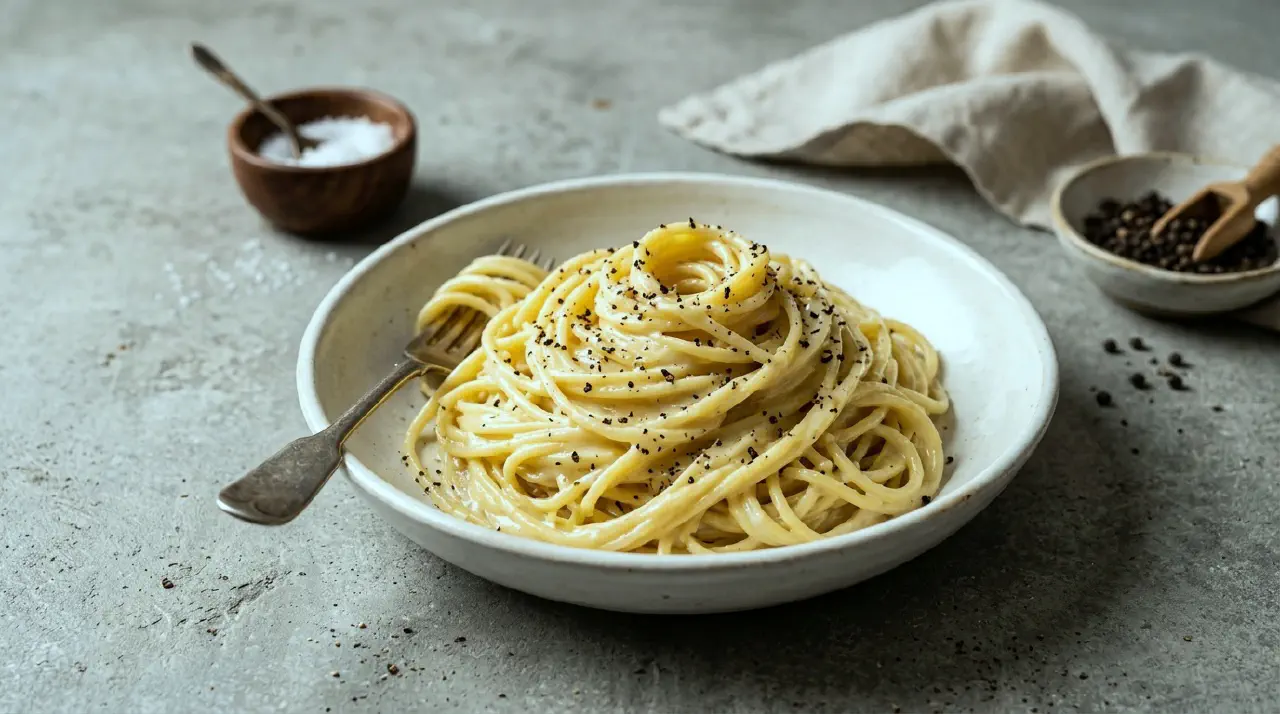
Cacio e pepe is a Roman pasta dish made with three ingredients: pasta, Pecorino Romano, and black pepper. The cheese is worked with warm pasta water into a cream, then combined with the pasta off heat to form a glossy, peppery sauce. No butter, no cream, no olive oil.
Serves 4
Ingredients
- 400 g spaghetti (or bucatini, or tonnarelli)
- 200 g Pecorino Romano DOP, finely grated
- 6 g whole black peppercorns (ca. 2 tsp), freshly ground to a coarse grind
Directions
Grate the cheese as finely as possible using the smallest holes on a grater or a microplane. Set aside at room temperature.
Grind the peppercorns coarsely – visible flakes, not powder.
Bring about 2 liters of water to a boil with only a small pinch of salt (the cheese is salty). Cook the pasta until 2 minutes short of al dente. Reserve about 400 ml pasta water before draining.
While the pasta cooks, toast the ground pepper in a large dry skillet over medium heat for 2-3 minutes until fragrant.
Add one ladle (ca. 120 ml) of pasta water to the toasted pepper. Let it simmer briefly.
Transfer the pasta to the pepper skillet. Toss and cook for the remaining 2 minutes, adding pasta water as needed to keep it loose.
In a separate bowl, combine the grated pecorino with about 120 ml of warm (not boiling) pasta water. Stir vigorously until you get a smooth, thick cream.
Remove the skillet from heat entirely. Wait 30 seconds. Add the cheese cream to the pasta in batches, tossing vigorously after each addition until the sauce is glossy and coats every strand.
If too thick, add pasta water a tablespoon at a time. If too thin, toss longer off heat.
Serve immediately with extra pepper and a dusting of pecorino on top.
Notes
- The cheese cream must be made with warm, not boiling, pasta water. Too hot and the cheese clumps into rubbery lumps.
- Removing the skillet from heat before adding the cheese cream is the most important step. Direct flame causes clumping.
- Under-salt the pasta water intentionally. Pecorino Romano is intensely salty on its own.
- Do not substitute Parmesan. Pecorino Romano has a sharper, saltier character that defines the dish.
- Leftover cacio e pepe does not reheat well – the emulsion breaks.
See Also
Amatriciana
Arrabbiata

Bagna Cauda
Biber Salcasi (Turkish Red Pepper Paste)