Sous Vide Chicken Thighs
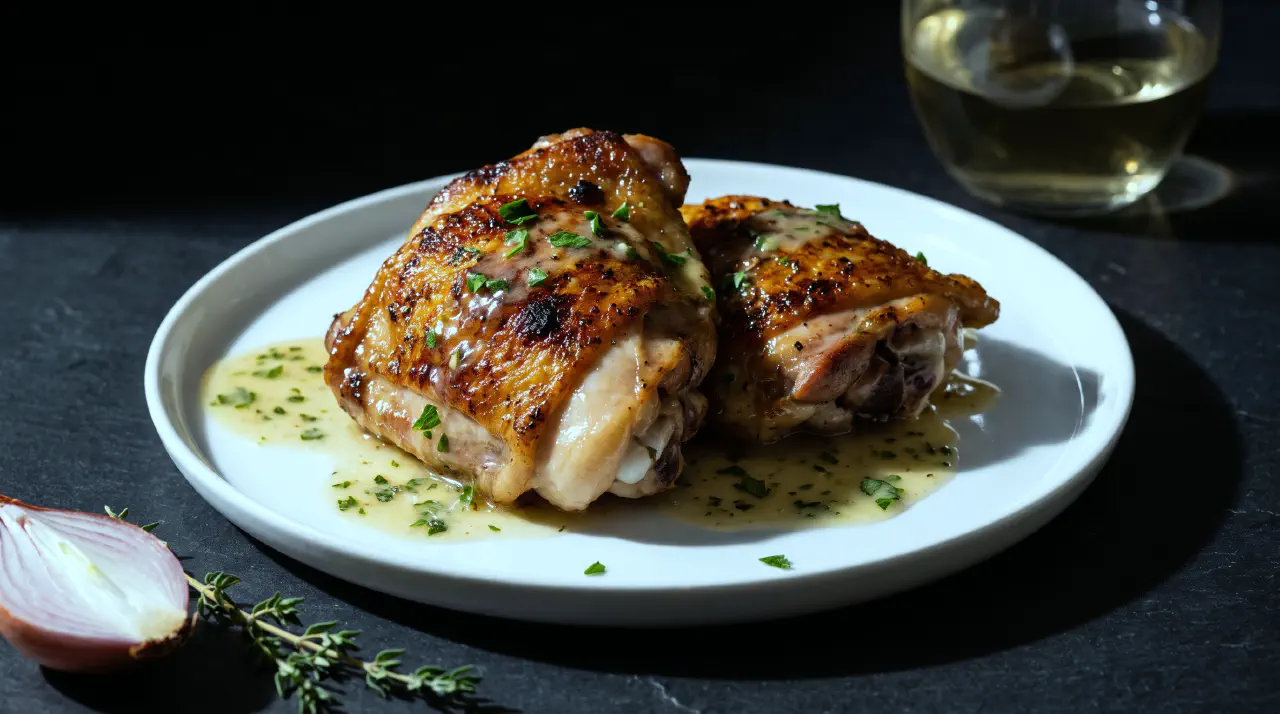
Sous Vide Chicken Thighs
Chicken thighs are about as forgiving a cut as exists for sous vide cooking. Where a chicken breast turns dry and stringy within minutes of overshooting its target temperature, a thigh’s higher fat and connective-tissue content lets it sit in a water bath for hours without drying out - which is exactly why thighs, more than almost any other cut, reward experimenting with the bath temperature rather than following one fixed number.
Bone-in, skin-on thighs are the default here: the bone adds flavor during the long cook, and the skin self-bastes in the bag before getting a second life under a hot skillet. The water bath alone can’t brown or crisp anything, so a hard sear afterward isn’t optional - it’s the step that turns a poached-looking thigh into something worth putting on a plate. 165°F (74°C) for 1.5 to 4 hours is the most practical default: fully tender, juicy meat that isn’t stringy, without needing a multi-hour bath. Cooler or hotter baths push the texture in either direction - see the Notes for the full range.
The one non-negotiable step is drying the chicken thoroughly before it goes anywhere near the pan. Sous vide bags leave the skin wet, and wet skin steams instead of crisping no matter how hot the pan is. An optional ice-bath chill after the water bath firms the meat up first, which lets the skin sear longer and harder without the interior overcooking - useful if you’re cooking ahead, since the chicken can then sit in the fridge for a few days before the final sear.
This isn’t a dish with a lineage; it’s a modern precision-cooking technique applied to a familiar cut, worked out by sous vide equipment makers and food writers testing temperature against texture rather than handed down through any regional kitchen. The optional pan sauce, built from the gelled juices left behind in the bag plus a splash of wine and a knob of butter, borrows classic French pan-sauce technique for a very unclassical cooking method.
Serve the thighs on their own with a simple side - rice, mashed potatoes, a green salad - or spoon the sauce over if you’ve made it. Either way, this is a low-effort, high-reliability route to crisp skin and evenly cooked meat without babysitting a stove the whole time.
Ingredients
Serves 4
The chicken
- 4 bone-in, skin-on chicken thighs, about 150 g each (600 g total), patted dry
- kosher salt, to taste
- black pepper, freshly ground, to taste
- 4 sprigs fresh thyme (or rosemary), for the bag, optional
- 1 tbsp neutral oil (canola, vegetable, or grapeseed), for searing
The sauce
- 1 small shallot, minced (or 2 garlic cloves, thinly sliced)
- 120 ml dry white wine
- 1 tbsp whole-grain mustard, optional
- 2 tbsp unsalted butter
- 1 tsp fresh lemon juice
- 1 tbsp fresh parsley, minced
Directions
The chicken
Season the chicken thighs generously with the salt and pepper on both sides, then place them in a single layer in a vacuum bag or a heavy zipper-lock bag, along with the thyme or rosemary sprigs if using.
Seal the bag: use a vacuum sealer, or the water-displacement method for a zipper-lock bag, lowering it slowly into the water bath and sealing just before the bag fully submerges.
Preheat the water bath to 165°F (74°C), the practical default for fully tender, juicy meat that isn’t stringy - see the Notes for a firmer or fall-off-the-bone alternative. Submerge the bagged thighs and cook for 1.5 to 4 hours.
Transfer the bag to an ice bath and chill completely, about 10 to 15 minutes, before finishing. This firms the meat so the skin can be seared longer without overcooking what’s underneath, and it also means the chicken can be refrigerated at this stage for up to 4 days before you finish it.
Remove the chicken from the bag, reserving any gelled juices if you’re making the sauce, and discard the herb sprigs. Pat the chicken very thoroughly dry with paper towels - this step cannot be rushed, since any moisture left on the skin steams instead of crisping.
Heat the oil in a heavy cast-iron or nonstick skillet over medium-high heat until shimmering. Lay the thighs skin-side down and press them firmly flat with a spatula. Cook, pressing occasionally, until the skin is deep golden-brown and crisp, 3 to 8 minutes depending on the pan and the heat, then flip and cook the second side for about 2 minutes. Rest for 2 to 5 minutes before serving.
The sauce
In the same skillet, cook the shallot or garlic over medium-high heat until fragrant, 30 seconds to 1 minute. Add the wine and simmer, scraping up the browned bits from the bottom of the pan, until reduced by about half, 2 to 5 minutes.
Strain in the reserved gelled bag juices along with the mustard, if using - straining removes the coagulated protein that would otherwise cloud the sauce. Take the pan off the heat and whisk in the butter, the lemon juice, and the parsley, then season with salt and pepper to taste.
Spoon the sauce over the chicken thighs and serve immediately.
Notes
For a firmer, more resilient bite, closer to a chop than a poach, cook at 150°F (66°C) for 1.5 to 4 hours instead. The connective tissue doesn’t fully break down at this temperature, so the texture stays springy rather than falling apart - almost like a steak, rather than the fall-apart texture of a longer cook.
For fall-off-the-bone, shreddable meat, cook at 165-176°F (74-80°C) for 4 to 8 hours. The higher and longer you go within that range, the more the meat pulls apart on its own; this is about as close as sous vide gets to a braise.
Don’t go below 150°F (66°C) for chicken meant to be served hot and unchilled without an extended pasteurization hold - that’s a food-safety line, not a texture preference.
Boneless, skinless thighs cook faster - cut the time roughly in half at the same temperature - but they lose the crisp-skin payoff that’s the point of this dish.
Garlic works as well as shallot in the sauce, and either is a matter of preference, not correctness. Skip the sauce entirely and the chicken is still a complete dish on its own with a side.
See Also
Beef Cuvette - Red Meat Sous Vide