Kasundi
Prep 20 min Total 168 hr
Kasundi - kvalifood.com
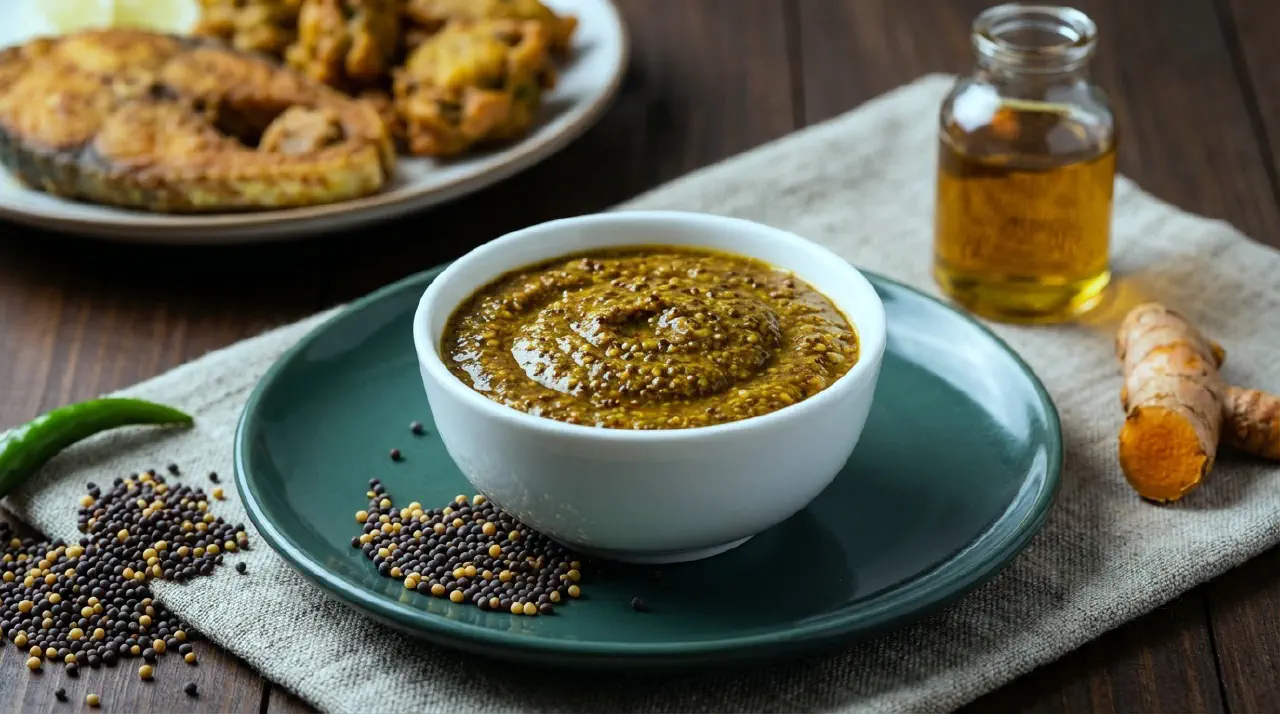
Kasundi is a fermented Bengali mustard sauce. It is made from ground mustard seeds, chilies, turmeric, and mustard oil, then left to ferment at room temperature for about a week. The result is sharp, pungent, and potent – used sparingly alongside fried snacks, rice and dal, or as a dip.
Makes ca. 300 g
Ingredients
- 70 g black mustard seeds
- 70 g yellow mustard seeds
- 4-6 green chilies (or 3-4 dried red chilies)
- 1 tsp turmeric powder
- 1.5 tsp salt
- 2 tbsp white vinegar
- 60 ml mustard oil
- 60 ml water, boiled, cooled
Optional spice blend
- 1 tsp cumin seeds
- 1 tsp coriander seeds
- 1/2 tsp black peppercorns
- 1/4 tsp ajwain (carom seeds)
- 1 bay leaf
Directions
Rinse the mustard seeds and spread on a plate to dry completely, several hours or overnight.
If using the optional spice blend, dry-roast the cumin, coriander, peppercorns, ajwain, and bay leaf over low heat 2-3 minutes until fragrant. Cool and grind to a fine powder.
Combine the dried mustard seeds, chilies, turmeric, salt, and ground spice blend (if using) in a food processor. Pulse until coarsely ground.
Add the vinegar and cooled boiled water. Blend to a thick, slightly coarse paste. Add a little more water if needed – aim for a consistency like thick porridge.
Transfer to a clean glass or ceramic jar. Pour the mustard oil over the surface to form a thin sealing layer.
Cover loosely and leave at room temperature for 5-7 days. The paste needs some air exchange for fermentation.
Stir once daily with a clean, dry spoon. Replace the oil layer after stirring.
After 5-7 days, seal tightly and refrigerate.
Notes
- Using both black and yellow mustard seeds gives the best balance. Black seeds are sharper; yellow are milder and give body.
- Mustard oil is essential for authentic flavor. Do not substitute with neutral oil.
- Vinegar helps kickstart acidity. Traditional versions skip it entirely, but it adds a safety margin for home fermenters.
- Traditional kasundi is slightly coarse, not silky smooth.
- Fermentation continues to develop flavor over weeks. It improves with age.
- Keeps refrigerated for several months. Always use a clean, dry spoon.
- For aam kasundi (mango version): replace the water with 200-300 g chopped green (unripe) mango. Skip the vinegar. Add 3-5 garlic cloves when blending. Tangier but shorter shelf life (about 1 month).
See Also
Aam ka Achaar (Mango Pickle)

Mango Chutney (Indian Style)

Mixed Vegetable Achaar
Peanut Chutney