Sous Vide Lamb Shoulder
Sous Vide Lamb Shoulder
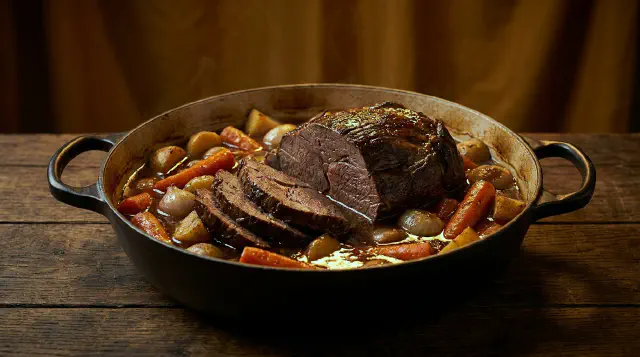
Lamb shoulder is a tough, hard-working cut, full of fat and connective tissue, and it’s cheap for exactly that reason. The traditional fix is a long braise or a slow oven roast, hours of moist heat until the collagen melts. Sous vide gets to the same place by a different route: one steady water-bath temperature held for a full day, rather than an oven that overcooks the outside long before the inside has caught up. This version holds the shoulder in the pull-apart range, the school that turns a whole shoulder into fully shreddable meat with no pink left anywhere in it. A second, sliceable school exists at a lower temperature - see the Notes for that route if a knife-cut roast is what you’re after instead.
The steps themselves are simple, just slow. The shoulder is salted well ahead of time so the seasoning has a full day to work its way through, then bagged with garlic and fresh herbs before it goes into the bath. Because the bag traps every drop of liquid the meat releases over that day, that liquid becomes the base of a short pan sauce once the cook is done, rather than something poured down the drain the way oven drippings so often are.
This isn’t a traditional dish tied to one country’s kitchen - sous vide itself grew out of French culinary science, but applying it to a whole lamb shoulder like this belongs more to the online sous vide community than to any single cuisine. What that community agrees on, almost without exception, is that a tough cut like this needs the better part of a day at one exact temperature; where it splits is on which exact temperature to choose, pull-apart or sliceable, and a good cook picks one rather than drifting toward a compromise in between.
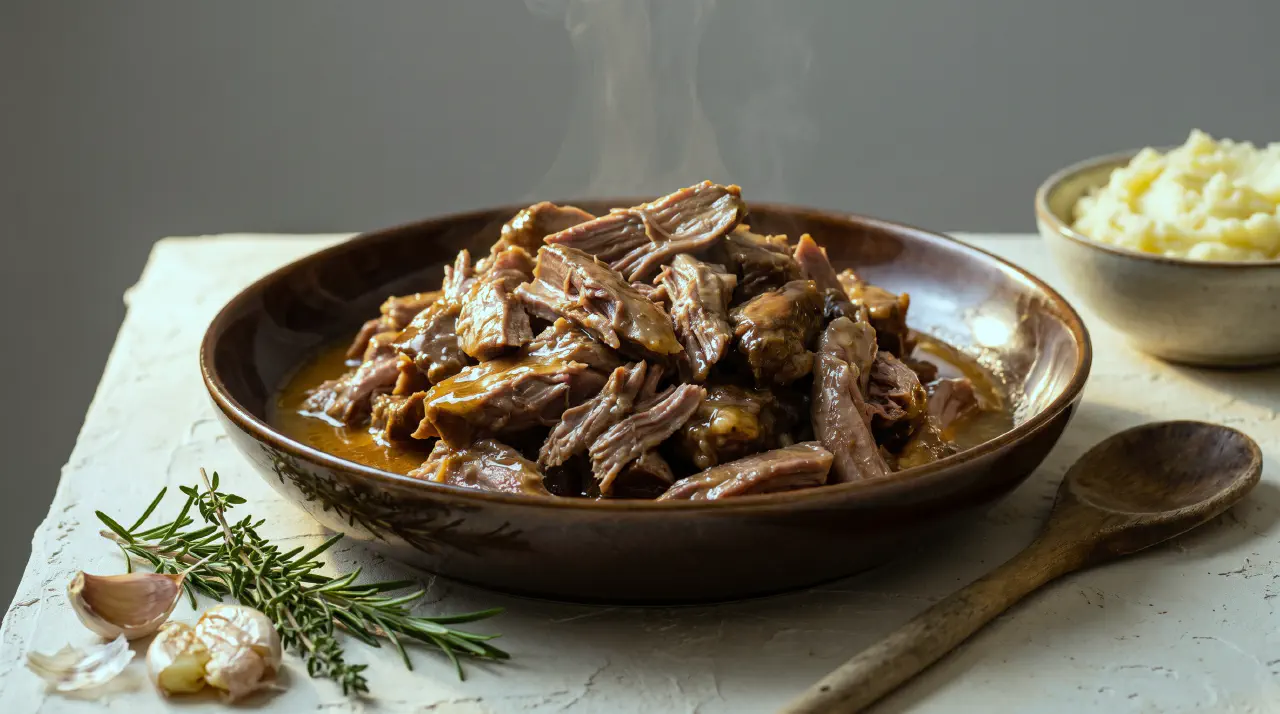
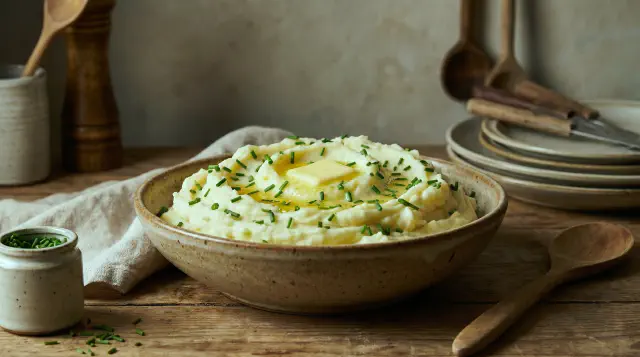
What comes out of the bag is rich, fatty, fall-apart lamb, best pulled into rough shreds and tossed with the buttered jus rather than plated as neat slices. It’s a good weekend dish, since the bath needs almost no attention once it’s running. Serve it over mashed potatoes, soft polenta, or rice, with a sharp, acidic green salad or some roasted vegetables alongside to cut through the richness.
Ingredients
Serves 4-6
The lamb
- 1.4-1.6 kg bone-in lamb shoulder
- 25-30 g kosher salt, about 1.5-2% of the meat’s weight
- 1 tsp black pepper, freshly ground
- 4 garlic cloves, smashed
- 4 sprigs rosemary, fresh
- 4 sprigs thyme, fresh
- 1 tbsp olive oil
The jus
- 2 tbsp unsalted butter
Directions
The lamb
Season the lamb shoulder all over, generously and evenly, with the kosher salt and black pepper. Set it uncovered on a rack in the fridge overnight, at least 8 hours. This dry brine gives the salt time to work all the way into the meat and dries the surface slightly, both of which a last-minute seasoning can’t manage over a 24-hour cook.
Place the shoulder in a vacuum bag with the garlic, rosemary, thyme, and olive oil, and vacuum-seal it. If sealing by hand with a zip-top bag, lower it slowly into a pot of water with one corner left open, letting the water pressure push the air out before sealing that last corner.
Preheat a water bath to 165°F (74°C) and submerge the bag, cooking for 24 hours. This lands squarely in the pull-apart school: hot enough and long enough that the collagen running through the shoulder fully breaks down, leaving meat that shreds apart with no resistance and no pink remaining. Keep the bag weighted or clipped down so it stays fully submerged, and top up the water if it evaporates faster than expected over the long cook.
Once the bath is done, lift the bag out and let it rest on the counter for 10 to 15 minutes before opening. If you’re not finishing right away, the bag can also go straight into the fridge for a few days and be reheated in a fresh 140°F (60°C) bath before the next step.
Open the bag and lift the meat out onto a cutting board, reserving the liquid for the jus below. Pat the shoulder dry, then sear it hard in a screaming-hot skillet, char it briefly on a grill, or run it under a hot broiler - just long enough to color the surface, since the interior is already fully cooked. Shred the meat with two forks once it’s cool enough to handle.
The jus
Strain the liquid left in the bag through a fine-mesh sieve into a small saucepan, pressing on the garlic and herbs to get the last of the flavor out before discarding them. Skim off any excess fat floating on top if you’d like a leaner jus.
Bring the strained liquid to a boil, then take the pan off the heat and swirl in the butter until it melts into a glossy sauce. Season with a little extra salt if needed.
Toss the shredded lamb with the buttered jus right in the pan or in a serving bowl, and serve while it’s still hot.
Notes
For a knife-sliceable roast instead of a pull-apart one, bag the shoulder exactly the same way and cook it at 132-135°F (56-57°C) for 24 hours rather than 165°F (74°C). The meat comes out a rosy medium-rare edge to edge rather than fully broken down. Sear it for only 20 to 30 seconds per side, just enough to brown the crust, then rest it for 5 to 10 minutes and slice against the grain, spooning the jus over the slices instead of tossing them in it.
Don’t reach for Anova’s general “Steak or Lamb” chart for this cut - it’s calibrated for naturally tender lamb like rack or loin chops, and its short 1.5 to 4-hour window won’t tenderize a tough shoulder no matter which temperature on that chart is chosen.
Bone-in is worth seeking out here: the bone adds flavor to the jus and doesn’t get in the way of shredding. A boneless shoulder works too, just trim the weight down slightly and expect a somewhat less rich jus.
If choosing the lower-temperature steak-style route above, raw garlic held below 140°F (60°C) for a full day carries a small but real botulism risk. Blanch the garlic cloves briefly before bagging, or swap in garlic powder, if that’s the school being used.
See Also
Beef Cuvette - Red Meat Sous Vide
Lamb Leg Provençale
Mashed Potatoes
Massaman Curry with Lamb Shoulder (Gaeng Massaman Gae)