Sous Vide Poached Eggs
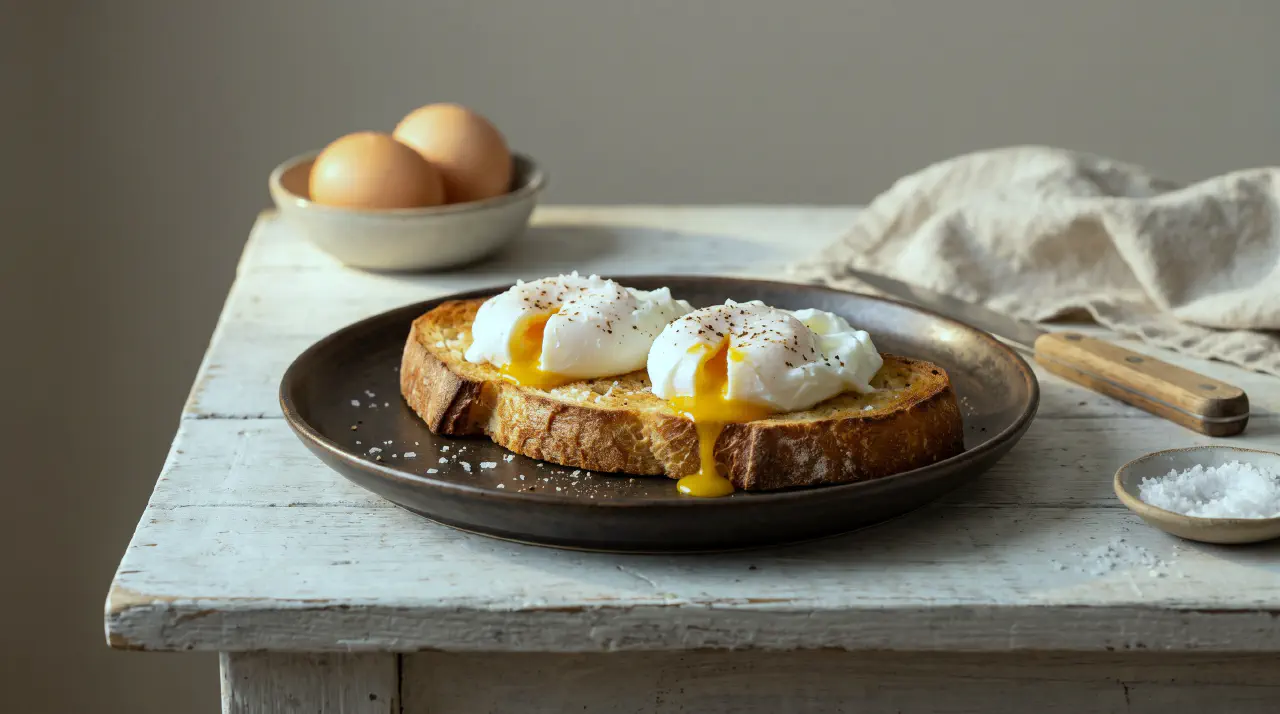
Sous Vide Poached Eggs
Poaching an egg the old way is a small act of kitchen luck: swirl the water, drop the egg in fast, and hope the white pulls together around the yolk instead of trailing off into wisps. Sous vide sidesteps the whole gamble by cooking the egg in its shell. The shell holds everything in exact place while the water bath does the work, so the white sets soft but whole and the yolk stays warm, rich, and loose - no vinegar, no whirlpool, no timing it by eye.
The method is close to a boiled egg in every way except the temperature. A precision cooker holds the bath at 167°F (75°C), noticeably below a full boil, for about 13 minutes. That narrow band is what makes it a poached egg rather than a hard- or soft-boiled one: hot enough to set the white into something that holds together when cracked out, but not hot enough to firm the yolk past a runny center. A brief dip in cold water afterward makes the shell safe to handle, and then it’s cracked straight onto the plate.
There’s also a slower way to get there. A cooler bath held for closer to an hour gives an even softer, more custardy yolk, though the white needs an extra dip in barely simmering water afterward to firm up enough to hold a poached shape - that version is covered in the notes below for anyone chasing a jammier center.
This isn’t a technique with any history behind it beyond the immersion circulator itself; it’s a modern fix for an old café-brunch problem, not a regional dish. Where it shines is exactly where poached eggs always have - over toast, tucked into eggs Benedict, laid on hash, or set on top of a steak so the yolk runs into the meat as it rests.
Ingredients
Serves 4
- 4 large eggs, cold, uncracked
- salt, to taste
- black pepper, freshly ground, to taste
- toast (or crusty bread), to serve
Directions
Fill a pot or container with water and set a sous vide precision cooker to 167°F (75°C). Let the bath come fully up to temperature before adding the eggs - starting them in water that’s still climbing throws the timing off.
Using a slotted spoon, lower the whole eggs into the bath straight from the refrigerator, still in their shells. Cook for 13 minutes.
Lift the eggs out with the slotted spoon and drop them into a bowl of cold water for about 30 seconds to a minute, just long enough to handle the shells comfortably. This cold dip is only for your hands - the egg has already finished cooking and won’t change much in that short a soak.
Crack each egg into a small bowl or straight onto its serving base - a slice of toast, a plate of hash, or a hot steak. The white should be soft-set but hold together as one piece, and the yolk should still be warm and running. Season with salt and pepper and serve right away, while the yolk is still loose.
Notes
For a softer, jammier yolk, use the slower two-stage method instead. Set the bath to 145°F (62.8°C) and cook the whole eggs, still in their shells, for 45 minutes. While they finish, bring a separate small pot of water to a bare simmer. Working one egg at a time, crack it into a bowl, then slip it gently into the simmering water and hold it there for 30 seconds to a few minutes, just until a thin skin forms over the white and it holds together when lifted with a slotted spoon. Season and serve immediately. This version takes close to an hour instead of fifteen minutes, and the yolk comes out noticeably softer and more custardy, but the white needs that extra dip to firm up enough to plate cleanly - skip it if the egg is landing on something hot anyway, like a steak or a bed of hash, where a looser white just mingles into the rest of the plate.
Both methods can be made ahead: shock the cooked eggs, still in their shells, in an ice bath, then refrigerate for up to 5 days. Reheat gently in a 130-140°F (54-60°C) bath for 15 minutes to an hour before cracking, finishing, and serving.
Use the freshest eggs you can find. Day-old-from-the-carton eggs still work, but very fresh eggs hold their shape best once cracked out of the shell.
Don’t confuse this with a soft-boiled egg sous vide, which stays in the shell and gets served in an egg cup with a spoon rather than cracked out and plated.
See Also
Air Fryer Hard-Boiled Eggs
Hollandaise sauce
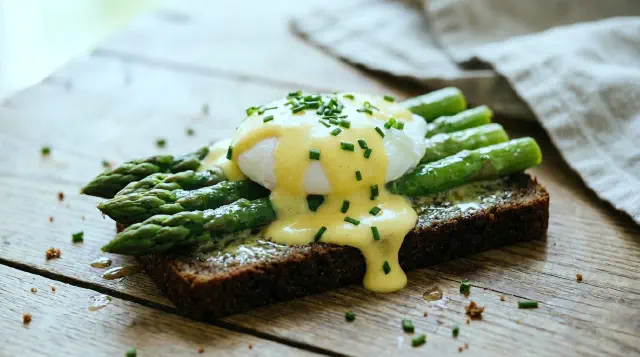
Smørrebrød with Poached Egg, Asparagus and Hollandaise
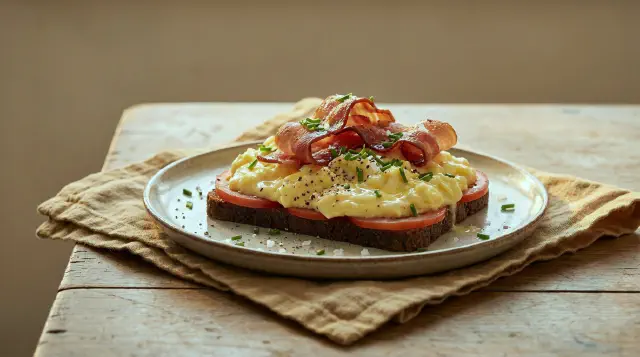
Smørrebrød with Scrambled Eggs, Chives and Crispy Bacon