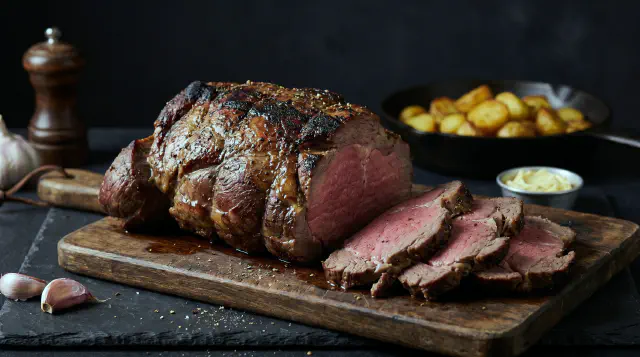
Sous Vide Prime Rib
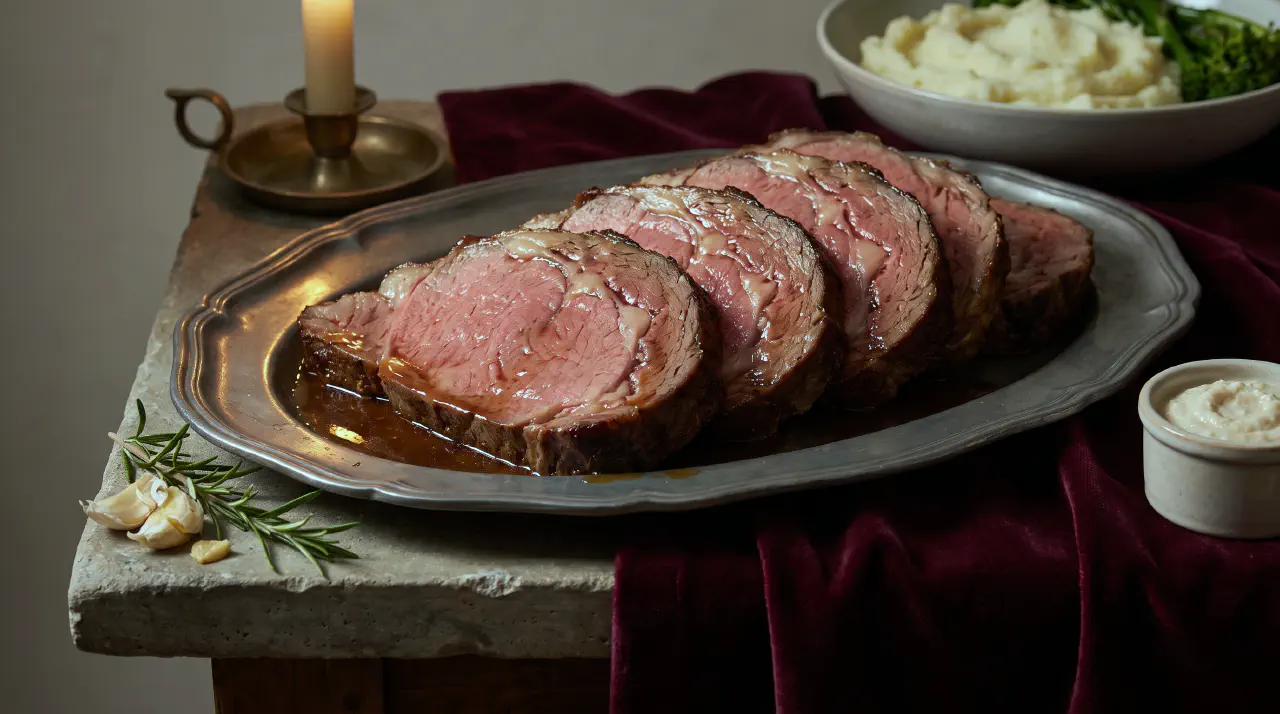
Sous Vide Prime Rib
Prime rib is a standing rib roast cut from the primal rib section - the cut American steakhouses are built on, and the classic centerpiece of a US Christmas or New Year’s dinner - bone-in, thick, and forgiving enough to feed a crowd with almost no carving loss. The trouble with roasting one in an oven is the trouble with any big cut of meat: the outside finishes well before the center does, so a roast pulled at the right internal temperature usually has a wide gray band of overcooked meat surrounding a smaller pink core. Sous vide sidesteps the problem by holding the whole roast at the exact temperature you want the inside to reach, for long enough that the center catches up to the edges instead of the other way around.
The ingredient list is short: a bone-in standing rib roast, kosher salt, coarsely cracked pepper, rosemary and garlic for the bag, and a little oil for the sear. Ask the butcher to french and separate the bones if you plan to vacuum-seal the roast; they come off cleanly before bagging and can go back on for serving, or roast alongside the meat for the cook to pick at.
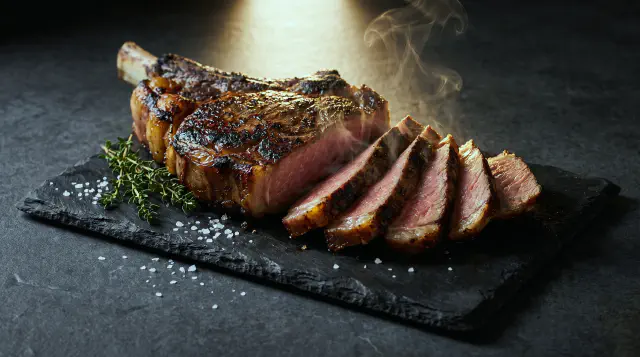
The bath temperature sets the doneness, usually somewhere between 131°F (55°C) and 136°F (58°C) depending on how far into medium-rare you want to land, and the time is set by the roast’s thickness rather than its weight: a thinner roast clears the center in six to eight hours, while a thick, five-rib holiday roast can need most of a day. Once the bath is done, all that’s left is a hard sear to build a crust, since the inside is already exactly where it needs to be: a uniform rosy pink from edge to edge, rich and beefy, with the seared crust the only contrast in texture.
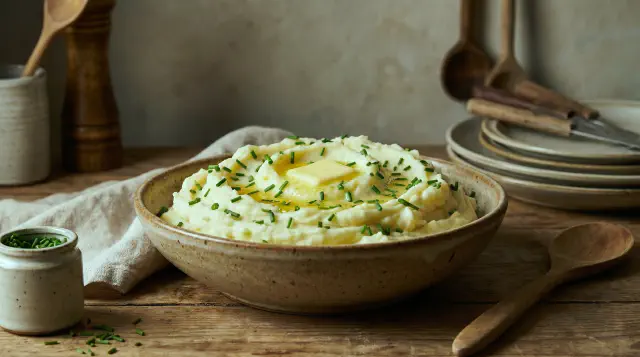
This is a roast for the table, not a weeknight dinner. The long bath makes it a project best started in the morning for an evening meal, or a make-ahead centerpiece for a holiday when the oven is already busy with everything else. Serve it sliced away from the bones, with the reserved jus spooned over the top, alongside roasted or mashed potatoes, a green vegetable, and horseradish sauce on the side.
Ingredients
Serves 6-8
- 1.8-2.3 kg bone-in standing rib roast (prime rib)
- 30 g kosher salt, about 1% of the roast’s weight
- 1 tbsp black pepper, coarsely cracked
- 4 sprigs rosemary, fresh
- 4 garlic cloves, smashed
- 2 tbsp neutral oil, for searing
Directions
Season the roast generously on all sides with the kosher salt and cracked pepper, working it into the fat cap as well as the meat. If time allows, set the roast uncovered on a rack in the fridge for anywhere from an hour up to overnight; the salt draws moisture out and then pulls it back in along with itself, seasoning the meat all the way through instead of just the surface. If you’re short on time, season right before bagging and move straight to the bath.
Fill a water bath and set an immersion circulator to 132°F (55.5°C). Place the roast in a vacuum bag or a well-purged zip-top bag with the rosemary and garlic, then seal it. Submerge the bag and cook for 8 hours for a roast this size, closer to 6 hours for a smaller 3-pound cut, or up to 10 to 12 hours for a larger 6-to-8-pound holiday roast. What matters is the roast’s thickness, not its weight: a fat, thick roast needs the longer end of the range to bring its center up to temperature, while a thinner one clears it faster. Keep the bag fully submerged, weighing it down or clipping it to the side of the container if it wants to float.
Once the time is up, lift the roast out of the bag and pour the juices into a small saucepan; set them aside for the jus. Pat the roast completely dry on every surface with paper towels. Any moisture left behind turns to steam the moment the roast hits high heat, and steam is the one thing standing between you and a good crust.
Heat the oven to 500°F (260°C), or heat a large cast-iron skillet until it’s just short of smoking. Rub the roast all over with the neutral oil, then roast it on a rack for 10 to 15 minutes, watching closely, until the outside is deeply browned all over; if searing in a skillet instead, sear the roast fat-cap-first for about a minute per side, turning until the whole surface is browned. Either way, the roast is already fully cooked, so this step is purely for color and crust, not doneness.
Let the roast rest for 10 to 15 minutes before carving it away from the bones into thick slices. While it rests, skim the reserved bag juices and simmer them briefly in the saucepan to concentrate them into a jus; season to taste and serve alongside the sliced meat.
Notes
The bath temperature can be nudged anywhere from 131°F (55°C) up to 136°F (58°C): the lower end gives the more classic “true medium-rare” prime rib, while the higher end trades a touch of doneness for extra food-safety margin on a very large roast held in the bath for a long stretch. Don’t hold the raw, seasoned roast below 130°F (54°C) for extended periods before it goes into the bath.
For a more textured finish, press a spice crust onto the roast just before the final sear: extra cracked pepper, chopped herbs, and a little garlic powder, brushed on with a thin coat of egg white so it sticks.
See Also
Beef Cuvette - Red Meat Sous Vide
Horseradish Sauce
Mashed Potatoes
Steak - Cooking Methods Guide