Sous Vide Rack of Lamb
Sous Vide Rack of Lamb
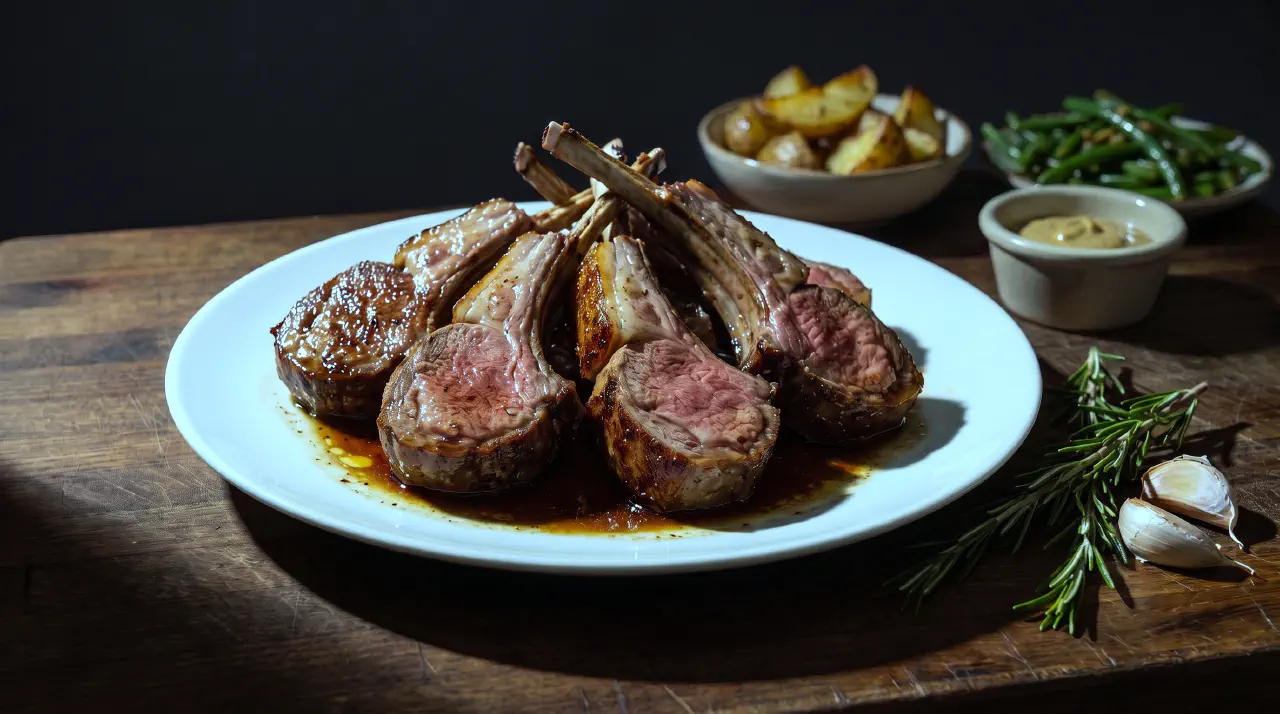
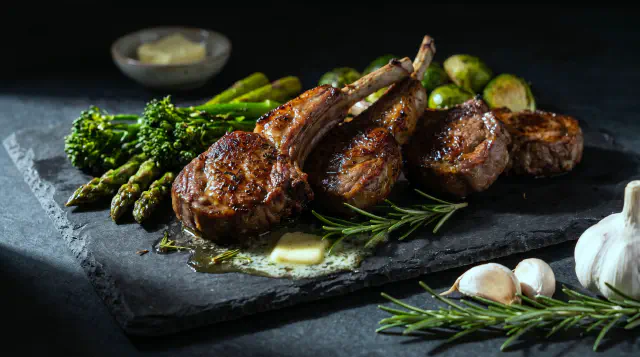
Rack of lamb is the ribs of the animal, frenched down to bare, scraped bones and a compact eye of meat - the cut behind the French carré d’agneau and the standard centerpiece of a bistro lamb course. It’s already tender straight off the butcher’s block, which changes what sous vide is actually doing here: the water bath isn’t softening anything, it’s just making sure the whole eye of meat comes up to the same doneness at once, edge to edge, with none of the gray overcooked band a hot pan or oven leaves around a pink center.
The bath runs at 131°F (55°C), the medium-rare doneness nearly every sous vide source lands on for this cut, for anywhere from 1 to 4 hours - an hour is the minimum needed to heat a rack through, and the texture starts turning soft past four. Out of the bag, the racks get patted bone-dry and dropped into a screaming-hot pan, fat-side down first, then rolled onto every other side for well under a minute each, with butter and rosemary spooned over continuously until the surface is deeply browned. That sear is the only place any real heat touches the meat for more than a few seconds - the interior is already exactly where it needs to be by the time the pan comes off the heat.
A Dijon-and-panko crust is a common finish worth doing at least once: mustard brushed over the hot, seared racks, then a press of toasted panko, parmesan, and minced rosemary on top, given five minutes to set before carving. It builds a crumbed, savory crust over the seared surface without any oven time of its own, since the meat inside is already fully cooked.
None of this is a heritage recipe - sous vide as a home technique is barely a couple of decades old, so there’s no “traditional” temperature to defer to the way there might be with a centuries-old braise. What carries over from classic French cooking is the cut itself and its presentation: frenched bones, sliced into individual or double chops and fanned out on the plate. It’s a small, rich cut suited to a dinner for two or a small dinner party rather than a big family meal - good alongside roasted or mashed potatoes, a simple green vegetable, and a spoon of pan jus or mint sauce if the table wants one.
Ingredients
Serves 2-4
The lamb
- 2 racks of lamb, frenched, 8 ribs each, about 900 g total
- kosher salt, to taste
- black pepper, freshly ground, to taste
- 3 garlic cloves, thinly sliced (optional, for the bag)
- 4 sprigs rosemary, fresh, divided (2 for the bag, 2 for searing)
- 28 g neutral oil (canola, vegetable, or rice bran), for searing
- 28 g unsalted butter, for basting
The crust
- 2 tbsp Dijon mustard
- 25 g panko breadcrumbs, toasted until golden
- 7 g parmesan, grated
- 1 tbsp rosemary, fresh, minced
Directions
The lamb
Season the racks generously all over with kosher salt and black pepper. Vacuum-seal each rack in its own bag with half the sliced garlic and a rosemary sprig, or use a zipper-lock bag and the water displacement method if a sealer isn’t on hand.
Set the water bath to 131°F (55°C) and submerge the bags once it’s up to temperature. An hour is enough to bring a rack fully up to temperature; the bath can run as long as 4 hours without harming the texture, but stop there, since longer turns the meat soft in a way that has nothing to do with tenderness. If working with a lower bath temperature, under 130°F (54°C), cap the time at 2.5 hours for food safety.
Lift the racks from the bags, discard the garlic and rosemary, and pat the meat thoroughly dry with paper towels - a damp surface steams instead of browning under high heat.
Heat the oil in a heavy skillet, cast iron or stainless, until just short of smoking, or get a grill ripping hot. Sear the racks fat-side down first, then roll them onto the remaining sides, about 45 seconds to a minute per side. Partway through, add the butter and the two reserved rosemary sprigs to the pan, tilting it and spooning the melted butter over the meat continuously until the racks are deeply browned all over.
The crust
To serve without the crust, slice the racks straight into chops once seared; the interior is already exactly medium-rare from the bath, so no rest is needed. For the crust instead, brush the still-warm, seared racks all over with the Dijon mustard, then press on a mixture of the toasted panko, parmesan, and minced rosemary so it sticks to the mustard. Let the racks rest 5 minutes, just long enough for the crust to set, before slicing between the bones into individual or double chops.
Notes
A fuller doneness chart, if 131°F (55°C) isn’t the target - all of these hold for 1 to 4 hours in the bath:
- 125°F (52°C) - rare
- 131°F (55°C) - medium-rare, the default above
- 140°F (60°C) - medium
- 160°F (71°C) - well-done
Below 130°F (54°C), cap the bath at 2.5 hours for food safety.
The racks can go into the bath straight from frozen - add about an hour to the cook time.
Bagging the racks whole rather than cutting them into individual chops first keeps the meat juicier and makes for a better presentation at the table; portioned chops cook a little faster if that’s what’s on hand instead.
A grill sears the rack’s curved shape more evenly than a flat pan does.
See Also
Beef Cuvette - Red Meat Sous Vide
Grilled Saddle of lamb (Double Loin)
Lamb Chops
Lamb Leg Provençale