Flavor Chemistry of Herbs and Spices
Flavor Chemistry of Herbs and Spices
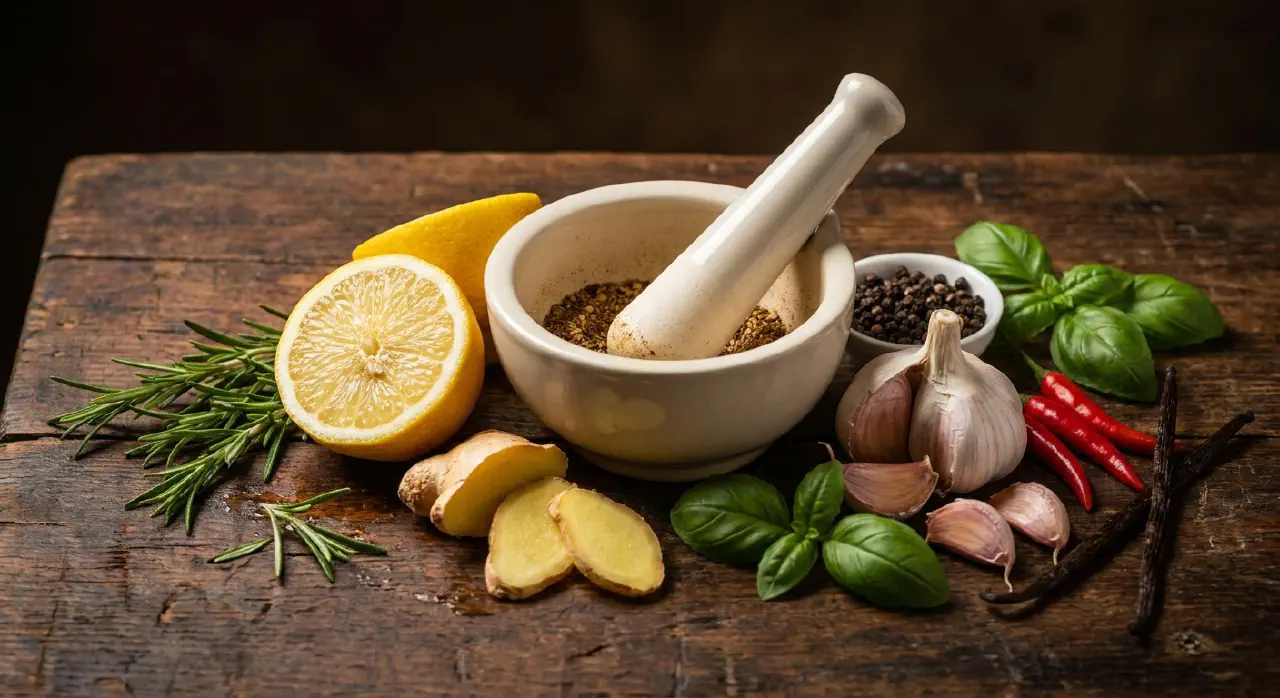
All herb and spice flavors are plant defense chemicals — evolved to repel insects, fungi, and grazing animals. Humans learned to dilute them (a few milligrams in a pound of food) to convert weapons into pleasures. The science of these chemicals explains why some flavors vanish with cooking while others persist, why fat extracts more flavor than water, and why a spice blend can be greater than the sum of its parts.
Melons
Melons
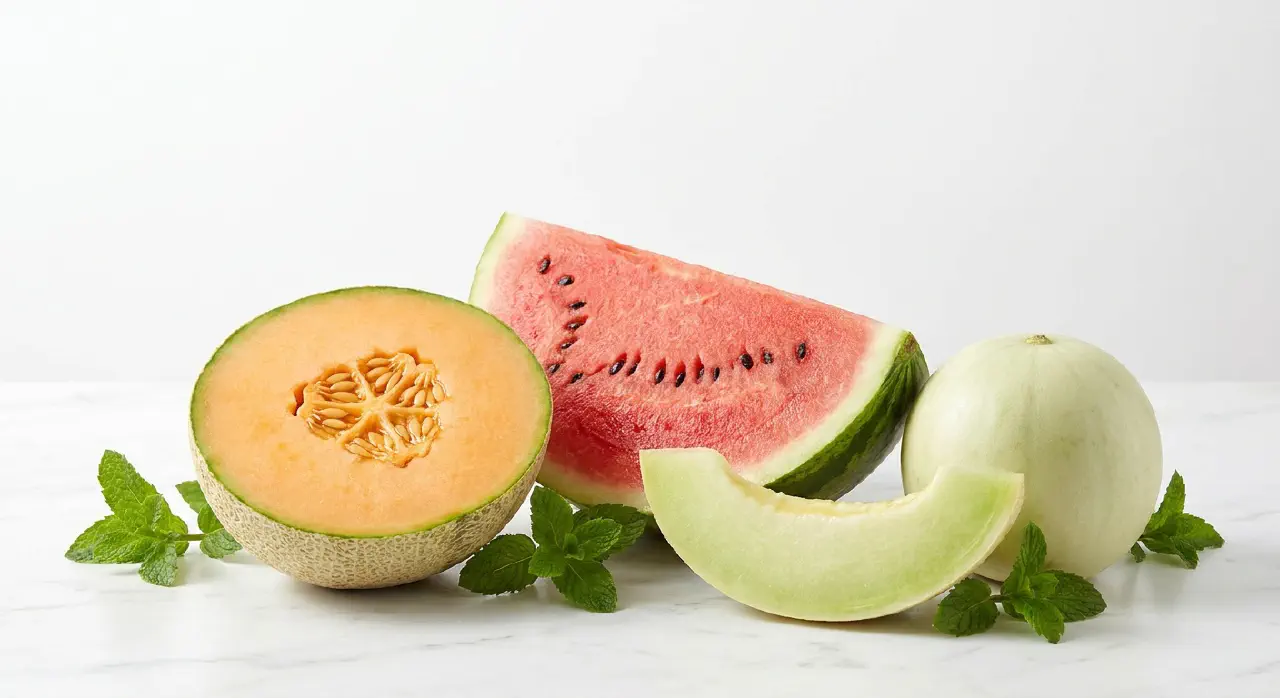
Most melons belong to Cucumis melo, a relative of cucumber, native to the semiarid subtropics of Asia. Large, rapid-growing fruits that symbolized fertility and abundance in ancient cultures. The melon family divides cleanly into two groups that mirror the climacteric/non-climacteric divide — aromatic, perishable summer melons and mild, durable winter melons — plus the distantly related watermelon, which stands alone as one of the world’s most remarkable fruits.
The fundamental rule: no starch, no post-harvest sweetening
Melons do not store starch. Sweetness is entirely fixed at harvest — a melon picked with 8% sugar will never reach 12%. Post-vine aroma may develop slightly, but it won’t match vine-ripened fruit. This makes vine-ripening critical and good sourcing the most important kitchen decision. For aromatic summer melons, a stem remnant signals premature harvest.
Plant Flavor
Plant Flavor
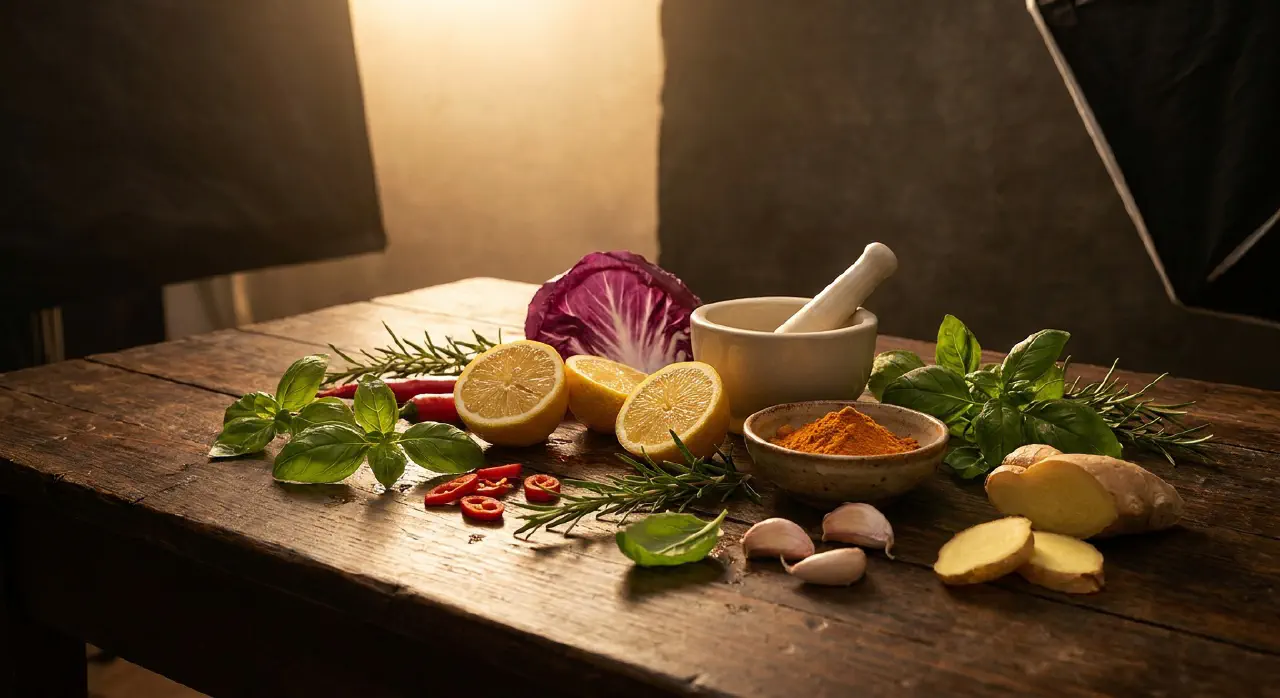
Plant flavor is a composite of four distinct sensory channels: taste (tongue), touch (mouth feel), irritation (pain receptors), and aroma (olfactory receptors). Taste tells you the basic composition — sweet, sour, bitter, savory. Touch reveals astringency. Pain receptors register pungency. And aroma, with its hundreds of volatile molecules, is where the fine discriminations happen — the difference between an apple and a pear, between basil and oregano.
Taste: the basic composition
Sweetness
Sugar is the main product of photosynthesis, so plants are inherently sweet. Ripe fruits average 10–15% sugar by weight. In unripe fruit, sugar is locked away as tasteless starch, then converted to sugar during ripening while acid content simultaneously drops — making the fruit seem even sweeter than the sugar alone would suggest.