Berries
Berries
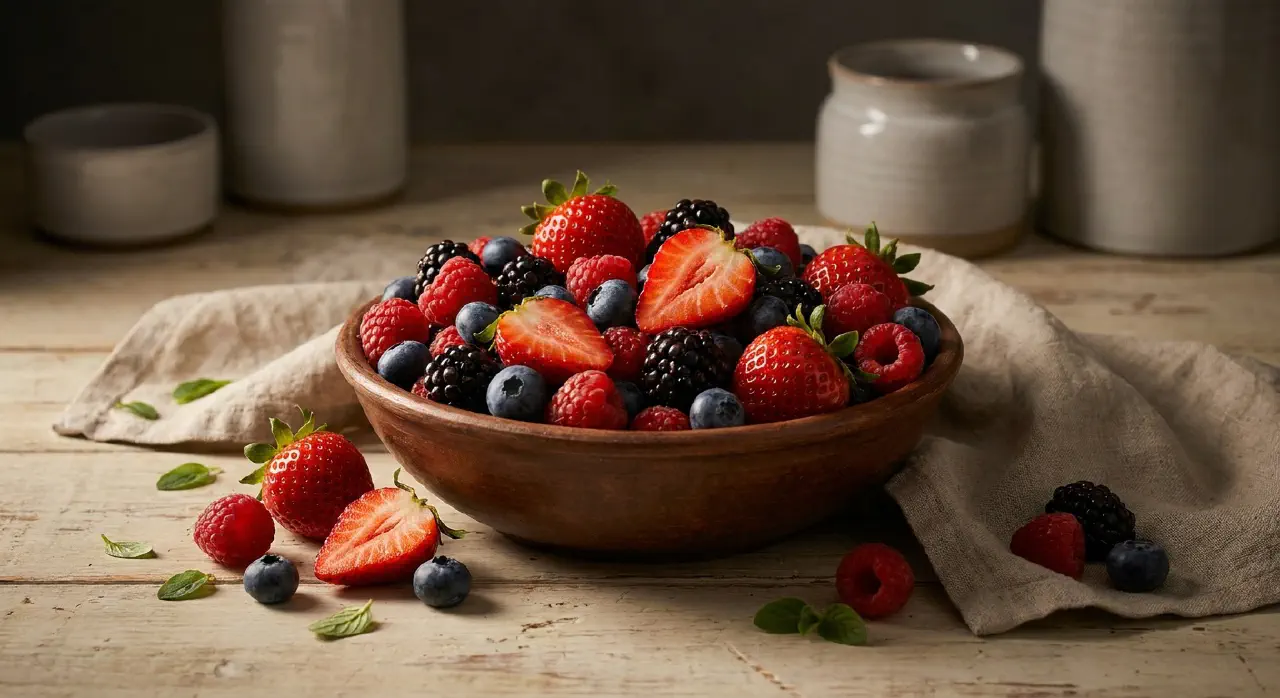
In culinary terms, the small fruits borne on bushes and low plants (rather than trees) — most native to northern woodlands. As a group, berries are the most fragile, perishable, and phenolic-rich fruits in the kitchen. Most are non-climacteric or nearly so, meaning quality is essentially fixed at harvest. Their intense colors come from anthocyanin pigments, and their concentrated flavors — far more intense in wild forms — make them both the most rewarding and most time-sensitive fresh fruits to work with.
Wine
Wine
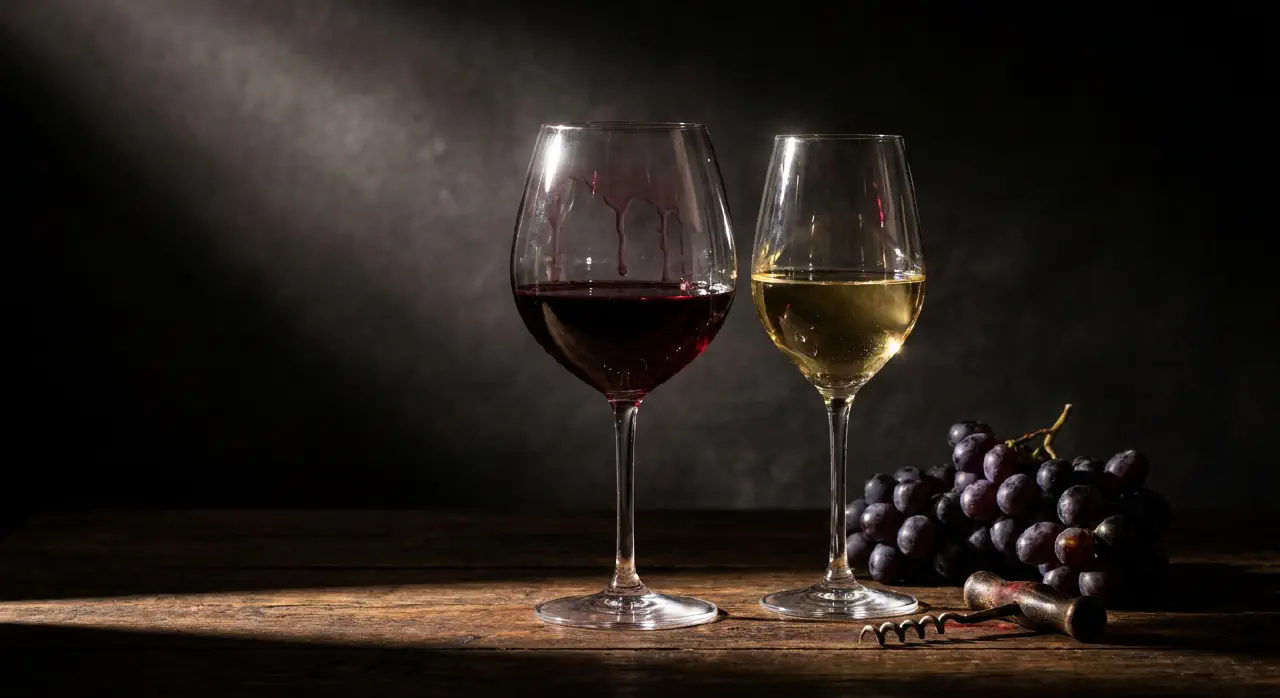
Wine is fermented grape juice — and grapes are uniquely pre-adapted for the job. They retain large amounts of tartaric acid (which few microbes can metabolize, giving yeast a competitive advantage), ripen with enough sugar that the resulting alcohol suppresses nearly all other organisms, and offer striking colors and a diversity of flavors. Seventy percent of the world’s largest fruit crop goes to wine.
Why grapes are special
Most fruits ferment readily, but grapes do so with unusual reliability and quality. Tartaric acid creates an environment that favors Saccharomyces yeasts over spoilage bacteria. The sugar content at ripeness (typically 20–25%) produces 10–14% alcohol — enough to preserve the wine without any additives. The vast number of grape varieties, each responding differently to soil and climate, explains wine’s infinite regional diversity. Pliny noted in Roman times that the same grape produced different wines in different locations — the concept now called terroir.