Alcohol Science
Alcohol Science
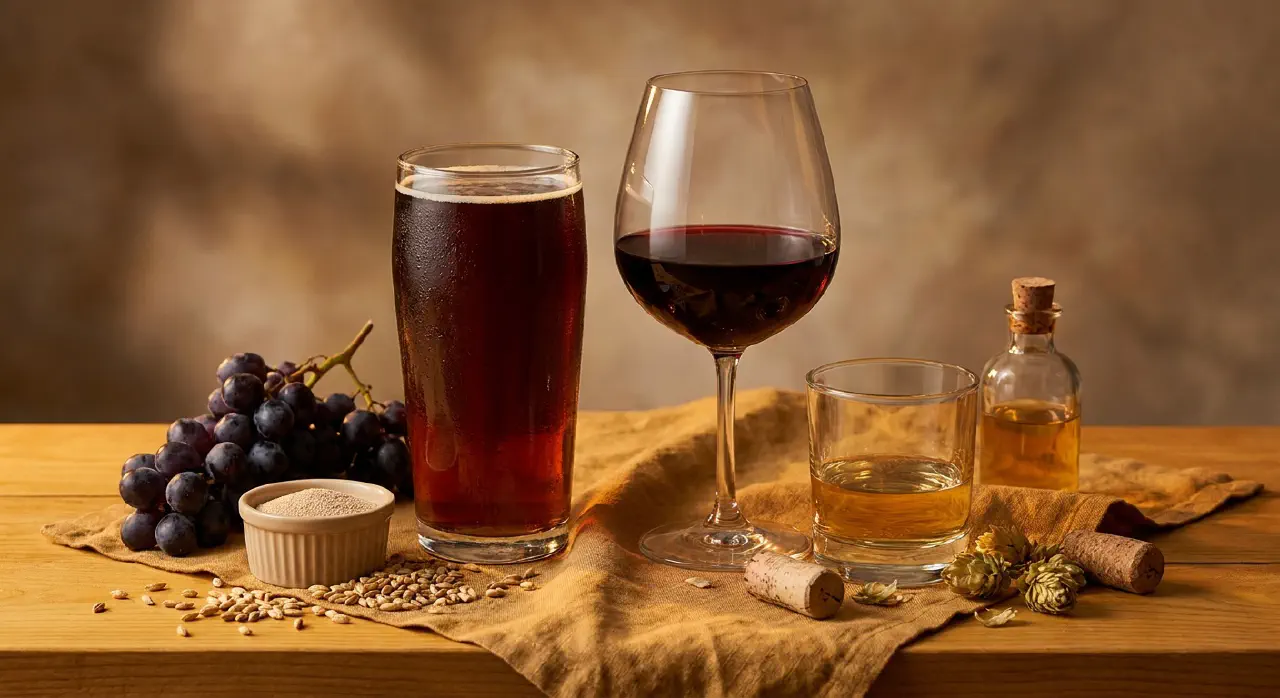
Ethanol — the alcohol in wine, beer, and spirits — is a small, dual-natured molecule: one end resembles a fatty-acid chain, the other resembles water. This amphipathic structure makes ethanol a universal solvent, a third cooking medium alongside water and oil, and a potent drug that penetrates cell membranes. Understanding ethanol’s physical properties explains everything from why distillation works to why flambé retains most of its alcohol.
Fermentation chemistry
About 160 species of Saccharomyces (“sugar fungus”) yeasts convert glucose to ethanol and CO₂ under anaerobic conditions. Beyond ethanol, yeasts produce a constellation of flavor compounds: savory succinic acid, fruity esters (from combining alcohols with acids), longer-chain “higher” alcohols from amino acid metabolism, and sulfur compounds reminiscent of cooked vegetables and toast. Dead yeast cells (lees) release enzymes that generate still more flavor. This is why fermentation is not just preservation — it is flavor creation.