Beer Brewing
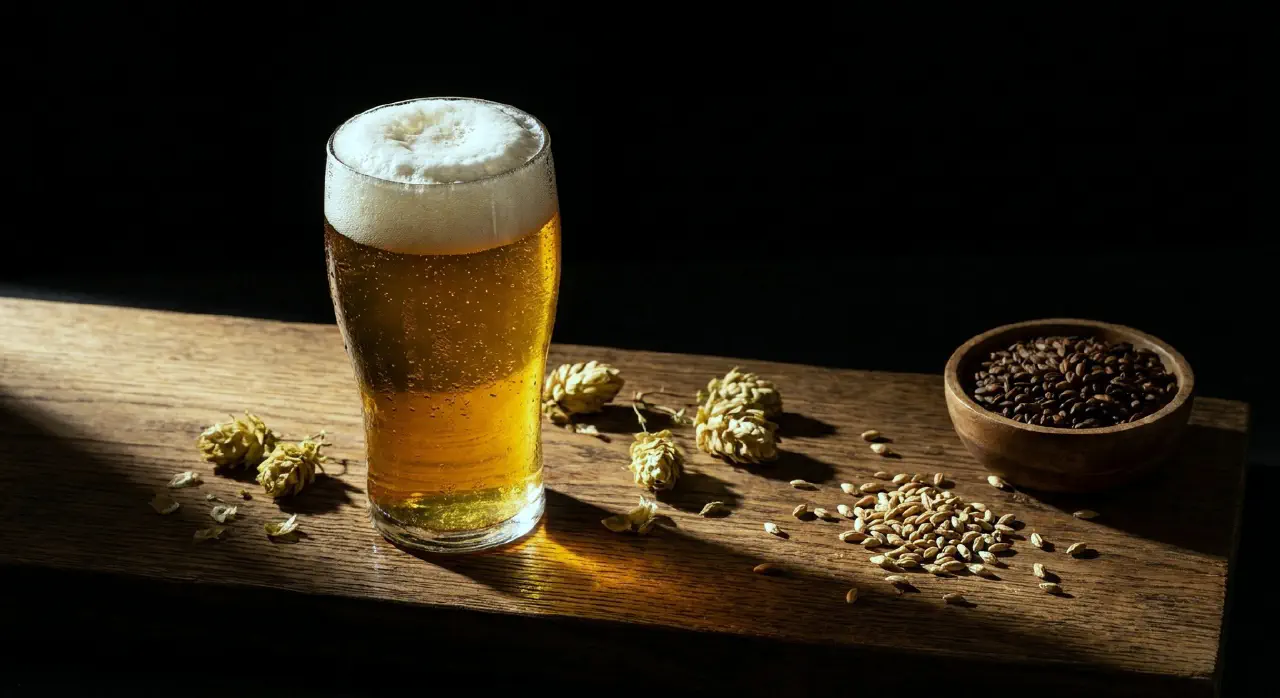
Beer is fermented grain - and unlike grapes, grains contain starch rather than sugar, requiring an extra conversion step before yeast can work. Three independent civilizations solved this problem independently: saliva enzymes (Inca chicha), mold preparations (East Asian koji), and malting (Near East, now dominant worldwide). The malting tradition gives beer its distinctive flavors of grass, bread, and cooking - flavors born from the Maillard reactions that are inseparable from the process.
Malting: creating the enzymes
Malting is controlled germination. Dry barley (preferred for its unusually copious enzymes) is steeped in cool water and germinated at ~65°F/18°C for 5–9 days. The embryo’s hormone gibberellin stimulates the aleurone layer to produce digestive enzymes that break down cell walls, starch, and proteins - exactly what the brewer needs.
Kilning halts germination and fixes the enzyme-sugar balance through dehydration and heat. This is where the malt spectrum emerges:
| Malt type | Kilning temp | Character |
|---|---|---|
| Pale/lager | ~180°F / 80°C | Light color, high enzyme activity |
| Amber/crystal | moderate | Caramel sweetness, moderate color |
| Chocolate/brown | 300–360°F / 150–180°C | Rich, toasted, low enzyme activity |
| Black (patent) | highest | Sharp, smoky, astringent; used in small amounts for color |
Brewers mix multiple malts for desired flavor, color, and enzyme combinations. Kilned malt stores for months.
Hops: bitterness and aroma
Hops are the female flower cones of Humulus lupulus (a relative of marijuana). Resin glands near the base of the floral bracts contain the alpha acids (humulone, lupulone) that provide bitterness - but these acids are naturally insoluble in water. They require prolonged boiling (up to 90 minutes) to transform into soluble, bitter forms.
Aroma hops are added after boiling to preserve volatile compounds that boiling would destroy. Different varieties contribute very different characters: ordinary hops give woody, resinous myrcene (also in bay leaf); “noble” European varieties offer delicate pine and citrus notes (humulene, pinene, limonene); American Cascades bring distinctive floweriness (linalool, geraniol).
The four stages of brewing
1. Mashing: Ground malt soaked in hot water (130–160°F/54–70°C) for ~2 hours. Malt enzymes revive and convert starch into sugars (mainly maltose) and amino acids. The brewer controls temperature to set the ratio of fermentable sugars to unfermentable dextrins - dextrins tangle together, providing body and stabilizing foam. The sweet brown liquid (wort) is separated from grain solids and rinsed (“sparged”) with hot water.
2. Boiling: Wort boiled vigorously with hops for up to 90 minutes. Functions: converts insoluble hop alpha acids to soluble bitter forms; inactivates malt enzymes (fixing the carbohydrate balance); sterilizes the wort; concentrates by evaporation; deepens color through Maillard browning (mainly maltose + proline); clarifies through protein precipitation.
3. Fermentation: Cooled, aerated wort is inoculated with yeast. Two fundamental methods:
Ale (top fermentation): S. cerevisiae at 64–77°F/18–25°C for 2–7 days. Warm, fast fermentation produces fruity and spicy aromas (esters, phenols). The foam is skimmed. Ales tend toward complex, full-bodied, sometimes acidic character.
Lager (bottom fermentation): S. uvarum/carlsbergensis at 43–50°F/6–10°C for 6–10 days. Cool, slow fermentation produces cleaner, crisper character with milder flavor. Developed ~1400 in Bavarian Alps caves; remained regional until the 1840s, when it spread to Pilsen, Copenhagen, and America.
4. Conditioning: New beer rests for weeks to months - purging off-flavors, clearing, and developing carbonation.
Water shapes style
Water is beer’s main ingredient and historically determined regional character: Burton-on-Trent’s sulfate-rich water produced bitter pale ales; Pilsen’s soft water encouraged aromatic hop bitterness; Munich’s alkaline carbonate water balanced the acidity of dark malts. Modern brewers adjust water chemistry, but the historical associations persist in style names.
Adjuncts
Unmalted carbohydrate sources (rice, corn, wheat, sugar) reduce malt requirements and production costs but contribute little flavor. American lagers use nearly as much adjunct as malt. German-tradition brewers and many microbreweries use nothing but barley malt and water.
See also
- alcohol-science - ethanol, fermentation chemistry, cooking with alcohol
- sake - the mold-based alternative to malting for grain fermentation
- grains - barley biology, oats, wheat, corn as brewing ingredients
- fermentation-overview - yeast biology and microbial flavor creation
- maillard-reaction - browning reactions during kilning and wort boiling
- barrel-aging - cask-conditioned ales, wood-aged styles
- hops - alpha acids, aroma compounds, dry hopping, and hop varieties