Dried Fruits
Dried Fruits
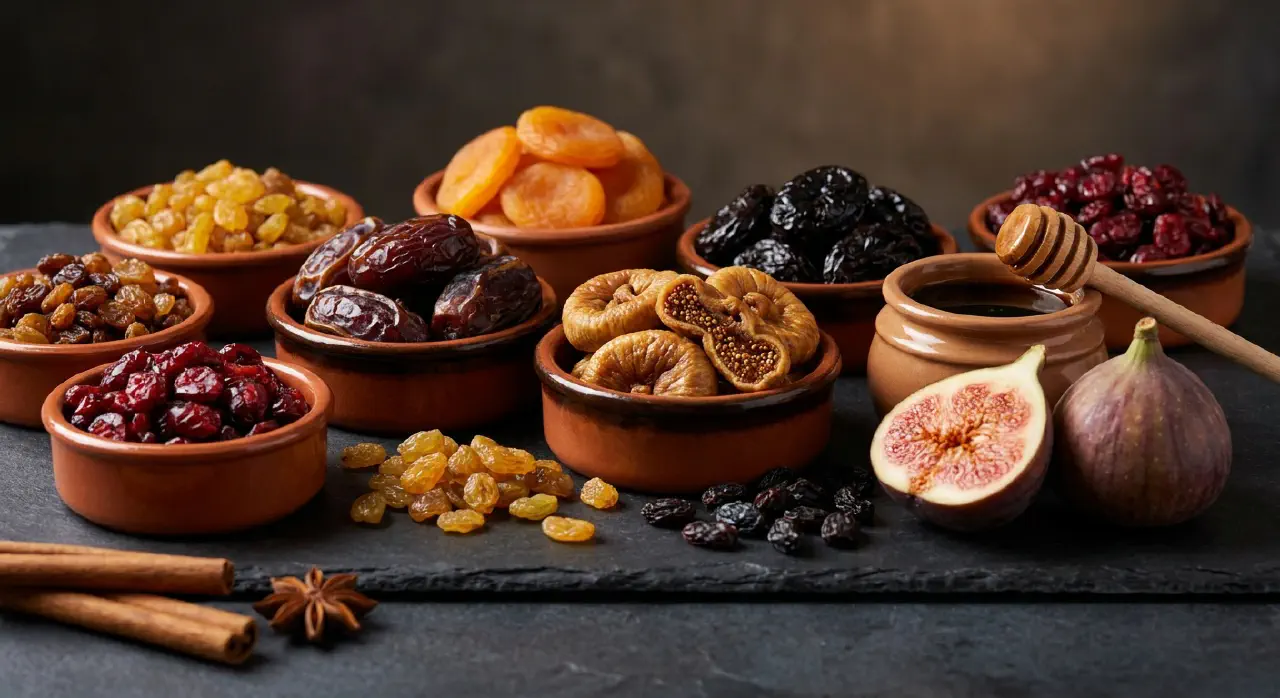
Drying is among the oldest preservation methods, reducing fruit to 15–25% moisture where microbial growth is inhibited and shelf life extends from days to months or years. The process concentrates sugars dramatically — dried dates reach 60–80% sugar — and drives two types of browning reactions (enzymatic oxidation of phenolics and Maillard reactions between sugars and amino acids) that generate complex caramel, roasted, and spice notes absent in the fresh fruit.
Stone Fruits
Stone Fruits
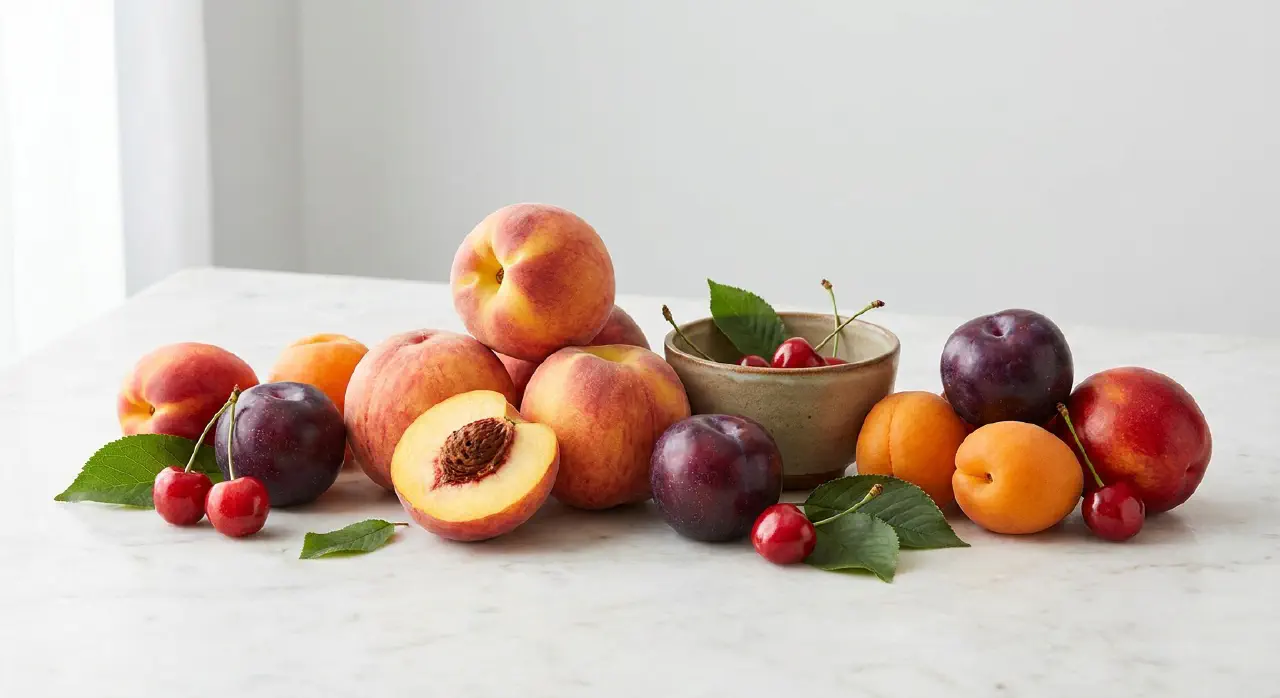
All species of genus Prunus in the rose family, defined by a stone-hard shell surrounding a single large central seed. Mostly Asian in origin, with ~15 species found across the northern hemisphere. The critical difference from their pome fruit relatives: stone fruits do not store starch — they cannot get sweeter after harvest. Ripening continues post-harvest (softening, aroma development), but the sugar level is locked in at picking. This makes them more seasonal and more dependent on good sourcing than the storable, sweetening pome fruits.