Cream
Cream
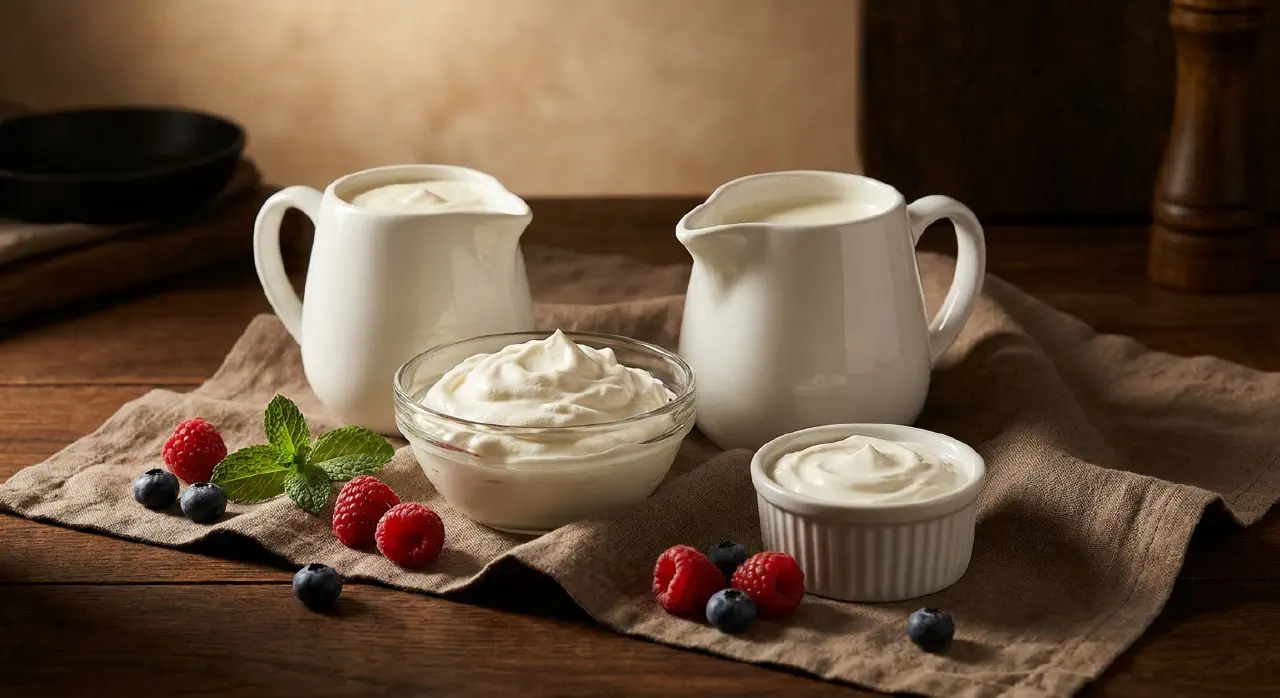
Cream is the fat-enriched portion of milk — the same emulsion, just with more fat globules per unit of water. This concentration is what gives cream its heat stability, whipping ability, and unmatched utility in sauce-making.
Types by fat content
The fat percentage defines what cream can do:
- Half-and-half (10–20% fat): Borders between milk and cream. Cannot whip. Curdles more easily than heavier creams.
- Light/whipping cream (30–36% fat): Can whip to soft peaks. Adequate for many sauces.
- Heavy/whipping cream (36–40% fat): The kitchen workhorse. Whips to stiff peaks. Survives boiling, reduction, and acidic ingredients.
- Double cream (40–48% fat): Very rich, whips to very stiff peaks. Clotted cream (55%+) is an extreme — cream heated slowly to 180°F/82°C until a thick layer of coagulated protein and concentrated fat forms on the surface.
Whipping science
Whipping cream is an exercise in controlled emulsion disruption. When a whisk incorporates air:
Egg Foams
Egg Foams
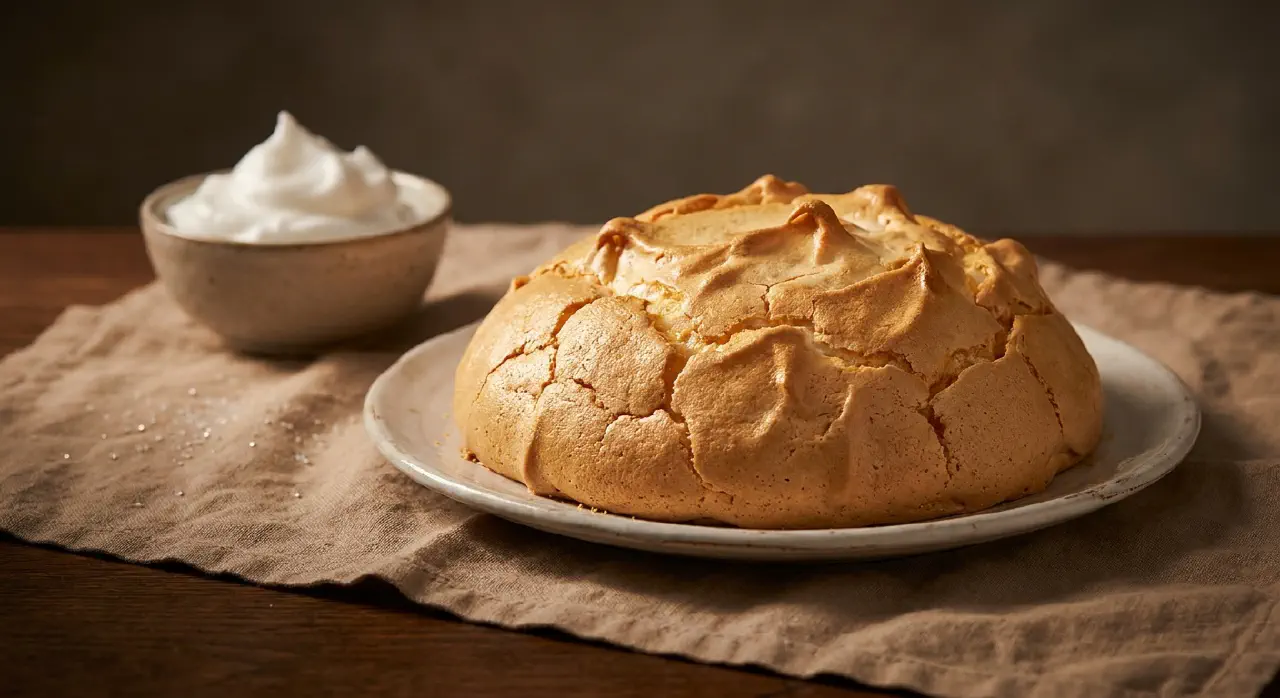
An egg foam is a mass of air bubbles stabilized by a protein network — a structure unique to egg whites. When whisked, egg white proteins unfold at the air-water interface and bond into a continuous film that reinforces bubble walls, turning a liquid into a semi-solid that can hold its shape against gravity. This is the basis of meringue, soufflé, angel food cake, mousse, and many other preparations.