Meat Aging
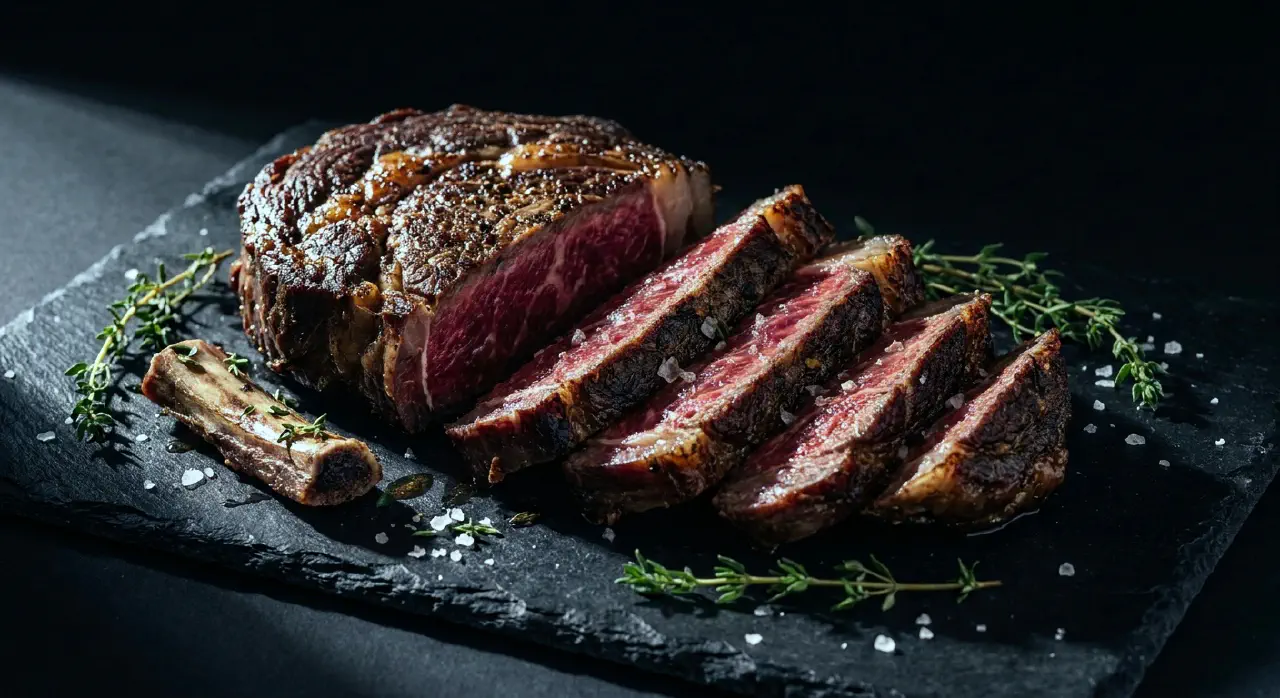
Aging is the controlled enzymatic breakdown of meat after slaughter. While popularly understood as a tenderizing process, its primary benefit is flavor development - enzymes convert large, flavorless molecules into small, intensely savory ones. The tenderizing effect is secondary and largely resolves within the first few days.
Rigor mortis
Immediately after slaughter, muscles are relaxed and extremely tender - if cooked within the first hour or two, the meat would be exceptionally soft. But this window closes quickly: once muscle energy (ATP) is depleted (within ~1 hour for lamb, pork, and chicken; ~2.5 hours for beef), the contractile filaments lock permanently. This is rigor mortis.
Carcasses are hung to stretch most muscles during rigor, preventing the tight filament bonding that would make meat exceptionally tough. Proper temperature control during this phase is critical - poor handling may explain some of the excessive toughness in retail meats.
Enzyme activity
Starting ~12 hours post-slaughter, two families of protein-digesting enzymes begin dismantling the locked muscle structure:
Calpains attack the frameworks holding the contractile filaments in place. The filaments remain locked but the overall structure weakens - the meat softens. Calpains begin denaturing around 105°F/40°C.
Cathepsins are more aggressive: they break apart the filaments themselves and also weaken collagen cross-links (meaning aged meat’s collagen dissolves into gelatin more readily during cooking, with less moisture loss). Cathepsins begin denaturing around 122°F/50°C.
This has a practical implication: slow cooking at low temperatures (below the enzyme denaturing points) effectively accelerates aging. A large roast cooked slowly for 10+ hours benefits from hours of enzyme activity before the enzymes are finally inactivated. A 50-pound steamship round can be made tender in 10 hours of slow roasting - work that would take weeks of cold-storage aging.
Flavor development: the primary benefit
Aging’s most important contribution is not tenderness but flavor. The same enzymes that weaken structure also break large molecules into small, flavorful fragments:
Proteins → savory amino acids and short peptide chains (sweet, salty, savory tastes). In dry-cured hams, glutamic acid rises 10–20-fold during months of aging.
ATP (the energy currency molecule) → IMP (inosine monophosphate), which is intensely savory - one of the most potent natural umami compounds.
Glycogen → sweet glucose.
Fats and membrane molecules → aromatic fatty acids.
During subsequent cooking, all these breakdown products react further, enriching the aroma far beyond what unaged meat can produce.
Dry aging
The premium method for beef. Whole sides hang unwrapped at 34–38°F/1–3°C and 70–80% relative humidity for up to one month. Cool temperature limits microbial growth; moderate humidity allows gradual moisture evaporation. The result is concentrated flavor and developed aromatics.
Trade-offs are significant: ~20% weight loss from evaporation and surface trimming (mold, rancidity), expensive cold storage space, and substantial labor. This is why dry-aged beef commands a premium.
Wet aging
The modern standard: meat stays in vacuum-wrapped plastic for days to weeks. Enzymes work in the oxygen-free environment, developing some flavor and tenderness - but without the moisture loss that concentrates flavor. Wet aging produces a less complex result than dry aging. Most retail meat is wet-aged incidentally during the 4–10 day distribution window.
Practical aging guidelines
Chicken: Benefits from 1–2 days. Quick tenderizing.
Pork and lamb: About 1 week optimal. Longer risks rancidity from their more unsaturated fats.
Beef: Flavor and texture improve for up to 1 month. Beef fat is the most saturated of common meats, tolerating long aging.
Freezing
Freezing halts biological processes but causes its own damage: growing ice crystals puncture cell membranes, and upon thawing the meat leaks fluid (salts, vitamins, proteins, pigments). The result is drier, denser, tougher cooked meat. Minimizing damage requires freezing as rapidly as possible, keeping temperature as low as possible (-22°F/-30°C is substantially better than 0°F/-18°C), and dividing meat into small pieces.
Fat rancidity is accelerated by freezing (ice crystal formation concentrates oxidation-promoting salts). Quality decline timelines: fish and poultry a few months, pork ~6 months, lamb and veal ~9 months, beef ~1 year. Ground and cooked meats deteriorate even faster.
See also
- meat - structure, fibers, and collagen
- meat-flavor - the biochemical sources of meat taste
- meat-cooking - how enzyme activity during slow cooking acts as accelerated aging
- meat-curing - preservation methods that also transform flavor through enzyme activity
- fermentation-overview - the related microbial transformation of food