Yogurt and Fermented Dairy
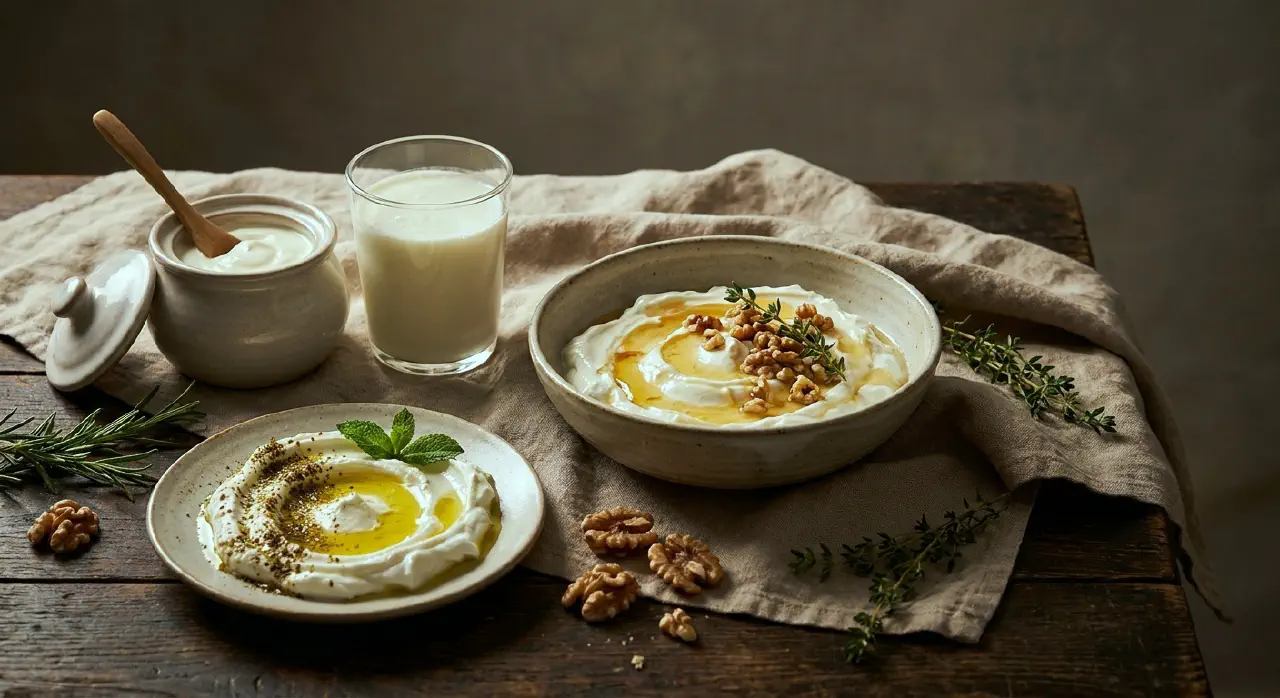
Fermented dairy products - yogurt, sour cream, crème fraîche, kefir - are milk or cream transformed by lactic acid bacteria. The bacteria convert lactose to lactic acid, which drops the pH, coagulates casein proteins, thickens the liquid, and generates tangy flavor. The result is more digestible (lower lactose), longer-lasting (acid inhibits pathogens), and more flavorful than the starting milk.
The fundamental reaction
Lactic acid bacteria (LAB) - primarily Lactobacillus and Streptococcus species - consume lactose and excrete lactic acid. As pH drops from milk’s neutral 6.6 toward 4.5, casein micelles lose their electrical charge, clump together, and form a gel that traps water. This is the same acid coagulation used in fresh cheese making, just stopped at a different point.
Temperature controls everything: Thermophilic cultures (yogurt) work at 110°F/43°C and ferment in 4–8 hours. Mesophilic cultures (crème fraîche, buttermilk) work at 68–77°F/20–25°C and take 12–24 hours. Even a 5°F variation changes timing significantly.
Yogurt
Yogurt is milk fermented by Lactobacillus bulgaricus and Streptococcus thermophilus to at least 0.9% lactic acid.
A critical preparation step: heating milk to 180°F/82°C for 30 minutes before fermentation denatures whey proteins, which then bond to casein micelles and to each other, producing a smoother, thicker gel. Skip this step and yogurt is thinner and grainier. Higher pre-heat temperatures yield firmer yogurt.
Texture range: Short fermentation (3–4 hours) produces thin, drinkable yogurt. Longer fermentation (6–8 hours) produces thick, spoonable yogurt. Greek-style yogurt is strained after fermentation to remove whey, concentrating protein and fat. Over-fermentation (8–12+ hours) causes casein to shrink and expel whey - the separated liquid on top of old yogurt.
Flavor: Primarily lactic acid (sour), with secondary compounds including diacetyl (buttery), acetic acid (slight vinegar note), and acetaldehyde. Fat suppresses sourness perception - full-fat yogurt tastes less sour than nonfat at the same pH. Cold also suppresses sour perception.
Sour cream vs. crème fraîche
These two products illustrate how fat content determines cooking behavior:
| Sour cream | Crème fraîche | |
|---|---|---|
| Fat | 18–20% | 35–48% |
| Sourness | Moderate-tangy | Mild |
| Heat stability | Low - curdles in hot sauces | High - survives boiling |
| Flavor | Simple tang | Complex, buttery |
The heat stability difference is the practical punchline. Sour cream’s lower fat content means less protection for its casein proteins - they coagulate and curdle at 160–170°F/71–77°C when acid is present. Crème fraîche, with twice the fat, insulates its proteins and can be reduced, boiled, and added to acidic sauces without breaking.
In practice: Use crème fraîche in hot sauces and soups. Add sour cream as a last-minute enrichment (off heat) or in baking, where its acid activates baking soda for lift.
Lactose and fermentation
Fermentation reduces lactose significantly: yogurt retains only 1–2% lactose (bacteria consumed 50–80% of the original). Longer fermentation reduces it further. This is why many lactose-intolerant people tolerate yogurt and aged cheese - the microbes have already done the digestion.
See also
- milk - the starting material and the casein coagulation that fermentation triggers
- cream - the fat-content spectrum that determines heat stability
- cheese - the next step beyond simple fermentation: curd handling and aging
- fermentation-overview - the broader science of microbial food transformation
- butter - cultured butter uses the same lactic acid bacteria
- precision-fermentation - temperature control in fermentation