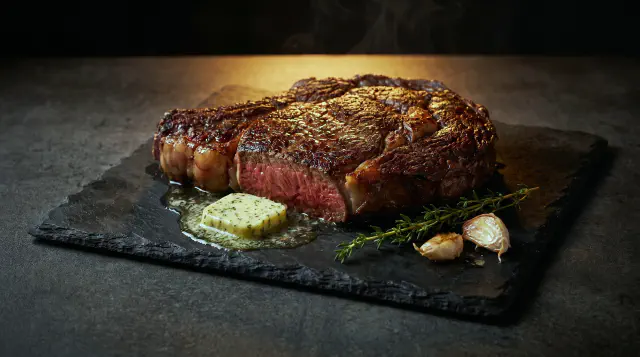
Sous Vide Filet Mignon
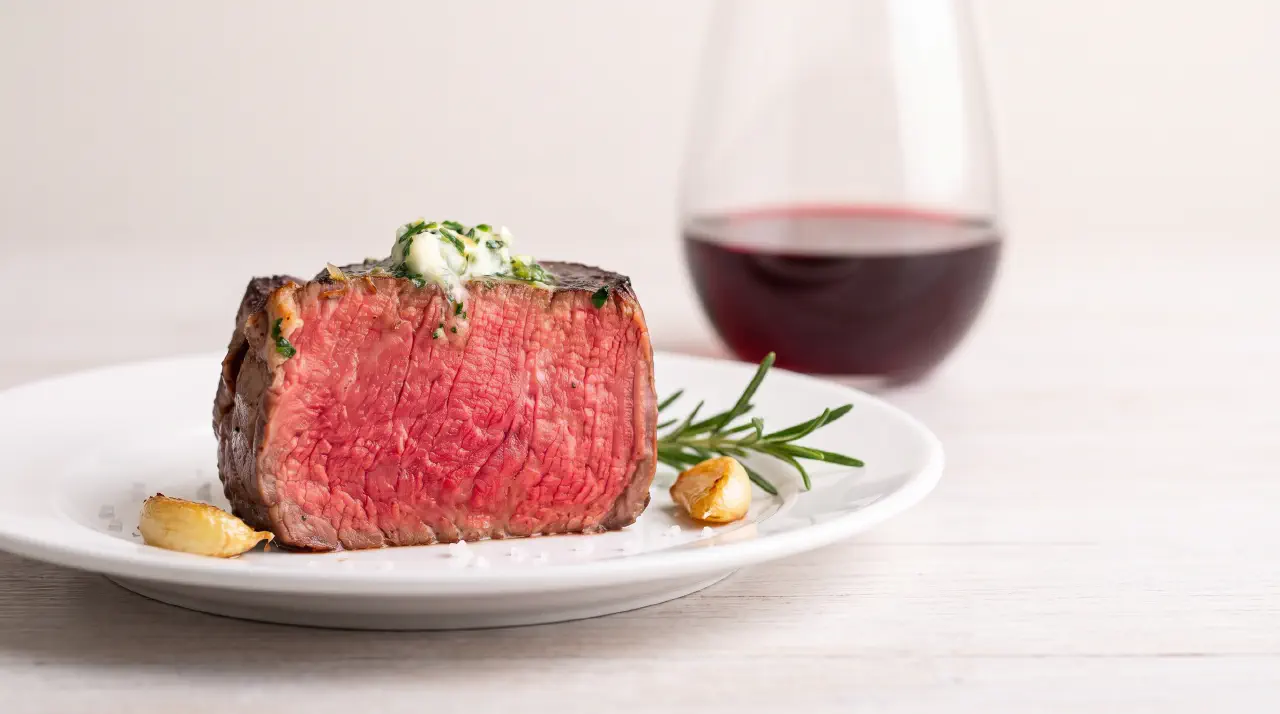
Sous Vide Filet Mignon
Filet mignon is cut from the tenderloin, the most tender part of the cow and the one with the least fat to protect it from overcooking. Sous vide solves that problem directly: the steak sits in a precisely heated water bath until it reaches a single, even temperature all the way through, then gets a fast, hard sear in a hot pan just to build a crust. Salt, pepper, and a little garlic and rosemary tucked into the bag are the only additions the meat needs.
The steak goes into a vacuum bag (or a zip-top bag with the air pressed out by hand) and into water held at a steady 130°F (54°C) for an hour - no watching, no probing, no guessing whether the middle caught up with the outside. Once it’s out of the bath, it gets patted bone-dry, dropped into a screaming-hot skillet for well under a minute per side, and finished with butter spooned over the top.
The result is a steak that’s the same rosy pink from the crust to the center, with a texture closer to butter than to meat. The flavor is clean and mildly beefy rather than boldly savory - filet trades the fatty, mineral punch of a ribeye for tenderness - so the browned crust from the sear and the richness of the butter baste carry most of the taste. Because filet carries almost no marbling, precision matters more here than with a fattier cut like ribeye - a few degrees too high and the meat turns dry rather than merely more done.
Sous vide steak cookery is a fairly recent kitchen habit, borrowed from restaurant technique once immersion circulators became affordable for home cooks, but the instinct behind it - cook gently, then sear hard - is as old as pan-searing itself. Filet mignon in particular rewards it, since there’s so little fat to give any margin for error with other methods.
This is a small, occasion kind of dinner - steakhouse food without the reservation. Pair it with something that can stand up to the richness of the butter: a baked or mashed potato, a simple green salad, or roasted asparagus. A glass of red wine doesn’t hurt either.
Ingredients
Serves 4
- 4 filet mignon steaks (170-225 g each), 2.5-4 cm thick
- 2 tsp kosher salt, about 1% of the meat’s weight
- freshly cracked black pepper
- optional: 2 garlic cloves, smashed
- optional: 4 sprigs fresh rosemary (or thyme)
- 2 tbsp high smoke point oil (avocado, canola, or vegetable oil, not olive oil), for searing
- 2-3 tbsp unsalted butter, for basting
Directions
Season the steaks generously on all sides with the kosher salt and freshly cracked pepper. If using the garlic and rosemary, tuck them into the bag with each steak - they’re optional, but they layer in real flavor during the bath.
Vacuum seal each steak, or use a zip-top freezer bag and the water displacement method to press out the air. Preheat the water bath to 130°F (54°C), the tightest and most reliable medium-rare target for filet, which has almost no fat and dries out fast if pushed higher. Stay within 129-133°F (54-56°C) if you prefer it a shade rarer or more done, but don’t go past 135°F (57°C).
Lower the bagged steaks into the bath and cook for 1 hour. That’s enough time to bring a 1 to 1.5-inch steak fully up to temperature edge to edge. The bath can hold them safely for up to 4 hours if you need to time things around a side dish, but there’s no tenderizing benefit to leaving them in longer - filet is already tender going in.
Remove the steaks from the bags and pat them completely dry with paper towels. Any surface moisture will steam in the pan instead of searing, and a dry surface is the only thing standing between you and a real crust.
Heat the oil in a cast iron or other heavy skillet over high heat until it’s just short of smoking, about 5 minutes. Sear the steaks 45 seconds to 1 minute per side, flipping every 15 to 30 seconds if that helps build even color, until both sides are deeply browned.
In the last 30 to 60 seconds, add the butter to the pan along with the reserved garlic and rosemary, if using. Tilt the pan and spoon the melted butter over the steaks continuously as it foams.
Serve right away. Sous vide steaks don’t need to rest - the interior is already one even temperature from edge to edge, so there’s no gradient left to equalize the way there is after a conventionally seared steak.
Notes
The 129-133°F (54-56°C) range is narrower than a general “sous vide steak” chart, which often stretches up to 135°F (57°C) for medium-rare. Filet has almost none of the intramuscular fat that buffers moisture loss in cuts like ribeye or strip, so it dries out faster at the same nominal doneness.
Don’t leave the steak in the bath for hours thinking it needs to tenderize. Filet is already the most tender cut on the animal - the bath’s only job is bringing it evenly to temperature, and extra time past 4 hours risks a mushy texture, not extra tenderness.
Skip the garlic and rosemary if you’d rather keep it simple. Plain salt and pepper is how most sources actually serve this steak, and the aromatics are a flavor option, not a technique requirement.
Don’t substitute olive oil for the sear. Its smoke point is too low for the near-smoking-hot pan this technique needs, and it will burn before the crust forms.
See Also
Beef Cuvette - Red Meat Sous Vide
English beef
Rib-Eye Steak
Steak - Cooking Methods Guide