Sous Vide Flank Steak
Sous Vide Flank Steak
Flank steak comes from the cow’s abdominal wall, a long, flat, well-worked muscle that’s lean, beefy, and prone to turning chewy if you’re not careful with it. It’s the cut behind carne asada and countless American cookouts, always sliced thin against the grain to keep it tender on the plate. Cooking it sous vide takes the guesswork out of that balance: a precise water bath cooks the steak evenly from edge to edge, and a hot sear at the end supplies the crust a pan alone can’t guarantee on a thin, irregular piece of meat.
The water bath runs at 131°F (55°C), the medium-rare mark for beef, held for two to four hours. That window does double duty: it’s long enough to loosen up flank steak’s tougher fibers, but short of the point where the texture turns soft and mushy. Some cooks push the same temperature out to seven hours or more for a meal-prep style, fall-apart tenderness, but the shorter cook keeps some bite, which is closer to how flank steak is meant to eat.
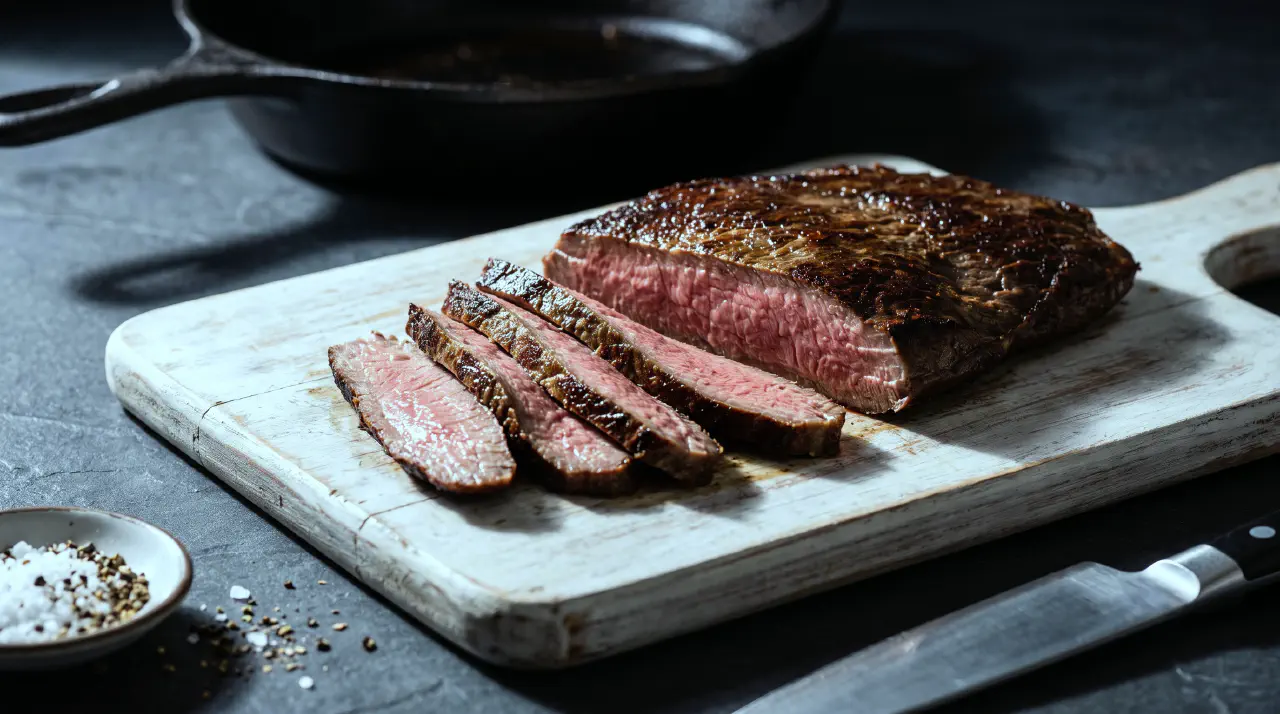
Once the steak comes out of the bag, it gets patted bone dry and dropped into a screaming hot cast iron pan or grill for less than a minute per side, just long enough to build a deep brown crust without pushing the interior past medium-rare. A short rest, then thin slices cut squarely against the grain, is what turns a lean, tough cut into something tender enough to eat with a fork.
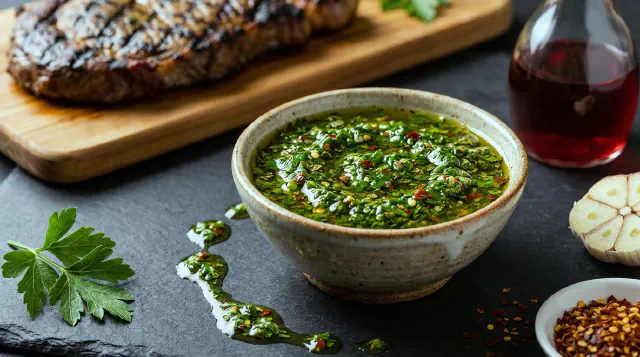
Keep the seasoning simple, just salt, pepper, and a little garlic powder, so the beef’s own flavor comes through. Sliced steak like this sits well with warm tortillas, rice and beans, or roasted vegetables, and pairs particularly well with something acidic or herbaceous alongside it: chimichurri, a compound butter, or a horseradish sauce all work against the lean, mineral flavor.
Ingredients
Serves 4
- 900 g flank steak
- 2 tsp kosher salt
- 1 tsp black pepper, freshly ground
- 1 tsp garlic powder (optional)
- 1 tbsp avocado oil (or other high-smoke-point oil), for searing
Directions
Preheat a water bath to 131°F (55°C) using an immersion circulator.
Season the flank steak generously on both sides with the kosher salt, black pepper, and garlic powder if using. Seal it in a vacuum bag, or a zip-top freezer bag using the water-displacement method, cutting the steak in half first if it won’t lie flat without overlapping.
Submerge the bag and cook for 2 to 4 hours, with 3 hours as a good default. Don’t go much past 4 hours if you want the steak to keep some bite; for a more meal-prep style texture, the same 131°F (55°C) bath can run 7 to 24 hours instead, though the trade-off is a softer, more fall-apart texture.
Take the bag out of the bath and let it rest at room temperature for 5 to 10 minutes before opening. This keeps the thin steak from overcooking once it hits the hot pan. Remove the steak and pat it completely dry with paper towels; a dry surface is what lets it sear instead of steam.
Heat a cast iron pan or grill until smoking hot, add the avocado oil, and sear the steak for 30 to 60 seconds per side, until a deep brown crust forms.
Let it rest briefly, then slice thinly against the grain and serve right away.
Notes
If you set the bath below 130°F (54°C), say 129°F (54°C) for a touch less doneness, keep the cook under about 2.5 hours for food safety.
A dry herb rub of oregano, rosemary, or thyme can stand in for or supplement the pepper and garlic powder; if using dried herbs, cut the amount to about a third.
Scoring the steak in a shallow diagonal crosshatch on both sides before seasoning helps the rub penetrate, a variation worth trying if you have the time.
Chimichurri, a compound butter, or a horseradish sauce all pair well with flank steak’s lean, beefy flavor.
See Also
Air Fryer Flank Steak with Chimichurri
Beef Cuvette - Red Meat Sous Vide
Chimichurri
Rib-Eye Steak