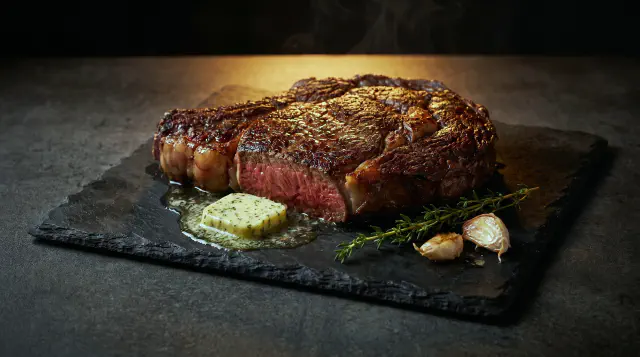
Sous Vide Flat Iron Steak
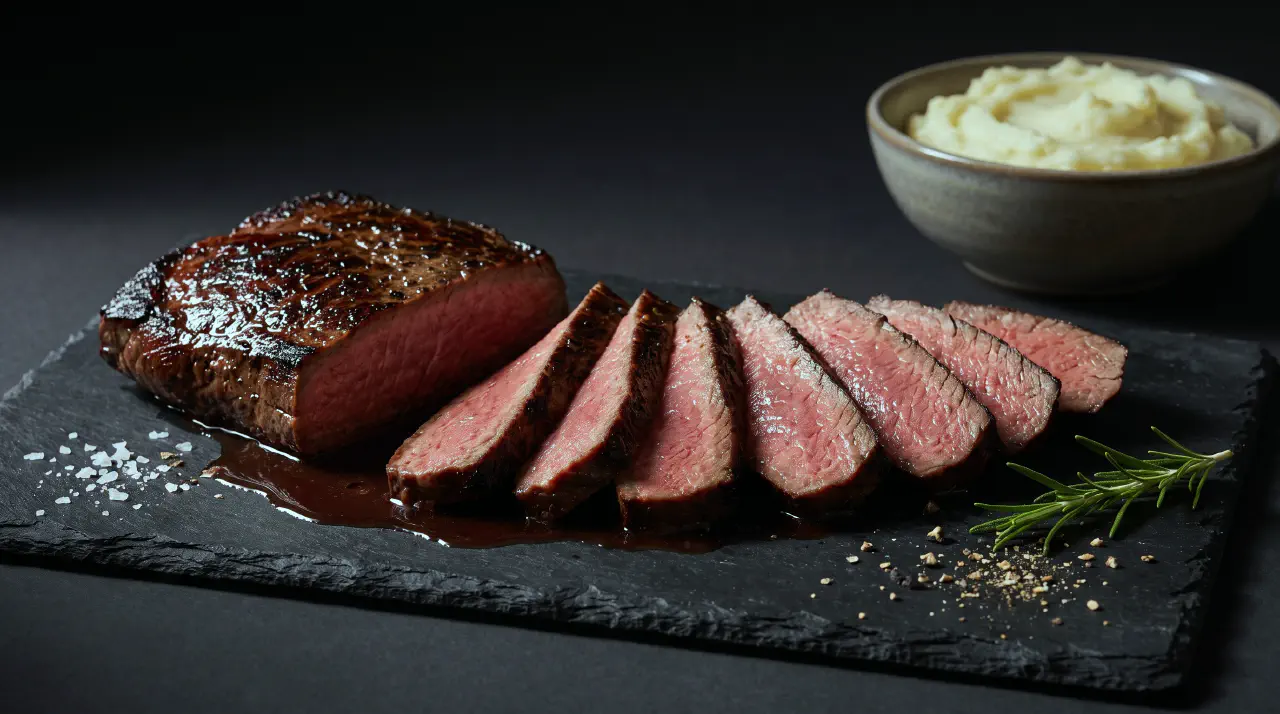
Sous Vide Flat Iron Steak
Flat iron steak comes from the shoulder, cut from the top blade muscle after a butcher removes the tough band of connective tissue running through its center. That trimming step is what makes the cut work at all: once the sinew is gone, what’s left is one of the most tender pieces of beef on the animal, second only to the tenderloin, at a fraction of the price. It’s a genuinely modern cut, identified and named in the early 2000s through beef research at the University of Nebraska and the University of Florida, so there’s no old-world tradition riding on how it’s cooked, just the beef itself and whatever technique gets the best out of it.
Sous vide is a natural fit. The steaks go into a bag with salt, pepper, and maybe a sprig of rosemary or thyme, then into a water bath held at a steady 131°F (55°C), the medium-rare mark for beef. Once the bath has done its work, the steak comes out, gets patted completely dry, and goes into a screaming-hot pan just long enough to build a crust. No probing, no guessing at doneness, no risk of a gray band under the surface.
How long the bath runs depends on what you want from the meat. A quick 2 to 4 hours brings the steak evenly up to temperature and nothing more, closer to how a well-trimmed flat iron behaves on a grill. Stretching the same 131°F (55°C) bath out to around 24 hours, with a safe range of 16 to 48 hours, gives the connective tissue time to break down into gelatin, which turns a merely tender steak into something closer to melt-in-the-mouth. Neither approach is more correct than the other; it comes down to how carefully your flat iron was trimmed and how much time you’ve got.
However it’s cooked, sliced flat iron eats beefy and tender, with a fine grain that takes well to a knife. Serve it over a simple salad of baby kale, sherry vinegar, and shaved Parmesan for something light, or deglaze the searing pan with red wine and finish it with cold butter for a quick sauce alongside mashed potatoes. The quick version suits a weeknight; the long bath is better started the night before for a dinner that needs almost no last-minute attention.
Ingredients
Serves 4
- 4 flat iron steaks (170-225 g each; or one 700-900 g whole flat iron, cut into portions)
- 2 tsp kosher salt, about 1% of the meat’s weight
- black pepper, freshly ground, to taste
- 15 ml neutral high-smoke-point oil (vegetable, canola, or refined avocado oil), for searing
- 4 sprigs fresh rosemary, optional (or thyme)
Directions
Preheat a sous vide water bath to 131°F (55°C) for medium-rare. Pat the steaks dry, then season them generously with the kosher salt and black pepper. Tuck in the rosemary or thyme if using.
Vacuum-seal the steaks, or use a zip-top bag and the water-displacement method, one steak per bag or all of them together in a single layer. Submerge the bag and choose one of two cook times: a quick 2 to 4 hours for steak-like doneness with no extra tenderizing, or a longer 24 hours (anywhere from 16 to 48 hours works) to dissolve the cut’s connective tissue into gelatin for a noticeably more tender result. Both hold safely at 131°F (55°C) for their full range.
Take the bag out of the bath. If you ran the quick cook, an optional brief ice-bath chill firms the steak back up before searing, which helps since flat iron is often cut thin; skip this step if you ran the long cook, since the meat has already had plenty of time to firm and rest. Remove the steak from the bag and pat it completely dry with paper towels - this is what lets it sear instead of steam.
Heat the neutral oil in a cast-iron or other heavy skillet until it’s just short of smoking. Sear the steak 1 to 2 minutes per side, or as little as 30 to 60 seconds per side if it went through the 24-hour bath, since by then it only needs color and not more cooking. Sear the edges too if the steak is thick, and work in batches if the pan is crowded.
Let the steak rest for 1 to 2 minutes - sous vide steak doesn’t need a long rest, since the interior is already one even temperature edge to edge. Slice against the grain into half-inch slices and serve.
Notes
The two cook times aren’t interchangeable shortcuts for each other, they’re two different results. Quick (2-4 hours) gives you steak-like doneness and texture with no tenderizing effect, a good match for a well-trimmed flat iron or a weeknight timeline. Long (about 24 hours, safely anywhere from 16 to 48) breaks down the connective tissue into gelatin for a more tender bite, and is the better choice for a less carefully trimmed steak or when the bath can run overnight unattended.
131°F (55°C) is the medium-rare target. For medium, raise the bath to 136°F (58°C); for medium-well, use 141°F (60.5°C) - the same time logic applies at either temperature. If running the long cook, don’t set the bath below about 130°F (54.4°C); extended cooks at lower temperatures don’t reliably pasteurize the meat, while 12 hours or more at 131°F (55°C) does.
A marinade of balsamic vinegar, olive oil, soy sauce, garlic, green onion, thyme, and mustard can go straight into the bag before the bath without changing the temperature or time - it’s a flavor variation only, not a different technique.
See Also
Beef Cuvette - Red Meat Sous Vide
Rib-Eye Steak
Steak - Cooking Methods Guide