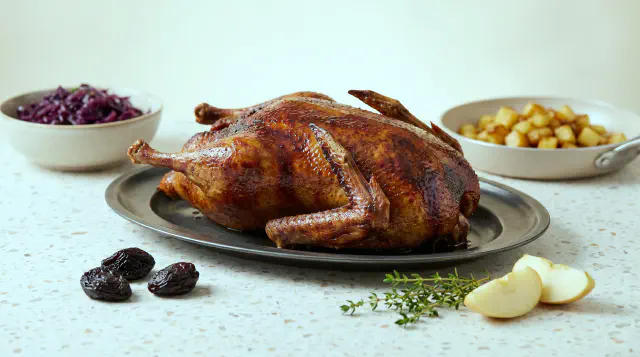
Sous Vide Roast Duck
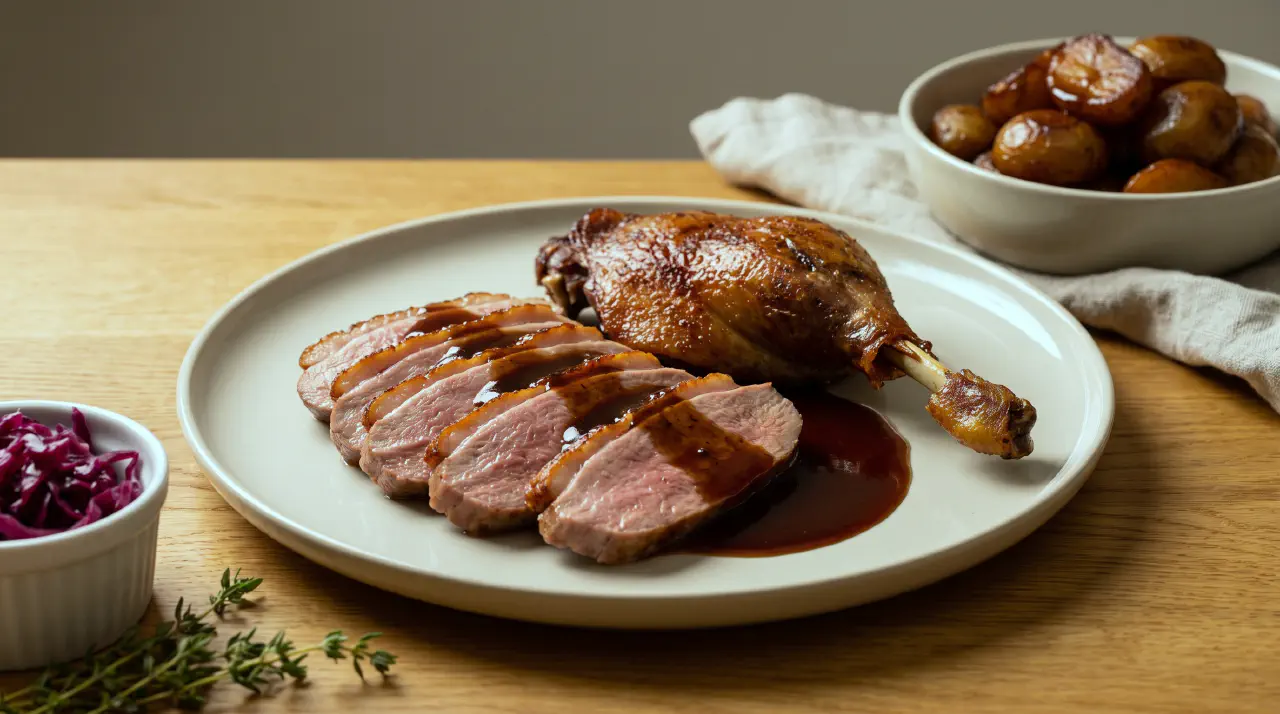
Sous Vide Roast Duck
Sous vide roast duck is the Danish answer to an old problem: how do you get both a juicy, pink duck breast and tender, falling-apart duck legs from the same bird, when the two cuts really call for quite different degrees of doneness? The answer is to split the duck into breasts and legs, then cook each separately in its own water bath at exactly the temperature and time that suits that particular cut.
The method is as precise as it sounds. The meat is seasoned with salt equal to about 0.8 percent of its own weight, along with pepper and fresh thyme, then vacuum-sealed in two separate bags. The breast is cooked at 136°F (58°C) for 2 hours, while the legs are cooked far longer, at 149°F (65°C) for at least 12 hours, so the tough connective tissue has time to turn tender. Finally, the skin is crisped in a very hot pan in duck fat, just before serving.
The result is a breast that stays lightly pink and juicy like a good steak, and legs that fall off the bone like a confit - something a classic oven-roasted duck can rarely deliver at the same time, because the legs typically need longer than the breast can take without itself turning dry and overcooked.
Roast duck is inseparable from the Danish Christmas season. It is a fixed tradition on Christmas Eve and on Mortensaften (St. Martin’s Eve) on 10 November, where - together with goose - it is one of the two birds that define the Danish autumn and winter dinner. The sous vide method is a modern shortcut to the same result, without the risk of scorching or drying out the meat along the way.
Serve sous vide roast duck as you would any other Christmas duck: sliced, with caramelized potatoes, white cabbage or red cabbage, a sauce made from the collected cooking juices, and ideally pickled red cabbage or pickled cucumber alongside to cut through the rich meat.
Ingredients
Serves 6
The Breast
- 3 duck breasts (about 1050 g total)
- 8 g salt (0.8% of the meat’s weight)
- freshly ground black pepper
- 2-3 sprigs fresh thyme
The Legs
- 3 duck legs (about 1200 g total)
- 10 g salt (0.8% of the meat’s weight)
- freshly ground black pepper
- 3-4 sprigs fresh thyme
To Serve
- 3-4 tbsp duck fat (or butter), for crisping
Directions
The Breast
Score the skin on the duck breasts in a tight, fine crosshatch pattern down to the fat layer, without cutting into the meat itself - this helps the fat render off better during the later searing and gives a crisper result. Weigh the breasts and rub them with the salt, freshly ground pepper and thyme. Lay them in a single vacuum bag in one layer with a little space between them, and set the bag aside in the fridge while the legs get going.
About 2 hours before serving, lower the duck breasts into a water bath at 136°F (58°C) and cook for 2 hours. Keep the time and temperature precise - if the breast goes longer than 2-2½ hours or above 144°F (62°C), the texture of the meat turns soft and livery instead of juicy and lightly pink.
The Legs
Score the skin on the duck legs the same way as the breasts, in a fine crosshatch pattern down to the fat layer. Rub the legs with the salt, freshly ground pepper and thyme, and vacuum-seal them in their own bag, separate from the breasts, since the two cuts need very different cooking times.
Lower the legs into a water bath at 149°F (65°C) and let them cook for at least 12 hours, so the connective tissue in the meat breaks down and the legs turn tender and fall off the bone. For an even more confit-like texture, the time can be extended to 18-24 hours without changing the temperature. Start the legs in good time so they are done when the breasts go into their own bath about 2 hours before serving.
To Serve
Take both breasts and legs out of the bags and pour the cooking juices from each bag into a saucepan - they form the base for the sauce, so never throw them out. Pat the pieces of meat thoroughly dry with paper towels; the drier the skin, the better it crisps in the pan.
Heat the duck fat in a very hot pan. Place the breasts and legs skin-side down and sear for 2-3 minutes, until the skin is crisp and golden-brown. Turn the pieces and give the meat side another minute, so everything is just heated through without cooking the meat any further.
Let the meat rest for a couple of minutes before slicing the breast across the grain. Serve breast and legs together as roast duck, with the reduced cooking juices as sauce and traditional sides such as caramelized potatoes, white cabbage, red cabbage, and pickled red cabbage or pickled cucumber.
Notes
If you prefer a whole, deboned duck for a more traditional presentation at the table, the backbone and ribs can be cut free so the duck can be folded flat and, if you like, filled with a sautéed mixture of apple, prune, onion and thyme before it’s vacuum-sealed whole. It’s then cooked at 154°F (68°C) for 6 hours and crisped afterward in a very hot oven at 480°F (250°C) for 10-20 minutes instead of in the pan. This method takes more butchery and a longer overall cooking time, but gives a classic whole-roast experience.
The carcass, wings and trimmed-off skin can be saved for duck stock or rendered into duck fat, which is used both for the crisping and to cook further sides such as caramelized potatoes and red cabbage.
See Also
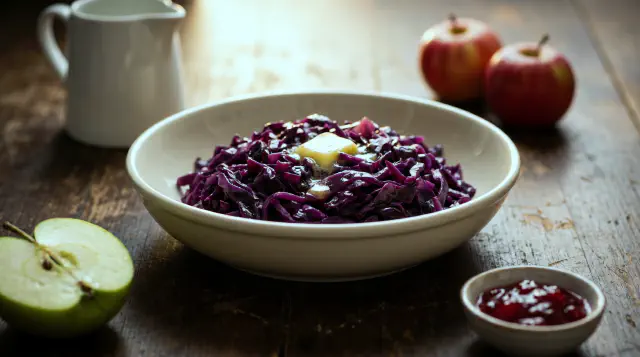
Braised Red Cabbage
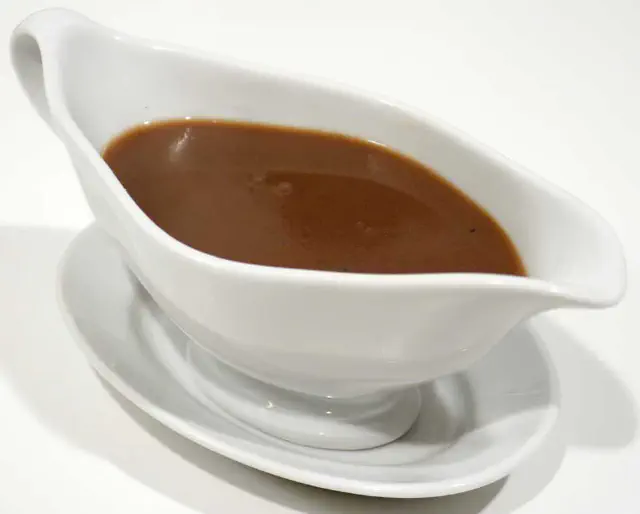
Duck Sauce for Christmas Eve
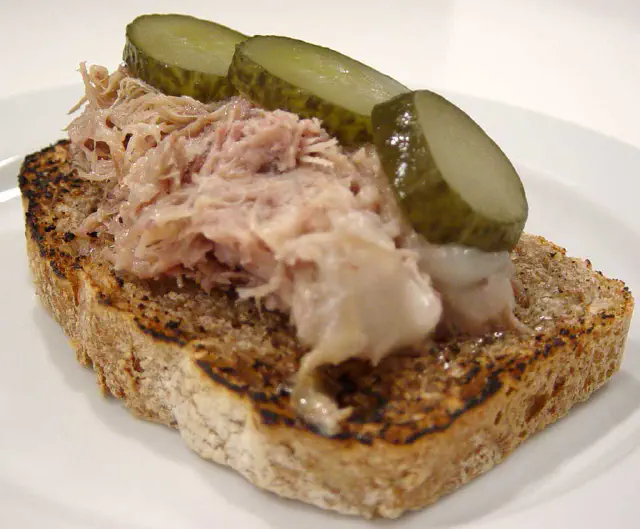
Rillette of Duck - Duck Rillette - Rillette de Canard
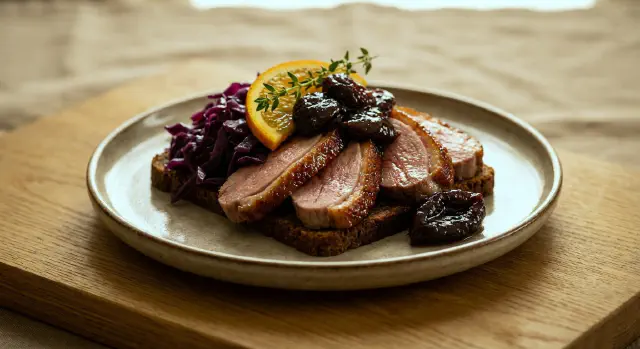
Smørrebrød with Roast Duck, Red Cabbage and Prune Compote