Sous Vide Salmon
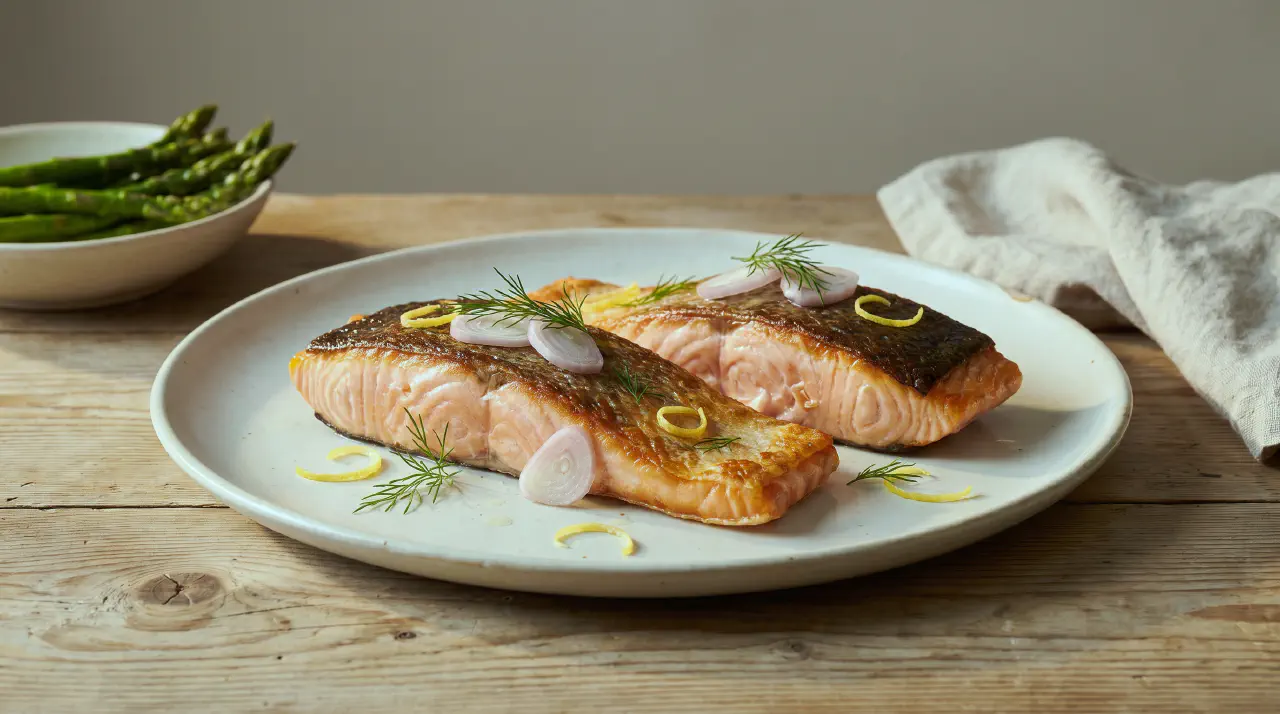
Sous Vide Salmon
Sous vide solves the one problem that dogs almost every other way of cooking salmon: a thin edge that’s overdone long before the center catches up. A precision water bath holds the fish at a single exact temperature for the whole cook, so a fillet comes out the same doneness edge to edge, with none of the dry gray band that forms under the skin in a hot pan or oven. The result is rich and buttery rather than dry or fishy - all of salmon’s natural sweetness intact, with none of the toughness overcooking brings out.
The method itself is simple. The fillets get a dry-brine of salt, go into a bag with a little oil and maybe a sprig of something, and spend half an hour or so in the bath before a fast, hot sear puts color and a bit of crackle back on the skin. None of this is a heritage technique - it’s a modern, restaurant-born method that home cooks picked up once immersion circulators got affordable - so there’s no “traditional” version to chase, just a bath temperature to pick. It’s easy enough for a weeknight once the bath is running, and precise enough to plate for guests.
That temperature is really the whole recipe. Lower settings give a soft, almost sashimi-like fillet that’s barely past raw in the center; the classic sous vide result sits a little higher, translucent and just starting to flake; and pushing higher still gives a firmer, more conventionally “cooked” piece of fish. None of those are wrong - it’s a matter of what you want on the plate, not a right and wrong way to do it.
One thing is worth knowing before you start: the gentlest settings don’t get the fish hot enough, for long enough, to pasteurize it, so the salmon itself needs to be good enough to eat raw. More on that below.
Serve it hot straight off the sear with something simple on the side - boiled potatoes, a green salad, blanched asparagus - or skip the sear altogether and let the fillets cool for flaking into a salad or a grain bowl.
Ingredients
Serves 4
- 4 salmon fillets, skin-on and pin bones removed, 140-170 g each, cut about 2.5 cm thick
- 1½ tsp fine sea salt (or kosher salt), divided
- 2 tbsp extra-virgin olive oil, divided
- fresh thyme sprigs (or dill sprigs), optional
- shallot, thinly sliced, optional
- lemon zest (or other citrus zest), optional
- 1-2 tbsp neutral oil (vegetable oil or grapeseed oil), for searing
Directions
Season the salmon fillets all over with the salt, then tuck them into a vacuum bag or a zip-top freezer bag along with the olive oil and, if using, the thyme, shallot, or lemon zest. Coat the fish lightly rather than drowning it - the oil is there to keep the fillets from sticking to each other and to help the bag seal cleanly, not to add much flavor of its own. Seal with a vacuum sealer on a moist setting, or press the air out using the water-displacement method and clip the bag to the side of a container.
Refrigerate the bagged salmon for at least 30 minutes, up to overnight. This dry-brine step matters more than it looks like it should: it firms the flesh slightly and seasons it all the way through, and it’s the single biggest factor in whether you end up with the chalky white film that shows up on the surface of undersalted sous vide salmon.
Preheat a sous vide water bath to 122°F (50°C), the setting most home cooks land on for a medium-rare, clearly “cooked” flake that still stays moist. Submerge the bag fully, clipping it to the side of the container if it wants to float, and cook for 30 to 45 minutes for fillets about 1 inch (2.5 cm) thick. Don’t leave it much past 1.5 hours total - sous vide salmon doesn’t behave like a tough cut of meat that improves with more time in the bath; extra time just breaks the texture down.
Lift the bag out of the bath and remove the fillets carefully - they’re far more delicate at this stage than raw or conventionally cooked salmon, and they’ll tear if handled roughly. Pat them very dry with paper towels. If you left the skin on, this is the point to peel it off, if you want to; it should come away easily now that the collagen underneath has loosened.
Heat a thin layer of neutral oil in a cast-iron or other heavy skillet over medium-high heat until it shimmers. Lay the fillets in skin-side down (or presentation-side down if the skin is already off) and press gently with a fish spatula for about a minute to a minute and a half, until that side is browned and a little crisp. Flip briefly just to color the other side, then move the fish to a plate and blot off any excess oil.
Serve right away while the sear is still warm and crisp, or skip the sear entirely and serve the salmon chilled and flaked through a salad or grain bowl.
Notes
Temperature is what actually decides the texture here, not time. 105-110°F (41-43°C) gives a firm, sashimi-like bite; 115-120°F (46-49°C) is the buttery, barely-flaking texture sous vide salmon is best known for; 122°F (50°C) - the temperature used above - lands on a more traditional medium-rare flake; 130-132°F (54-56°C) gives a firmer, fully flaky result with a wider safety margin. Past 140°F (60°C) the texture turns chewy and there’s little reason left to cook it this way.
Because the lower end of that range never gets hot enough, or holds long enough, to pasteurize the fish, use sushi- or sashimi-grade salmon - the kind you’d be comfortable eating raw - for anything cooked below about 120°F (49°C). At 122°F (50°C) and above the margin is wider, but starting with good, fresh fish is still worth it.
Don’t pack more than one fillet into a bag without oil between them, or they’ll fuse together in the bath.
See Also
Air Fryer Salmon
Air Fryer Salmon Cakes
Beef Cuvette - Red Meat Sous Vide
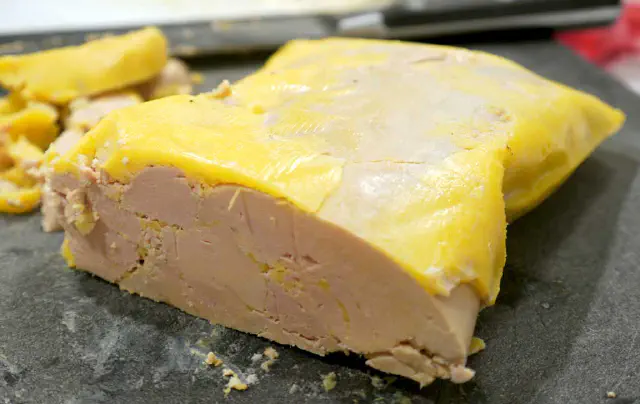
Foie gras terrine - made sous vide