Sous Vide Scrambled Eggs
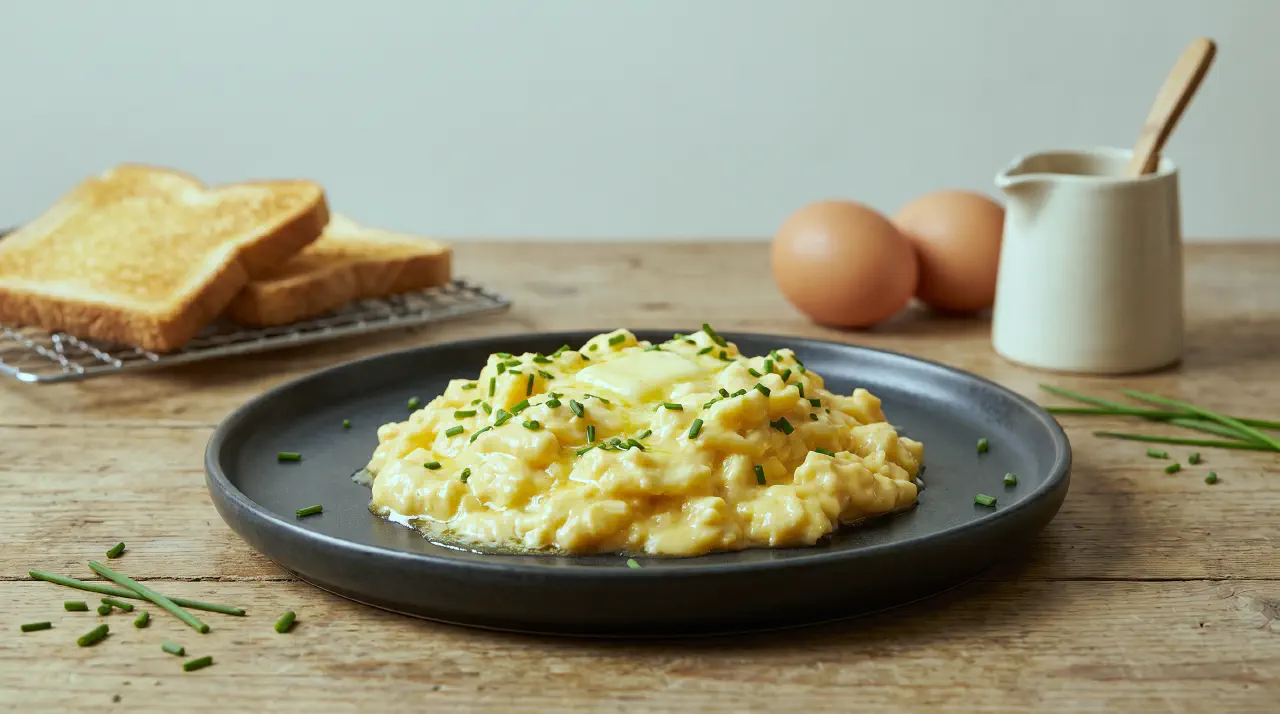
Sous Vide Scrambled Eggs
Scrambled eggs cooked sous vide skip the pan entirely. Whisked eggs go into a sealed bag, then into a precisely heated water bath, where the proteins set slowly and evenly instead of seizing against hot metal. What comes out is a soft, custardy curd, finer and creamier than anything a skillet produces, closer to a spoonable custard than the dry, quick-set curds of a stovetop scramble.
The technique traces back to Heston Blumenthal’s molecular-gastronomy demonstrations, which showed how differently eggs behave when they’re brought up to temperature gently instead of hit with direct heat. Home cooks picked it up once immersion circulators became affordable kitchen gear, and it’s now a familiar move among sous vide cooks: a plain carton of eggs turning into something that looks and tastes like it came off a tasting menu.
Only a handful of ingredients go into the bag: eggs, a little cream or milk, melted butter, salt, and pepper. Whisked smooth, sealed air-free, and held at a steady 167°F (75°C), the mixture isn’t left alone for the full cook - it comes out of the bath every five to ten minutes for a hand massage that breaks up the curds forming against the bag walls. Skip that step and the eggs set into a firm, unbroken custard instead of a soft scramble; the massaging is what keeps the texture loose.
This isn’t a faster way to get scrambled eggs on the table - a pan takes minutes, the bath takes fifteen to twenty - but it is a hands-off one, and it’s nearly impossible to overcook by accident. There’s no moment of distraction that turns the eggs rubbery or scorched. Serve it straight from the bag onto a warm plate with a scattering of chives, alongside toast or a smørrebrød spread whenever a softer, richer egg suits the meal better than a fried or boiled one.
Ingredients
Serves 2-4
- 6-12 large eggs
- 30-60 ml heavy cream (or whole milk)
- 14-28 g unsalted butter, melted, plus extra for serving
- 1/4-1/2 tsp kosher salt, plus more to taste
- black pepper, freshly ground, to taste
- chives, chopped, for garnish (optional)
Directions
Whisk the eggs in a bowl with the cream (or milk), salt, and pepper until completely smooth, with no streaks of white left. Whisk in the melted butter last.
Preheat a water bath to 167°F (75°C). Pour the egg mixture into a zip-top freezer bag or a vacuum bag, spreading it into a thin, even layer. Seal it using the water displacement method - lower the bag slowly into the bath so the water pressure pushes the air out through the top opening, then seal just above the waterline - or use a light vacuum seal, leaving a little slack for the eggs to expand as they warm.
Submerge the bag and cook for 10 minutes. Pull it out and massage it gently between your hands, kneading through the bag to break up any curds that have started forming against the plastic. Return it to the bath.
Continue in 5-minute increments from here, massaging the bag by hand after each one, until the eggs turn into a soft, creamy curd rather than a set custard. Total time in the bath runs 15 to 20 minutes, toward the longer end for a fuller batch. If splitting a larger batch across two bags, keep each one about as thin as the two-serving version and judge by texture rather than the clock.
Cut open a corner of the bag and squeeze or spoon the eggs onto a warmed plate. Scatter with chives and a little extra butter if using, and serve immediately - the curd keeps firming for a minute or two even off the heat.
Notes
Massaging the bag isn’t optional. Skip it and the eggs set into a firm, unbroken custard instead of breaking into the loose, spoonable curds that make this technique worth doing.
For a richer version, increase the combined butter and cream up to about 1 tablespoon per egg. For a leaner version, the eggs can be cooked with no added fat at all, though a fat-free batch needs closer to 30 minutes in the bath to reach a good curd.
Skip low-fat dairy. Cream or whole milk keeps the curds creamy; anything leaner tends to turn watery instead of custardy.
A rigid jar works in place of a bag if the massage step is done by rolling and shaking it between the palms instead of squeezing.
See Also
Air Fryer Hard-Boiled Eggs
Beef Cuvette - Red Meat Sous Vide
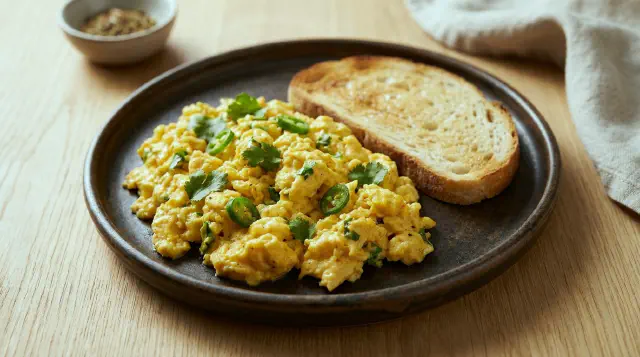
Ekuri – Scrambled Eggs with Chilli
Foie gras terrine - made sous vide