Sous Vide Soft-Cooked Eggs
Sous Vide Soft-Cooked Eggs
A sous vide egg is cooked whole, still in its shell, submerged directly in a water bath held at one exact temperature for far longer than you’d ever leave an egg on the stove. There’s no pot of boiling water losing heat the moment the egg goes in, and no guessing at exactly when to pull it out - the bath holds 145°F (63°C) steady for the entire cook, so every part of the egg, top to bottom, reaches the same temperature at the same time.
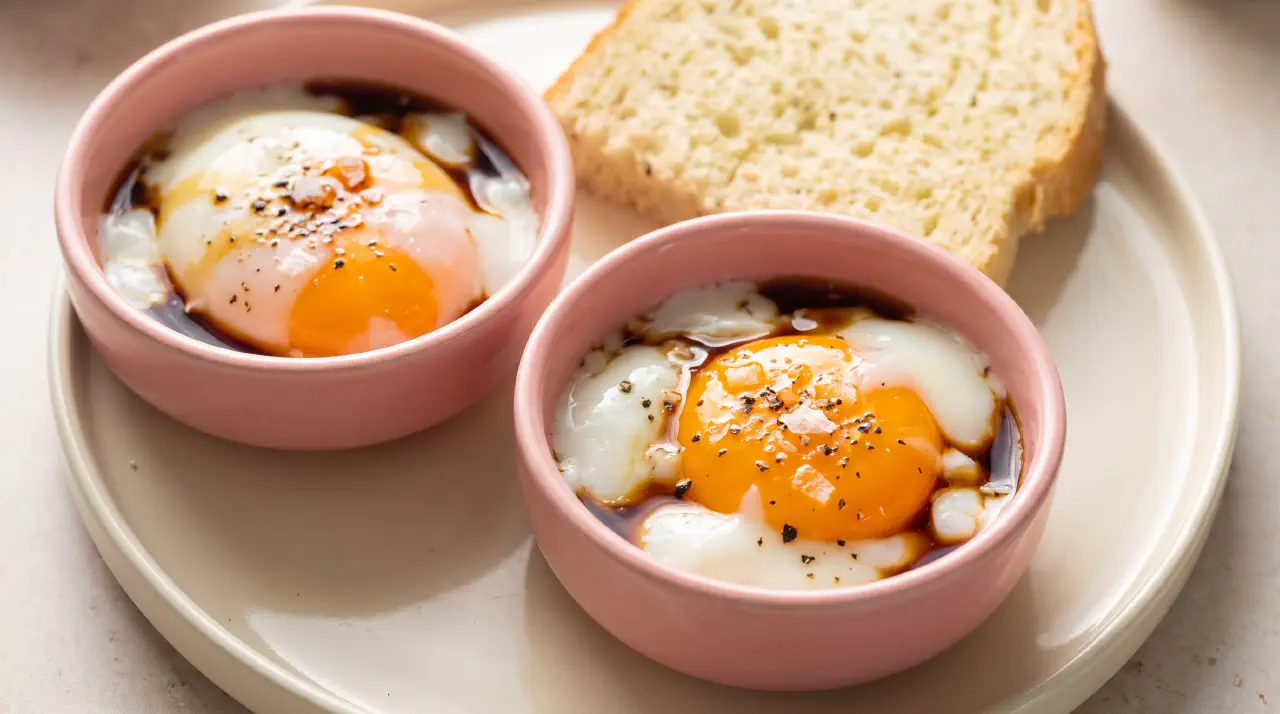
The result is a texture regular boiling can’t produce: a white that’s set but still tender and custardy, wrapped around a yolk that ranges from barely thickened to properly jammy depending on how long it stays in the water. Push the time a little further and the yolk turns almost fudge-like; pull the egg out a little early and the white stays looser. A degree or two, one way or the other, changes the result meaningfully, which is exactly why this dish suits sous vide so well - a stovetop can’t hold a temperature that precisely.
The technique is often called an “onsen egg,” after the Japanese hot-spring eggs traditionally cooked in natural volcanic water around 65-68°C. The two aren’t quite the same dish - onsen tamago cooks longer at a slightly higher temperature and comes out with a firmer white - but the family resemblance, a soft-set white cradling a runny yolk, is close enough that the name has stuck as shorthand for any egg cooked this way in a controlled bath.
Serve it warm for breakfast or a quick lunch, cracked over a bowl of rice or ramen the way it’s done in Japan, spooned over toast, or on its own with nothing more than salt, pepper, and a few drops of soy sauce. It’s as much a pantry staple as a dish in its own right - a way to have a genuinely soft-cooked egg ready whenever you want one, without hovering over a timer.
Ingredients
Serves 4
- 4 large eggs, cold from the refrigerator
- flaky salt, to finish
- black pepper, to finish
- soy sauce (or tamari), to finish (optional, for Japanese-style serving)
Directions
Fill a pot or sous vide container with water and set the immersion circulator to 145°F (63°C). Once the bath is fully up to temperature, lower the eggs in gently, still in their shells, using a slotted spoon so they don’t crack against the bottom.
Cook the eggs for 45 minutes for a looser, more liquid yolk, or leave them in for up to an hour for a slightly firmer, jammier one. The white sets to the same soft, custardy texture either way - it’s only the yolk that keeps changing the longer it sits in the bath.
If the shells tend to stick when you peel them, give the eggs a 3-minute boil and a 1-minute ice-water bath before they go into the sous vide bath. This step only helps the shell release more cleanly later; it doesn’t change the final texture.
When the timer goes off, move the eggs straight into a bowl of ice water. Two minutes there is enough to stop the cooking and make them safe to handle - leave them longer, up to eight minutes, if you’re not serving them right away.
To serve, crack the shell all over and peel it as you would any soft egg, or simply crack the egg directly into a small bowl - the white will be soft enough to pour out along with the yolk. Finish with flaky salt, a few turns of black pepper, and, for the Japanese onsen-egg presentation, a few drops of soy sauce or tamari.
Notes
Sous vide egg texture slides along a scale with temperature. Here’s what to expect if you experiment beyond the classic 145°F (63°C) version:
- 140°F (60°C), 45 min - very loose, barely-set white; liquid yolk. The loosest version of the “onsen” style.
- 145°F (63°C), 45 min-1 hr - the classic soft-cooked/onsen benchmark: tender, custardy white; liquid-to-jammy yolk.
- 149°F (65°C) - the original formulation popularized by food scientist Hervé This: fully coagulated, smooth, custardy white; soft but not runny yolk.
- 150-155°F (66-68°C) - yolk turns spoonable and fudge-like; white fully opaque and firm.
- 167°F (75°C), 13 min - a fast alternative that lands close to the 63°C/1-hour result, with a slightly firmer white.
- 165°F (74°C), 45-60 min - the hard-boiled equivalent: firm, tender, non-rubbery yolk all the way through.
Cooking the egg in its shell means it goes straight from bath to ice bath to table with no bag, sealing, or draining needed. A slotted spoon helps drain the thin, watery part of the white if you’re serving the egg out of its shell.
Already-cooked eggs, still in the shell, can hold in the bath at 130°F (54°C) indefinitely, or keep in the fridge in their shells for up to two days. Rewarm gently in 130-140°F (54-60°C) water for about 10 minutes before serving.
See Also
Air Fryer Hard-Boiled Eggs
All about vanilla egg creams and custards
Beef Cuvette - Red Meat Sous Vide
Foie gras terrine - made sous vide