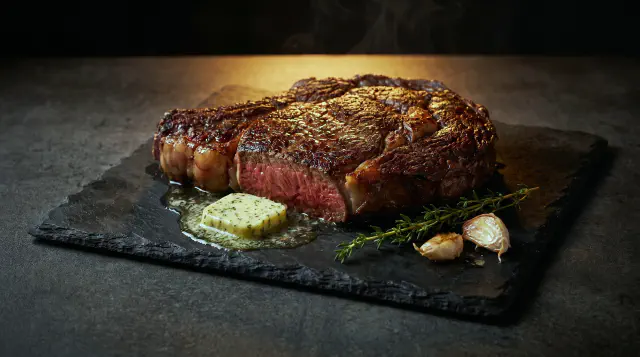
Sous Vide Tri-Tip
Sous Vide Tri-Tip
Tri-tip is a triangular roast cut from the bottom sirloin, the cut behind Santa Maria-style California barbecue, where it is traditionally grilled whole over red oak coals and seasoned with little more than salt, pepper, and garlic. The roast is wedge-shaped, thick at one end and tapering to almost nothing at the other, and it is really three separate muscles fused together, each running its grain in a different direction. Sous vide is not a shortcut here so much as a fix for a real problem: over an open fire, the thin end is always overcooked by the time the thick end catches up. A water bath brings the whole roast to one even temperature regardless of shape, then a hard sear at the end supplies the crust the fire would otherwise be doing.
Tri-tip is also a hardworking, collagen-rich cut rather than a naturally tender steak, and that changes how it should be cooked sous vide. Set the bath to 131°F (55°C) and hold it there for 6 hours rather than the hour or so a filet or ribeye would get. That temperature keeps the meat at a medium-rare doneness the entire time, while the extended hold slowly breaks down the connective tissue that a quick cook would leave chewy. It is possible to treat tri-tip like a fast steak instead, at a slightly higher temperature for under two hours, but that skips the tenderizing effect that is the whole reason to run this particular cut through a water bath rather than straight onto the grill.
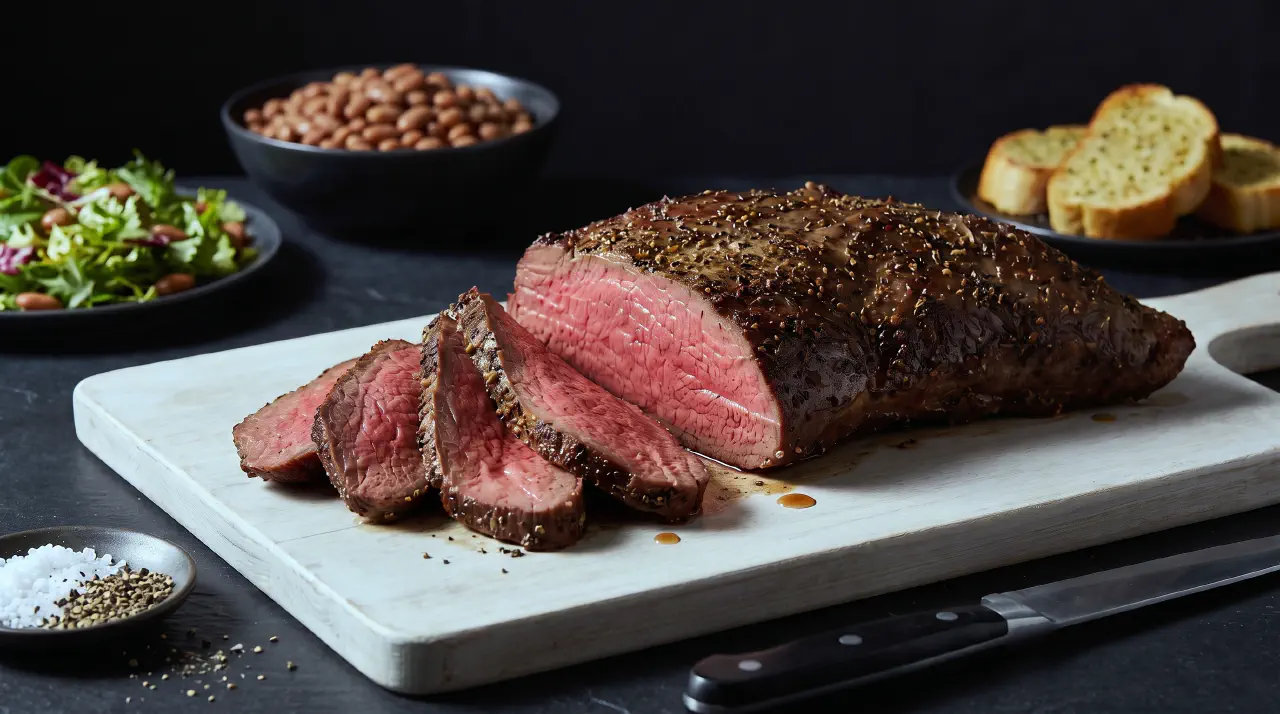
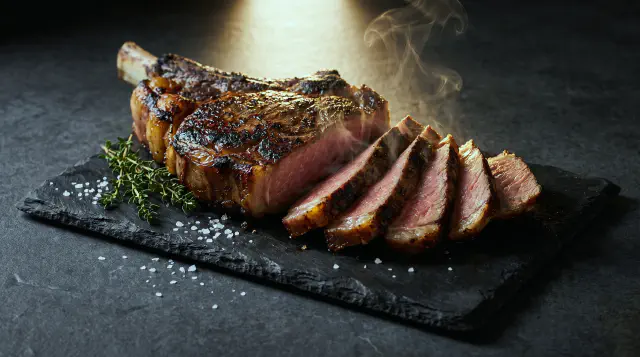
Once the bath is done, the roast comes out, gets patted completely dry, and goes straight into a screaming-hot pan or onto a hot grill for a fast sear on all sides. That crust is not optional; a tri-tip served straight from the bag is gray, flabby, and unappetizing no matter how well it was cooked inside. Done right, that contrast is the whole point: a deeply browned, faintly smoky crust wrapping a tender, evenly rosy, beefy interior. After a short rest, the real skill in serving tri-tip shows up at the cutting board: find the seam where the grain direction shifts, roughly at the midpoint of the roast, and slice thin against the grain on each side of it, changing the knife angle as you go. Skip that step and even a perfectly cooked roast turns chewy.
Serve it sliced, the way it would come off a Santa Maria grill, alongside pinquito beans, a simple green salad, and garlic bread, or fold it into tacos or a sandwich the next day. It makes an easy weekend cookout centerpiece, since most of the work happens hands-off in the water bath hours ahead, leaving only a quick sear before guests sit down.
Ingredients
Serves 4-6
- 1.1-1.4 kg tri-tip roast (bottom sirloin), trimmed, thin fat cap left on
- 2 tsp kosher salt, divided (about 0.5% of the meat’s weight)
- 1 tsp black pepper, freshly ground, divided
- 1 tsp garlic powder
- 1 tsp onion powder
- 1 tsp dried oregano
- 1 tbsp neutral oil (canola or vegetable), for searing
Directions
Pat the tri-tip completely dry, then season it all over with half the salt, pepper, garlic powder, onion powder, and oregano, reserving the rest for after the bath.
Seal the roast in a vacuum bag, or in a zipper-lock freezer bag using the water displacement method: lower the open bag slowly into a pot of water so the pressure pushes the air out, then seal it just above the waterline.
Set an immersion circulator to 131°F (55°C). Submerge the bagged roast and cook for 6 hours. That long hold is what actually tenderizes a working muscle like tri-tip; a quick 1.5 to 2 hours at a slightly higher 134°F (56.5°C) will cook it through but leaves it closer to a chewy steak than a tender roast.
Lift the bag from the bath, take the tri-tip out, and pat it thoroughly dry with paper towels. This step matters more than it looks: any surface moisture left behind steams in the pan instead of searing, and the crust never forms.
Season the exterior with the reserved salt, pepper, and spice blend. Heat the oil in a cast-iron skillet, or get a grill ripping hot for direct heat, until it is just smoking. Sear the tri-tip hard, 1 to 2 minutes per side, until deeply browned all over.
Rest the roast for 5 to 10 minutes on a cutting board.
Look for the point, roughly at the roast’s midpoint, where the grain direction shifts. Slice thin against the grain on each side of that point, adjusting the angle of the knife as the grain turns.
Notes
For a quicker, more steak-like texture instead of a fully tenderized roast, hold the bath at 134°F (56.5°C) for as little as 1.5 to 2 hours. For maximum tenderness, the bath can run as long as 10 to 12 hours at 131°F (55°C); do not exceed 24 hours total.
For a sweeter, glazed finish in place of the pan sear: bag the tri-tip with ¼ cup barbecue sauce before cooking. After the bath, skip the sear and instead broil the roast with more barbecue sauce and a little brown sugar brushed on top, about 5 minutes, until caramelized.
For the full traditional Santa Maria flavor, stir 1 tsp ancho chili powder, 1 tsp dried rosemary, and ½ tsp dried sage into the rub along with the garlic powder, onion powder, and oregano.
A probe thermometer set to alarm a couple of degrees below the bath temperature, followed by a brief ice-bath dip before searing, lets you skip the resting step entirely, since there is no internal temperature gradient left to equalize.
See Also
Beef Cuvette - Red Meat Sous Vide
Rib-Eye Steak
Steak - Cooking Methods Guide