Sous Vide Wild Boar Loin
Sous Vide Wild Boar Loin
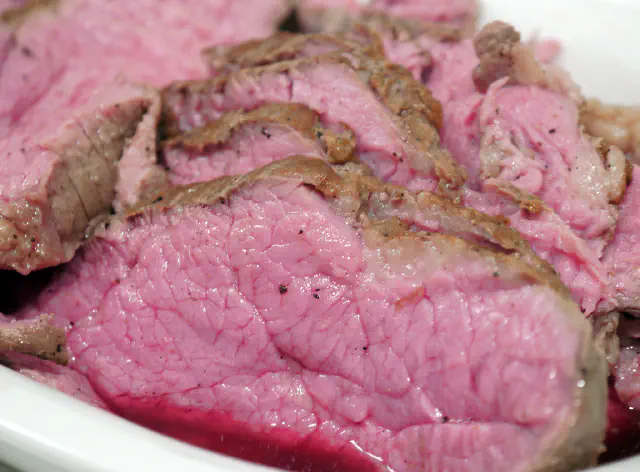
Wild boar loin is the most tender cut on the animal, taken from the back, and the only one suited to short, precise cooking rather than the long braise that the leg, shoulder and shank need. The meat is fine-grained and lightly marbled, with a mild, faintly nutty gamey flavor considerably milder than red deer or roe deer - which is exactly why the loin tolerates neither a long time at high heat nor overly aggressive seasoning if that flavor is to be preserved. Sous vide is the method that best keeps this in check: the meat reaches a perfectly even core temperature along its whole length, with no risk of the outer edge turning gray and dry while the middle is still raw.
The loin is seasoned, vacuum-sealed with butter, garlic and fresh herbs, then cooked at a low, carefully measured water bath temperature for a couple of hours. Only afterward comes the crucial sear in a scorching-hot pan, which delivers both the browned crust and flavor the sous vide method can’t provide on its own and which - for food safety - is a non-negotiable final step, not an optional finish. Wild boar carries a real risk of trichinella, and all Danish wild boar meat must therefore be trichinella-tested at an accredited laboratory before it’s cooked and eaten, no matter how carefully the sous vide bath is otherwise controlled.
Wild boar died out in the Danish countryside several hundred years ago, but over the last few decades it has returned in small, free-living populations, particularly near the Danish-German border, as well as on fenced hunting grounds around the country. Hunting wild boar is thus a relatively new but growing part of Danish hunting tradition, and the meat is increasingly sought after by hunters and by restaurants that work with local game. The dish belongs naturally to the autumn and winter months of the hunting season, where it’s a fine fit for a festive dinner after a day’s hunt or a more formal meal in good company.
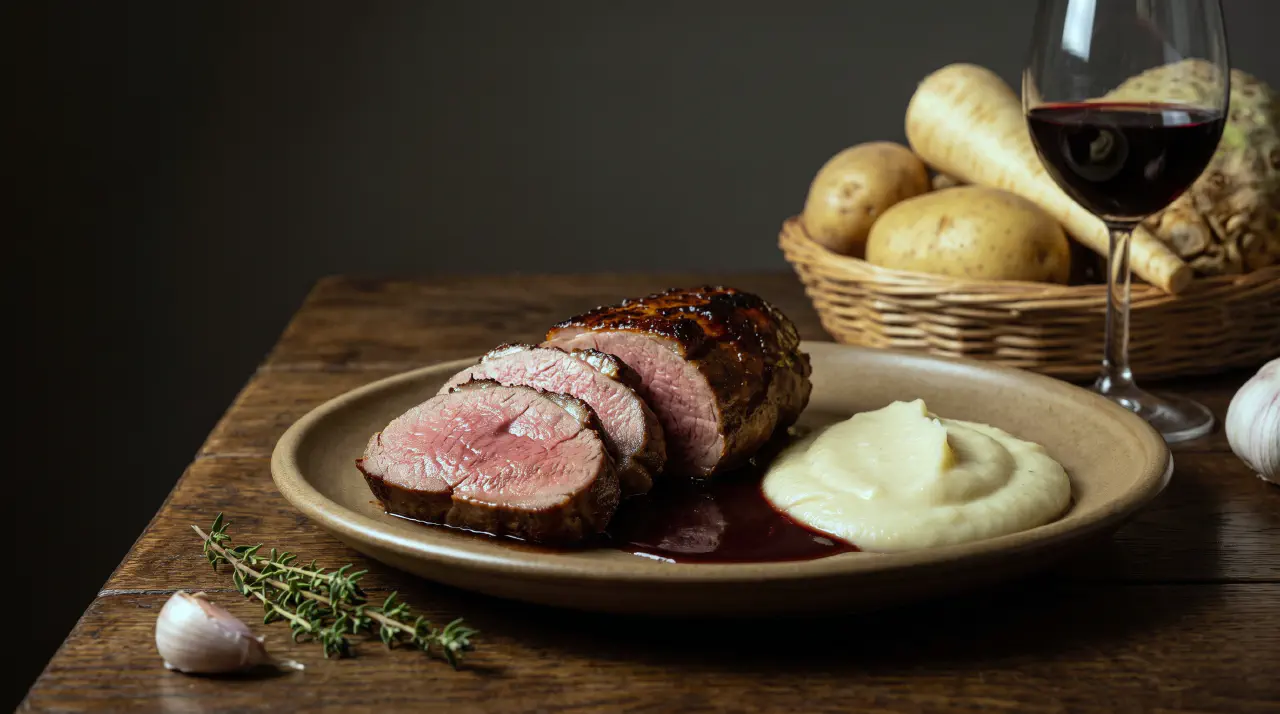
The loin is classically served sliced, alongside a root-vegetable purée of potatoes, parsnip and celeriac and a reduced red wine sauce that ties the dish together with a deep, tart sweetness. For variation, the red wine sauce can be swapped for a mustard sauce or a mushroom sauce, and the root-vegetable purée can be replaced with plain mashed potatoes or oven-roasted root vegetables - it’s the part of the dish that best tolerates being adapted to whatever else you have on hand.
Ingredients
Serves 4
The Loin
- 600 g wild boar loin, trichinella-tested, trimmed of sinews and silverskin
- 2 tbsp butter
- 1 tbsp olive oil
- 2-3 sprigs thyme (or rosemary)
- 1 clove garlic, lightly crushed
- salt
- freshly ground black pepper
The Root-Vegetable Purée
- 300 g potatoes
- 200 g parsnip
- 200 g celeriac
- 1 dl cream
- 2 tbsp butter
- salt
- pepper
- grated nutmeg
The Red Wine Sauce
- 1 onion, finely chopped
- 1 tbsp butter
- 2 dl red wine
- 2 dl game stock (or strong beef stock)
- 1 tbsp balsamic vinegar
- 1 tsp sugar
- 1 tbsp cold butter (for mounting)
Directions
The Loin
Before anything else: the wild boar loin must be trichinella-tested by an accredited laboratory before it goes anywhere near the pan. This is a Danish legal requirement for all wild boar meat intended for consumption, and the responsibility lies with the hunter - freezing is not a reliable substitute, since Nordic wild boar can carry freeze-resistant trichinella species. The sous vide cooking below is, scientifically speaking, well above the temperature and time needed to inactivate trichinella, but it never replaces the laboratory test itself.
Season the loin with salt and freshly ground pepper. Place it in a vacuum bag together with the butter, olive oil, thyme or rosemary and the lightly crushed garlic clove, and vacuum-seal the bag. Lower the bag into a water bath at 136-140°F (58-60°C) and cook the loin for 1.5-2 hours - use the long end of the range if the piece is thick or on the heavier side.
Take the loin out of the bag and pat it thoroughly dry with paper towels. Sear it hard in a very hot pan with a little extra oil and butter, about 30-60 seconds on each side, until the whole surface has taken on color. This searing isn’t just for flavor: it destroys any surface bacteria such as salmonella and yersinia that the water bath’s low temperature doesn’t get a chance to deal with.
The Root-Vegetable Purée
Peel the potatoes, parsnip and celeriac, and cut them into roughly equal pieces. Boil them until tender in lightly salted water, about 20-25 minutes. Drain and mash the root vegetables coarsely. Stir in the cream and butter, and season with salt, pepper and freshly grated nutmeg. Keep the purée warm while the rest of the dish is finished.
The Red Wine Sauce
Sauté the finely chopped onion in a little butter over medium heat until it’s glossy without taking on color. Add the red wine, game stock, balsamic vinegar and sugar, and let the sauce simmer down to about half. Strain the sauce through a sieve, and whisk in the cold butter just before serving, so the sauce turns glossy and cohesive.
Plating
Let the loin rest for 5 minutes under loosely tented aluminum foil so the juices have time to redistribute through the meat. Slice it across the grain and plate at once with the root-vegetable purée and the warm red wine sauce alongside.
Notes
Trichinella testing is not a recommendation but a legal requirement: never serve home-shot wild boar that hasn’t been tested by an accredited laboratory, no matter how precisely it’s cooked afterward.
Without sous vide equipment, the loin can instead be seared hard and then finished in an oven at 300°F (150°C) until the core temperature reaches 140°F (60°C). The result will be a touch less evenly pink than the sous vide version, but still juicy.
The red wine sauce can be replaced with a mustard sauce or a mushroom sauce, and the root-vegetable purée can be swapped for plain mashed potatoes or oven-roasted root vegetables, if you prefer.
See Also
Beef Burgundy - Boeuf Bourguignon
Beef Cuvette - Red Meat Sous Vide