Caramelization
Caramelization
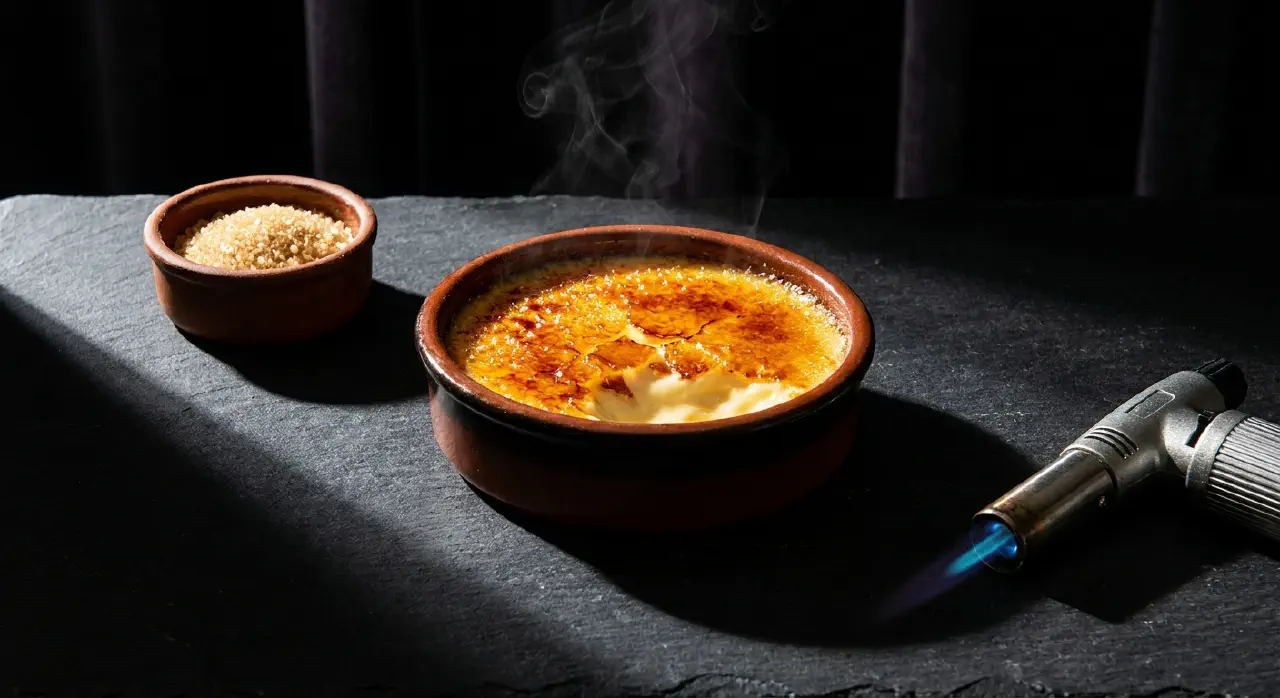
Caramelization is the simplest browning reaction — pure sugar, heated until it breaks down into hundreds of new compounds that produce the characteristic color, aroma, and bittersweet complexity of caramel. Unlike the maillard-reaction, no proteins are involved.
The process
When sucrose is heated above ~330°F/165°C, it melts into a thick syrup and begins to decompose. The sugar molecules fragment and recombine into a cascade of products:
- Organic acids (acetic acid and others) — contribute sourness
- Sweet and bitter derivatives — the bittersweet complexity of caramel
- Volatile aromatic molecules — butterscotch (diacetyl), nutty (furans), sherry-like (acetaldehyde), fruity (esters), and the distinctive caramel note (maltol)
- Brown polymers (melanoidins) — the color
The process is progressive: light yellow (mild, mostly sweet) through amber (complex, bittersweet) to dark brown (increasingly bitter, eventually burnt). The cook’s job is to stop at the right point.
Emulsions
Emulsions
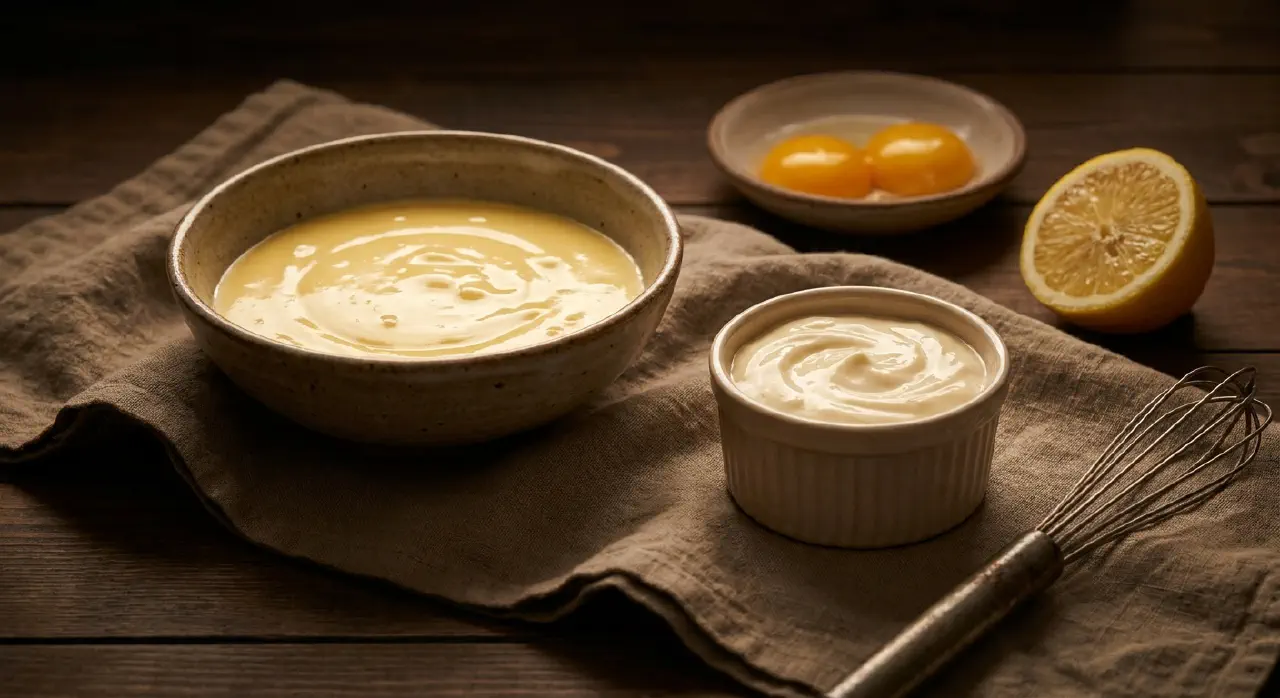
An emulsion is a stable mixture of two liquids that normally refuse to combine — almost always oil and water. Emulsions are everywhere in cooking: milk, cream, butter, mayonnaise, hollandaise, vinaigrettes, and most pan sauces.
How emulsions work
Every emulsion has two phases:
- Continuous phase — the liquid that forms the background. In cream and mayonnaise, this is water. In butter, it’s fat.
- Dispersed phase — tiny droplets (0.1–10 micrometers) suspended within the continuous phase.
Left alone, oil and water separate because oil droplets coalesce — they merge into larger and larger pools until the two liquids are fully separated. Emulsions prevent this through emulsifiers: molecules that are amphipathic (one end loves water, the other loves fat). They arrange themselves at the oil-water interface, coating each droplet in a protective shell that prevents coalescence.
Maillard Reaction
Maillard Reaction
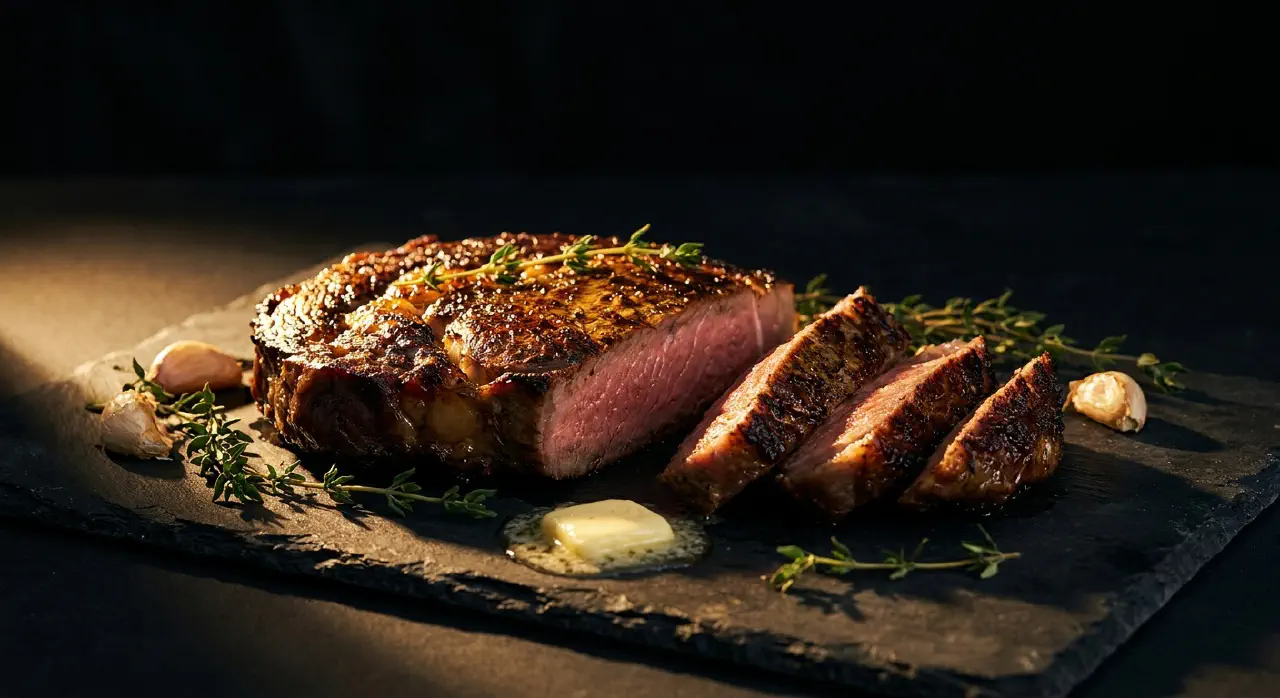
The Maillard reaction is the most important flavor-generating chemical process in cooking — the reaction between amino acids and sugars that produces the brown color and complex flavors of bread crusts, seared meat, roasted coffee, and chocolate.
The chemistry
Named after French physician Louis Camille Maillard (discovered ~1910), the reaction begins when a carbohydrate molecule meets an amino acid. They form an unstable intermediate that cascades into hundreds of different by-products — brown pigments (melanoidins), volatile aroma compounds, and new flavor molecules.
Protein Denaturation
Protein Denaturation
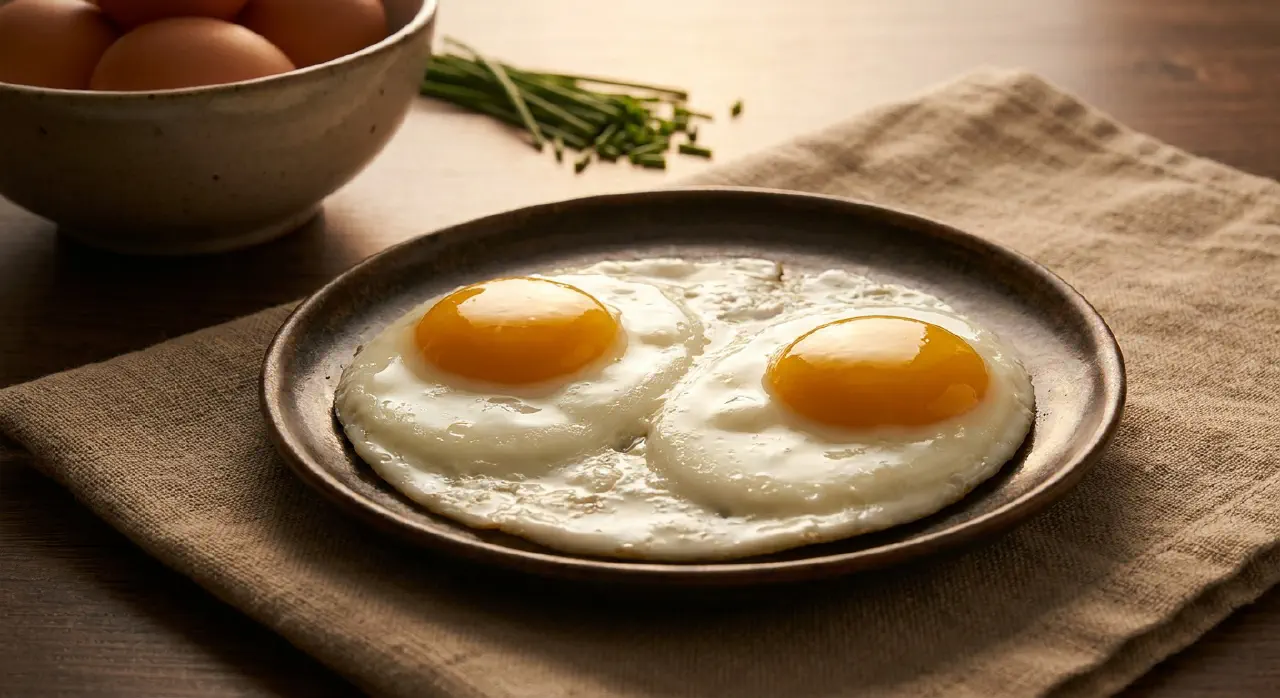
Protein denaturation is the undoing of a protein’s natural folded structure — the single most important chemical event in cooking. When you cook an egg, sear a steak, or make yogurt, you’re denaturing proteins. The change is mostly irreversible and transforms both texture and behavior.
What proteins look like
Proteins are long chains of amino acids (dozens to hundreds), folded into specific shapes held together by weak bonds — hydrogen bonds, van der Waals forces, and ionic attractions. Some proteins fold into compact globules (egg proteins), others form long helical fibers (collagen in meat). The folded shape determines what the protein does and how it behaves.