Eggs
Eggs
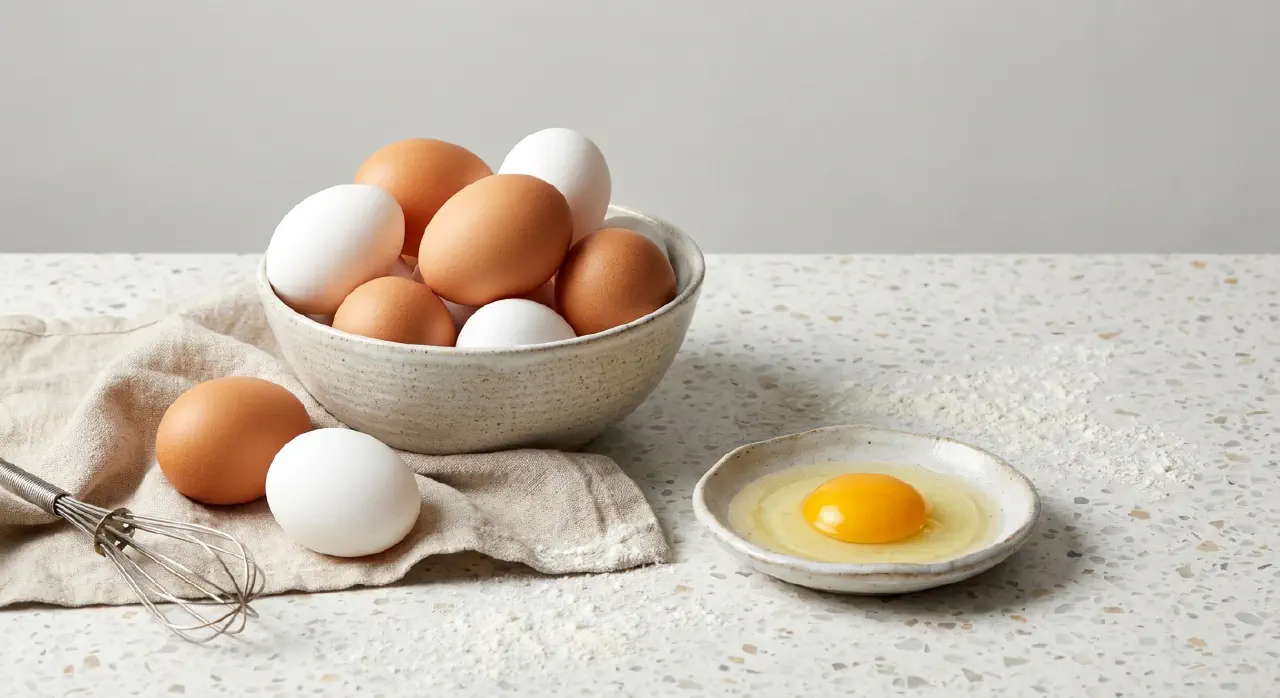
Eggs are the most versatile ingredient in cooking — they thicken, emulsify, leaven, bind, coat, and enrich. This versatility comes from their proteins, which respond to heat, acid, air, and mechanical force in predictable ways that no other single ingredient can match. Understanding egg science means understanding the biology first: every cooking property the egg possesses is a side effect of its original job — supporting 21 days of embryonic development inside a sealed calcium shell.
Protein Denaturation
Protein Denaturation
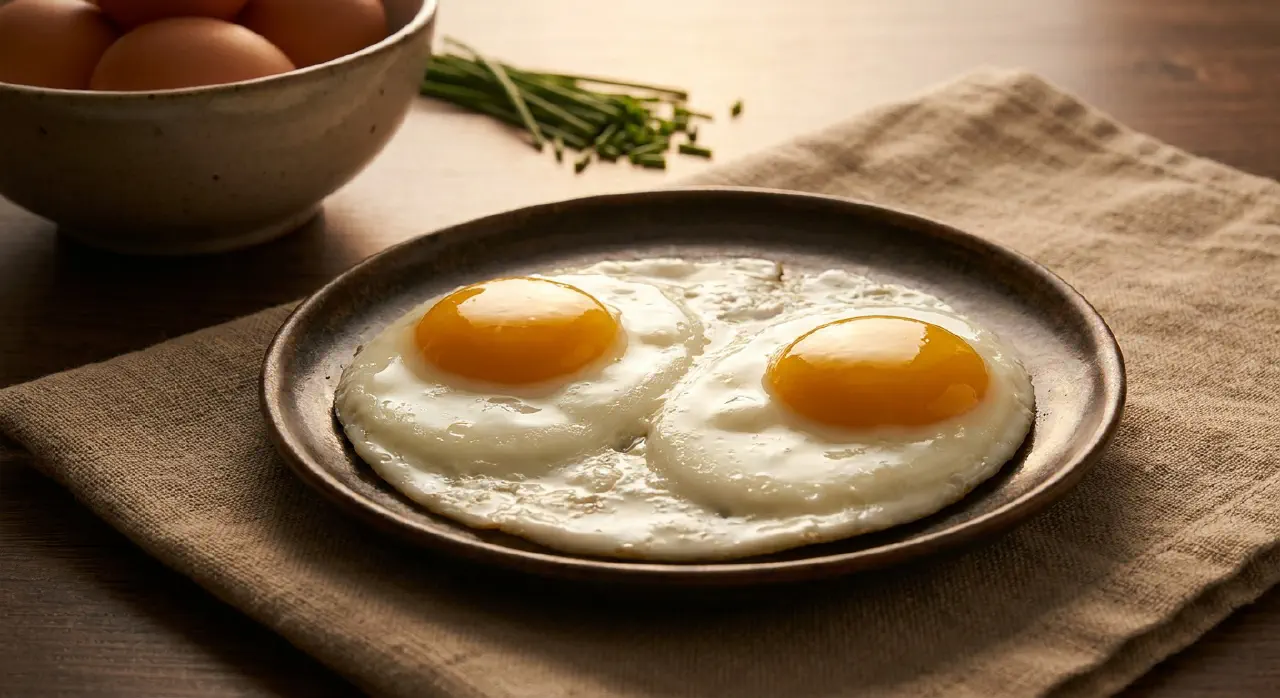
Protein denaturation is the undoing of a protein’s natural folded structure — the single most important chemical event in cooking. When you cook an egg, sear a steak, or make yogurt, you’re denaturing proteins. The change is mostly irreversible and transforms both texture and behavior.
What proteins look like
Proteins are long chains of amino acids (dozens to hundreds), folded into specific shapes held together by weak bonds — hydrogen bonds, van der Waals forces, and ionic attractions. Some proteins fold into compact globules (egg proteins), others form long helical fibers (collagen in meat). The folded shape determines what the protein does and how it behaves.
Protein Structure and Enzymes
Protein Structure and Enzymes
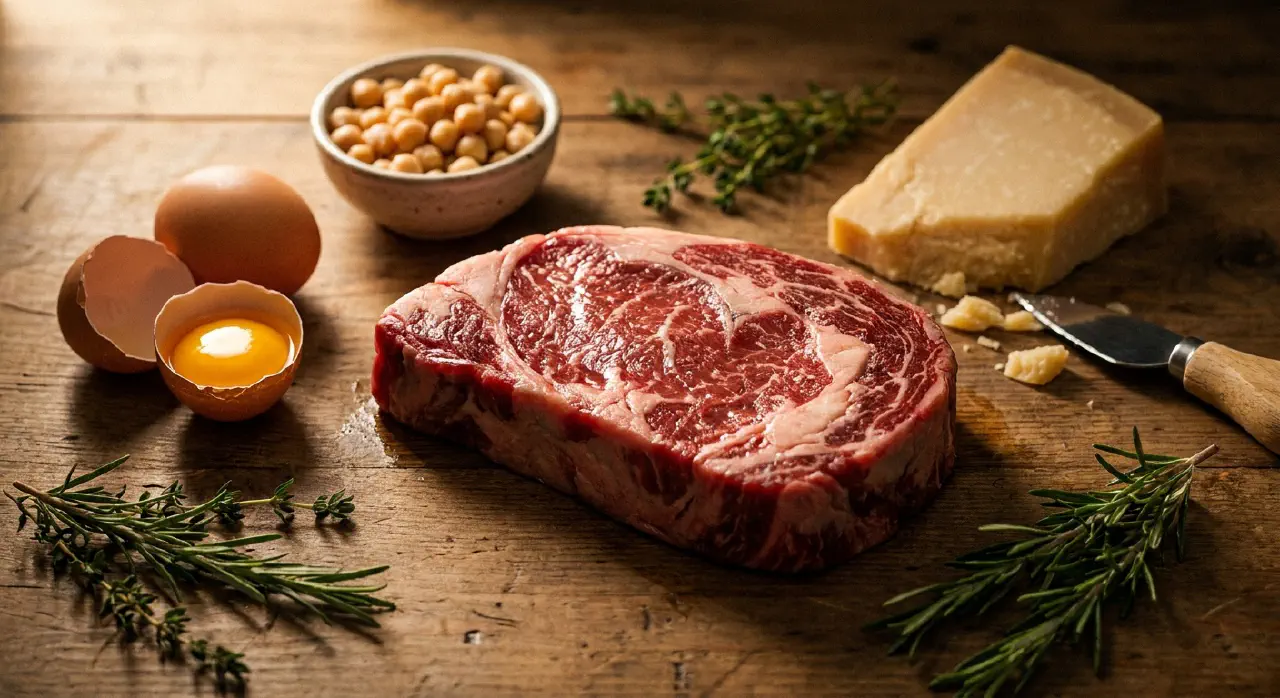
Proteins are the most challenging and sensitive of the four food molecules. Unlike water, fats, and carbohydrates (all relatively stable), proteins drastically change behavior when exposed to heat, acid, salt, or air. This sensitivity is fundamental — proteins are the active machinery of life, assembling and tearing down molecules, transporting materials within cells, forming muscle fibers that move whole animals. Their inherent dynamism is what makes them so responsive to cooking conditions.