Lipid Chemistry
Lipid Chemistry
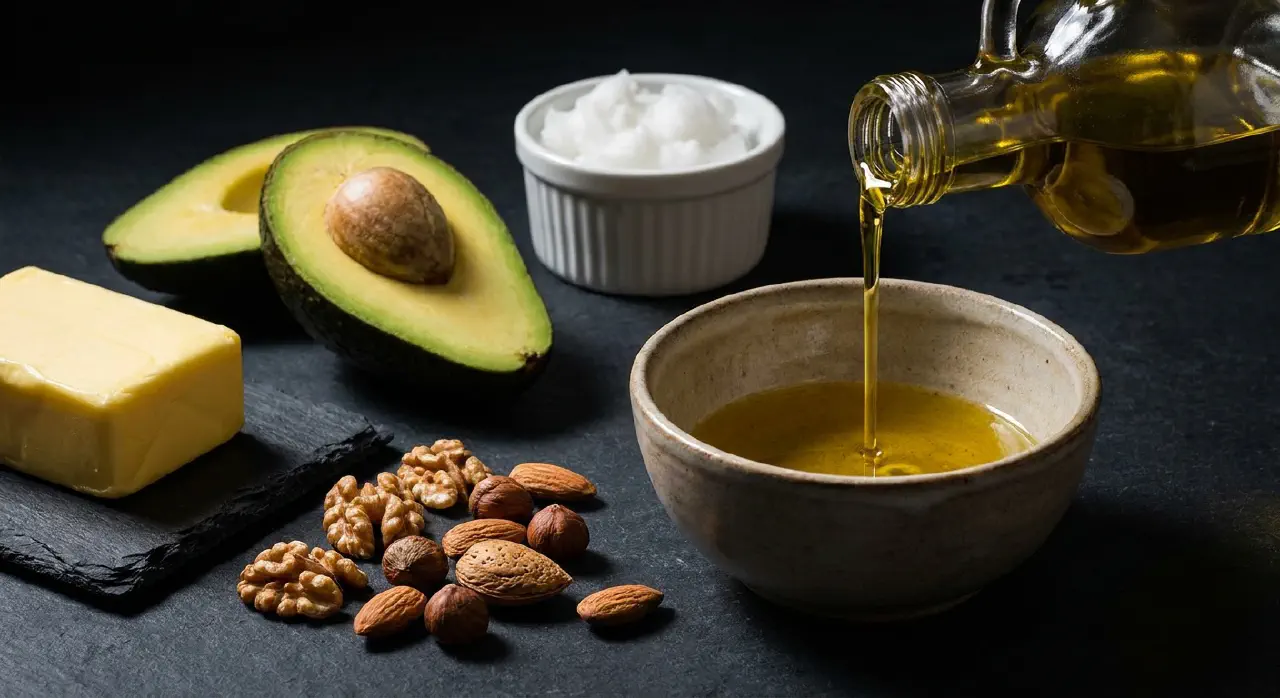
Lipids (from Greek for “fat”) are a large chemical family — fats, oils, phospholipids, pigments (carotenoids, chlorophyll), vitamin E, cholesterol, waxes — all consisting mainly of long carbon chains with projecting hydrogen atoms. Their defining property is hydrophobia: carbon-hydrogen bonds are nonpolar (atoms pull with equal force on electrons), so lipids cannot form hydrogen bonds with water. When mixed, polar water molecules bond with each other and nonpolar lipids segregate, minimizing contact. This single property — the oil-water divide — explains emulsions, fat rendering, oil-based extraction of aromas, and why fats float.
Nuts
Nuts
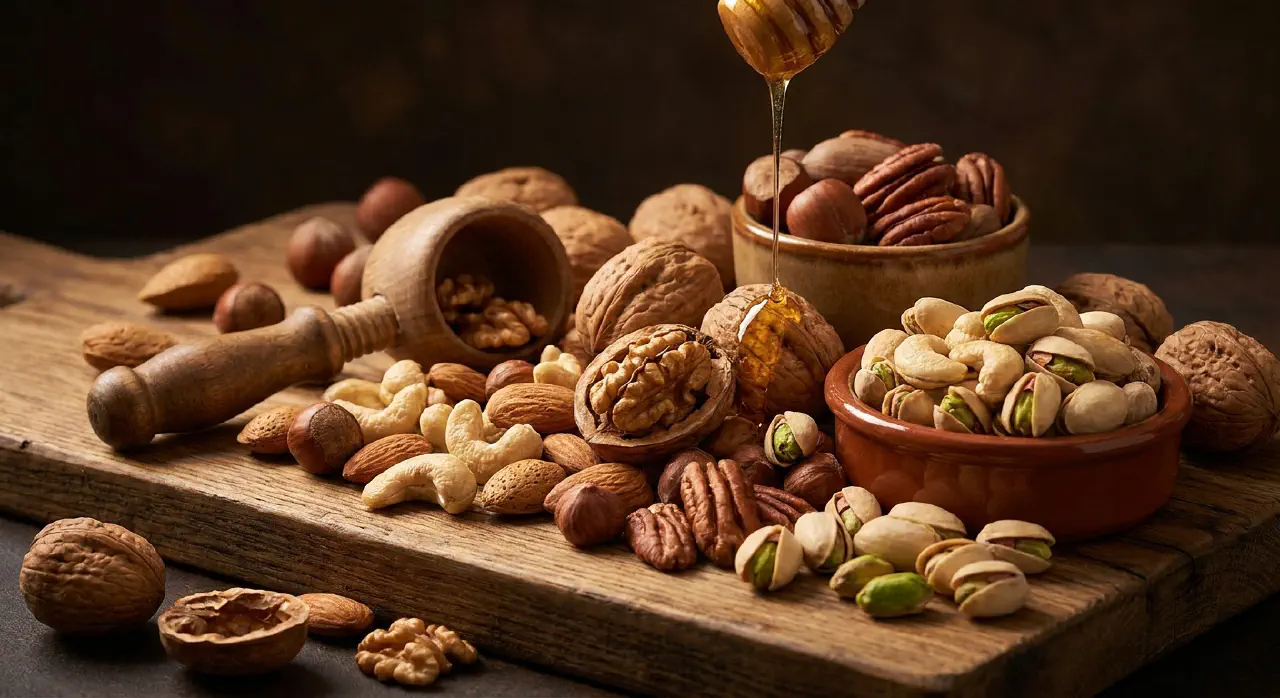
Nutritionally the richest plant foods after pure fats and oils — averaging ~600 calories per 100g, versus ~350 for dry grains — nuts are defined by their high oil content and the weak cell walls that make them uniquely edible raw or after brief dry heat, without the soaking and long cooking other seeds require. Their characteristic richness, creaminess, and depth come from abundant oil stored in oil bodies, the same phospholipid-stabilized structures found in milk fat globules.
Seed Oils and Oil-Rich Seeds
Seed Oils and Oil-Rich Seeds
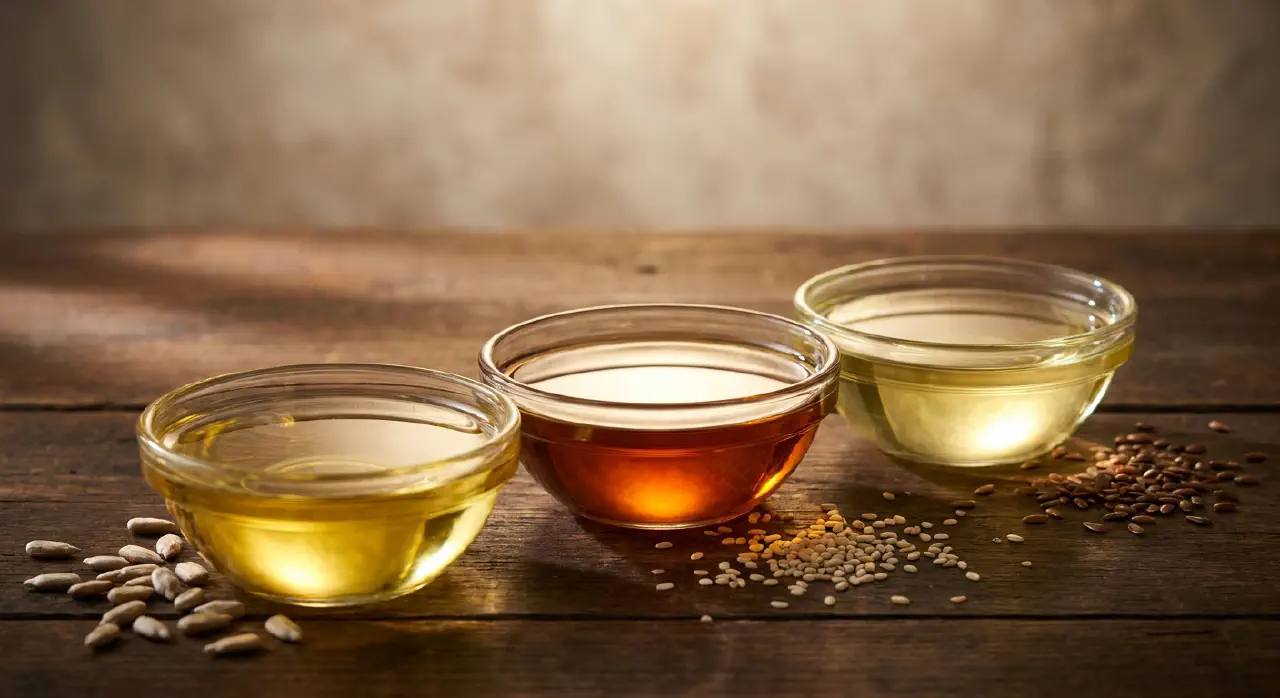
Seed oils extend the culinary reach of nuts and legumes into cooking fats and flavor carriers. The method of extraction — mechanical pressing or solvent dissolution — determines the oil’s flavor, allergenic potential, and suitable uses. Rancidity is the universal risk: all seed oils contain unsaturated fatty acids that oxidize into cardboard-and-paint-smelling fragments when exposed to light, heat, oxygen, or time.
Extraction methods
Cold-pressed (expeller-pressed): Cells are crushed and oil forced out by mechanical pressure. Heat from friction rarely exceeds boiling point. Trace compounds — including flavor molecules and potential allergens — remain. Used primarily as flavoring oils (stronger, distinct character). Flavor intensifies further if seeds are roasted before pressing.