Aromatic Seeds and Tropical Spices
Aromatic Seeds and Tropical Spices
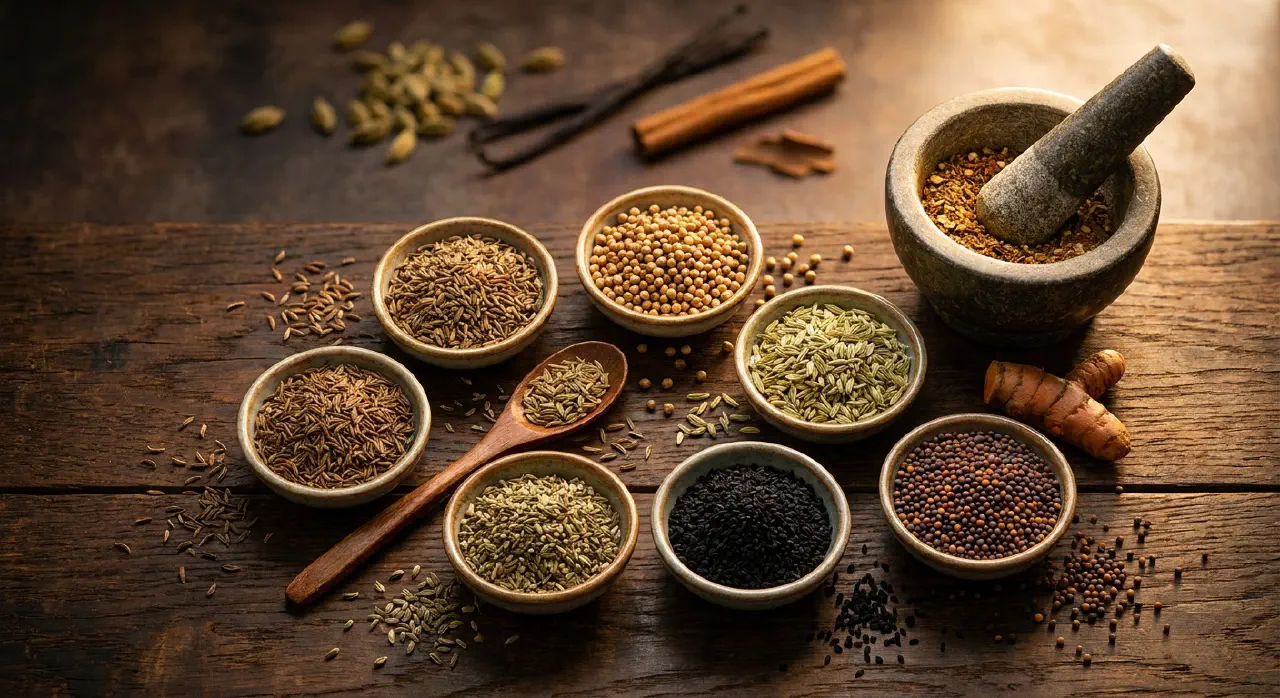
A diverse group united by the fact that the flavoring comes from seeds, roots, rhizomes, stigmas, or pods rather than leaves or bark. Includes the workhorses of Indian, Middle Eastern, and Latin American spice blends (cumin, coriander, cardamom), the world’s two most expensive spices (saffron, vanilla), and several of the most chemically unusual flavorings in the kitchen (asafoetida, fenugreek).
Carrot family seeds (Apiaceae)
Seeds with distinctive ridged surfaces containing aromatic oil in canals beneath the ridges. Many of these plants also provide culinary herbs from their leaves.
Pungent Spices
Pungent Spices
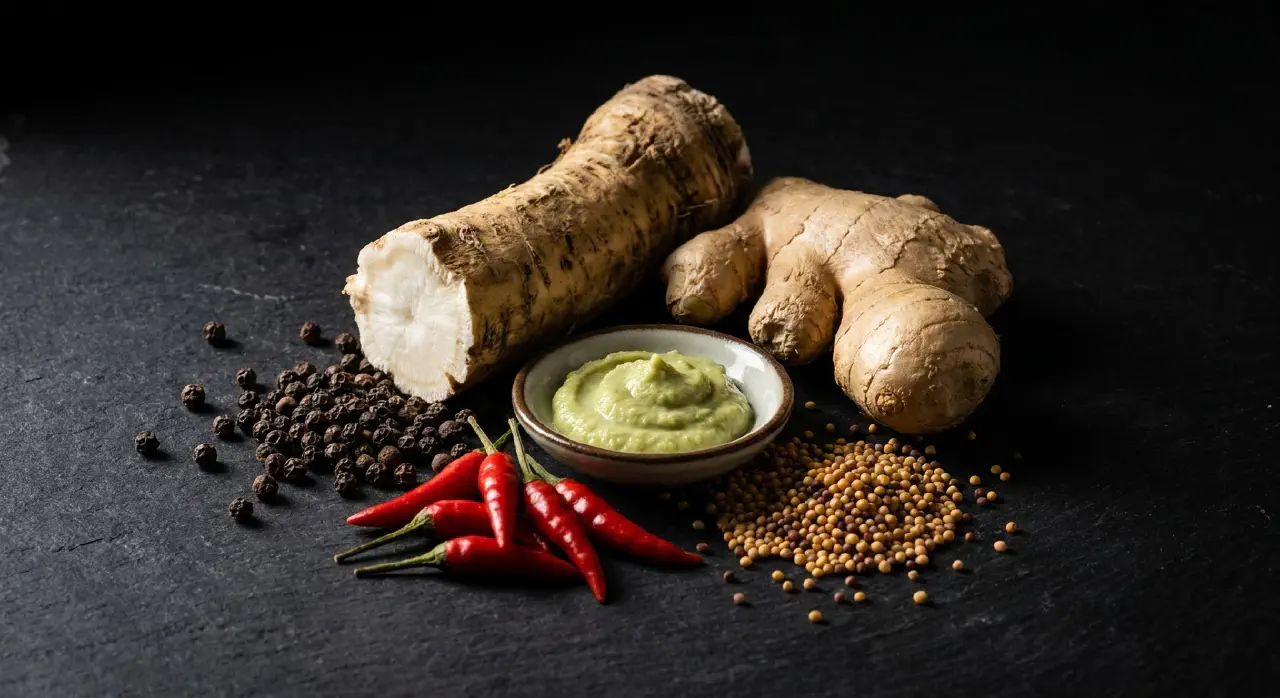
The heat-producing spices — black pepper, chillis, ginger, mustard, horseradish, and wasabi — are defined by compounds that activate pain receptors rather than taste or smell receptors. They divide into two fundamentally different pungency mechanisms: preformed alkyl-amides (pepper, chilli, ginger) that mainly affect the mouth and survive cooking, and enzyme-generated thiocyanates (mustard, horseradish, wasabi) that are volatile enough to irritate the nose and are destroyed by cooking.
Black pepper
The most traded spice from Asia historically, still preeminent in European/North American cooking. Native to tropical southwest India; 3,500+ years of sea and overland trade. Piperine (~100× less pungent than capsaicin) provides moderate heat while a rich terpene profile (pinene, sabinene, limonene, caryophyllene, linalool) gives fresh, citrusy, woody, warm, floral character — making pepper a universal background seasoning like salt.
Spice Handling
Spice Handling
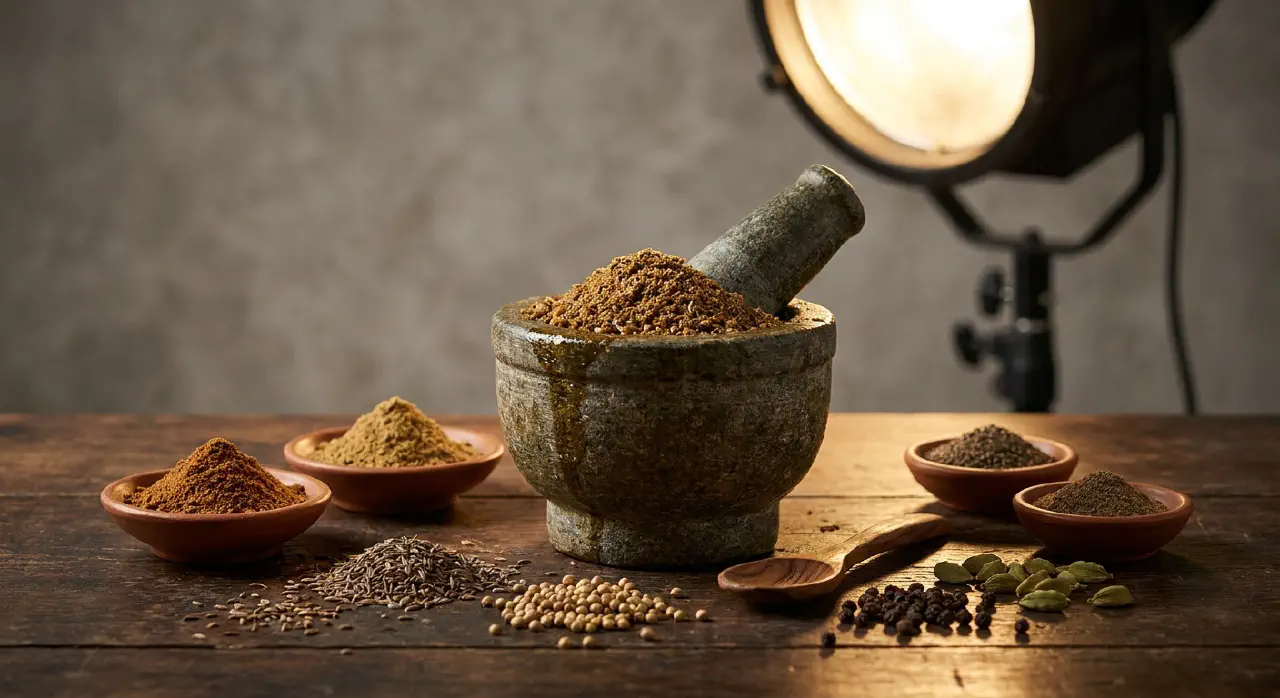
The gap between a vibrant spice and a dusty one comes down to handling — how it was dried, stored, ground, and introduced into the dish. The core challenge is that the same volatility that lets aroma compounds reach the nose also lets them escape into the air. Every step from harvest to plate is a race against evaporation and oxidation.
Storage fundamentals
Whole spices retain aromas within intact cells and keep well for a year or more. Ground spices expose enormous surface area to oxygen and light, losing characteristic aroma within months. The rule: opaque glass containers, freezer is optimal (warm to room temperature before opening to prevent moisture condensation). Cool, dark, dry room temperature is acceptable short-term. Black pepper is especially light-sensitive — UV rearranges piperine into nearly tasteless isochavicine.
Warm Spices
Warm Spices
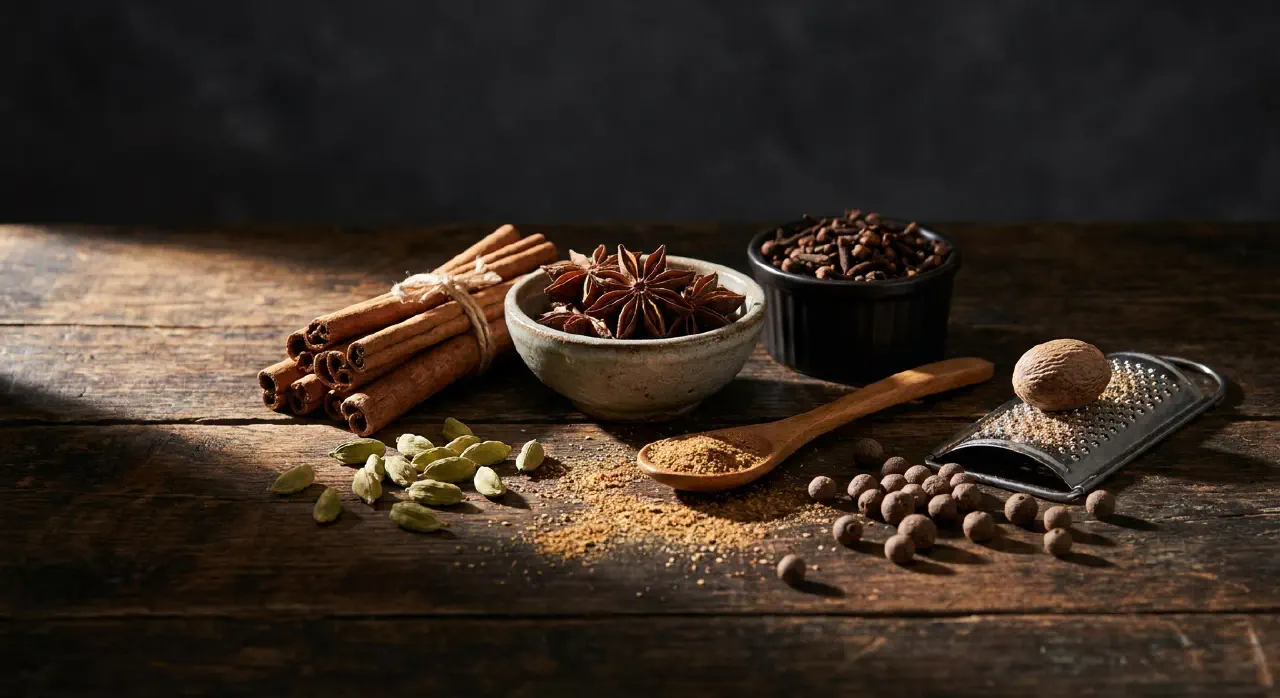
The warm spices — cinnamon, cloves, nutmeg, mace, and allspice — are defined by their rich phenolic compounds that produce sweet, penetrating, warming sensations. All come from tropical trees, all were enormously important in the medieval spice trade, and all share the property that their flavors persist through cooking (unlike volatile terpene-dominated herbs). Cloves hold the record for aroma concentration among all spices: ~17% volatile chemicals by weight.
Cinnamon and cassia
Dried inner bark of tropical Cinnamomum genus trees (laurel family relatives). When peeled from new growth, the inner bark curls into familiar quills or sticks.