Warm Spices
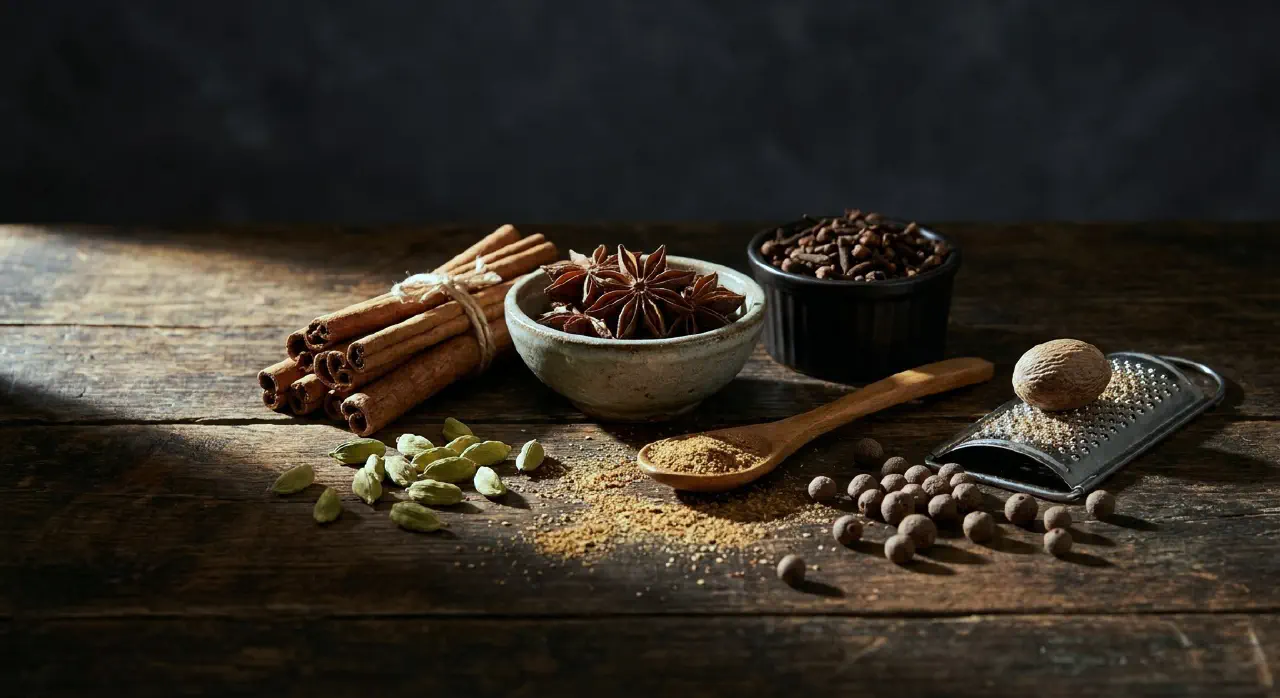
The warm spices - cinnamon, cloves, nutmeg, mace, and allspice - are defined by their rich phenolic compounds that produce sweet, penetrating, warming sensations. All come from tropical trees, all were enormously important in the medieval spice trade, and all share the property that their flavors persist through cooking (unlike volatile terpene-dominated herbs). Cloves hold the record for aroma concentration among all spices: ~17% volatile chemicals by weight.
Cinnamon and cassia
Dried inner bark of tropical Cinnamomum genus trees (laurel family relatives). When peeled from new growth, the inner bark curls into familiar quills or sticks.
Ceylon/Sri Lankan cinnamon (C. verum): Light brown, papery, brittle, single spiral coil. Mild, delicate, sweet flavor with subtle floral/clove complexity (linalool, eugenol alongside cinnamaldehyde). Preferred in Latin America.
Cassia (Chinese/Vietnamese/Indonesian cinnamon): Thick, hard, double spiral, dark. Much stronger: bitter, somewhat harsh, burning character - like “red-hot” candy. Phenolic cinnamaldehyde is the dominant aroma, more abundant than in Ceylon. Preferred globally. Main producers: China (C. cassia), Vietnam (C. loureirii), Indonesia (C. burmanii).
Among the first spices to reach the Mediterranean - ancient Egyptians used them in embalming. Asian and Near Eastern cuisines have always used cinnamon in meat dishes; medieval Arab influence brought this to European tables, though Western use has now narrowed mainly to sweets.
Cloves
Dried immature flower buds of the myrtle family tree Syzygium aromaticum, native to a few Indonesian islands. The most distinctive and strongest of all spices. Phenolic eugenol (85% of clove oil) creates the unique sweet-yet-penetrating aroma, temporarily numbs nerve endings (used in dental products and mouthwashes), and is an excellent antimicrobial. Most aroma stored just under the surface, in the flower cap, and in delicate stamen filaments.
Used in China 2,200+ years ago; not prominent in European foods until the Middle Ages. Today the largest use is Indonesian kretek cigarettes (up to 40% shredded clove). In cooking: meat dishes worldwide, European sweets, and a critical component in many spice blends.
Nutmeg and mace
Both from the same tropical Asian tree (Myristica fragrans), probably New Guinea in origin. The fruit contains a shiny brown-black shell with a bright red ribbon-like aril (mace) entwined around it; the seed inside the shell is nutmeg. Portuguese and Dutch monopolized the trade until the 19th century - along with cloves, nutmeg put the Spice Islands on European power maps.
Both share fresh, pine, flowery, citrus terpene notes dominated by woody, warm, somewhat peppery myristicin (the same compound found as a minor element in dill). Mace is gentler and more rounded. Grated nutmeg includes astringent tannin particles from the seed storage tissue. Both become unpleasant with prolonged heat - grate at the last minute. Essential in French béchamel, eggnog, doughnuts, and sausages.
Nutmeg’s reputed hallucinogenic effects (requiring several whole seeds) may involve myristicin, though evidence is scanty.
Allspice
The dried berry of the New World myrtle family tree Pimenta dioica, named in the 17th century for seeming to combine cinnamon, clove, and nutmeg. Rich in eugenol (like cloves) plus fresh, sweet, woody phenolic volatiles - but actually contains no cinnamon volatiles despite the perceived resemblance. Berries are picked green at flavor height, briefly heap-fermented, sweated in bags, then sun-dried 5–6 days. Jamaica is the main producer. Notable in pickling, pie seasonings, and Caribbean cooking.
Preparation and storage
Whole spices retain aromas within intact cells and keep well for a year or more. Ground forms expose greater surface area to oxygen and light, losing aroma in months. Dry-toasting on a hot pan mellows individual spice characters while browning reactions generate new savory pyrazine notes. Best stored in opaque glass containers; freezer is optimal (warm to room temperature before opening to prevent moisture condensation).
See also
- flavor-chemistry - phenolics as persistent “bottom notes,” essential oil chemistry
- aromatic-seeds - cardamom, vanilla, saffron, and other tropical spices
- pungent-spices - pepper, chilli, ginger - the heat-producing spices
- spice-handling - toasting, grinding, extraction, the Indian maturation system
- wood-smoke - lignin breakdown producing eugenol and vanillin (same as clove and vanilla)
- maillard-reaction - browning reactions during spice toasting