Boilover Physics
Boilover Physics
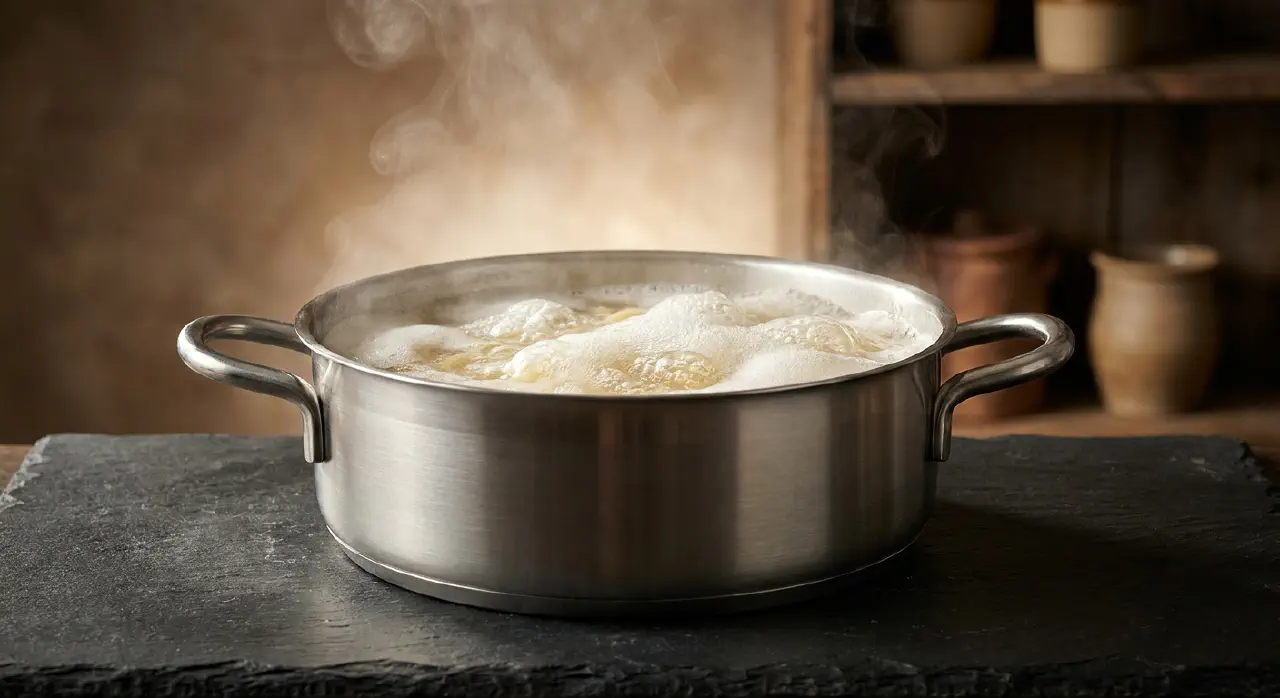
Boilover is not just an annoyance or a stove-cleaning catastrophe — it is a combined starch chemistry and temperature control problem. The foam is created by starch acting as a surfactant; the overflow is caused by binary on/off heating that dumps excess energy into violent steam production. Understanding both mechanisms reveals practical solutions.
The Foam Chemistry
When potatoes or pasta boil, starch granules swell and burst, releasing amylose and amylopectin into the water. These starch molecules create thin, flexible films around steam bubbles. In pure water, steam bubbles pop immediately at the surface. In starchy water, the films stabilize bubble structure — bubbles stack and trap additional bubbles, building a stable foam layer. This foam acts as an insulating lid, trapping steam underneath, which lifts the entire foam mat up and over the pot rim.