Starch Gelatinization
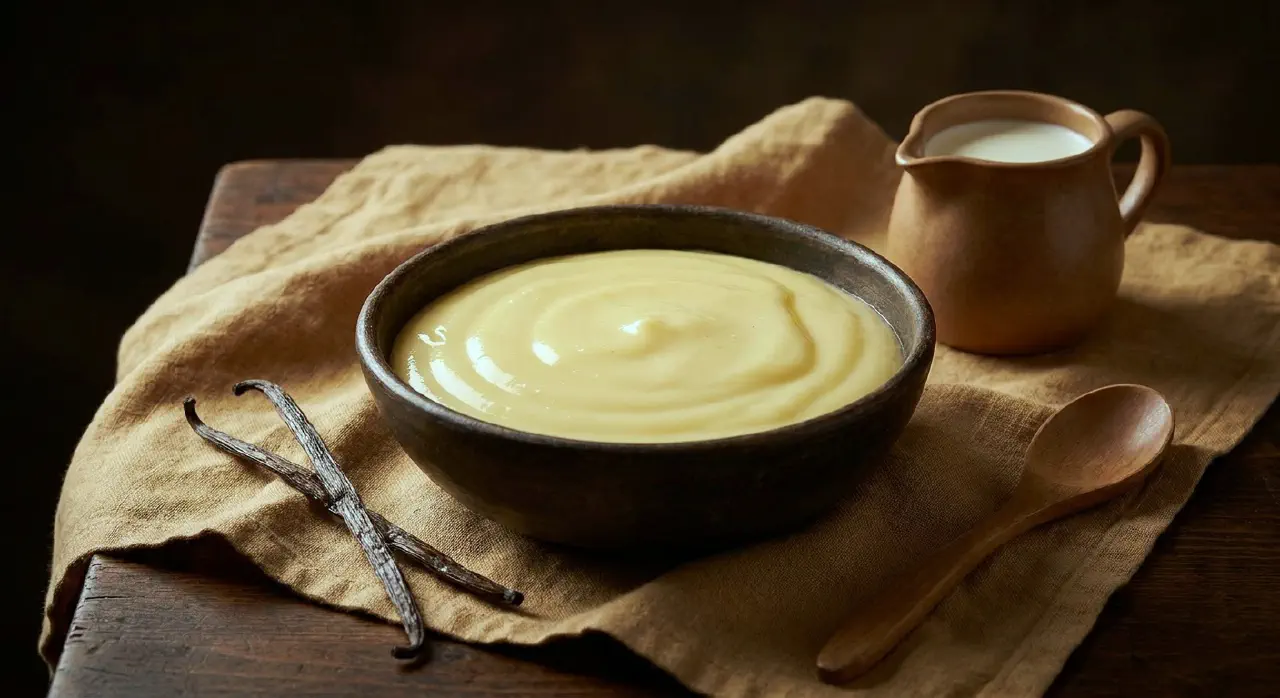
Starch gelatinization is the process by which starch granules absorb water, swell, and release their molecules to thicken a liquid into a gel. It’s the mechanism behind every roux-thickened sauce, every pot of cooked rice, and the structure of bread’s crumb.
What starch is
Starch is a plant’s way of storing energy - compact, unreactive chains of glucose sugars deposited in concentric layers within microscopic granules. Plants build two forms:
- Amylose - linear chains of glucose, more water-soluble
- Amylopectin - highly branched glucose chains, responsible for the characteristic stickiness and texture of starch gels
The ratio of amylose to amylopectin varies by plant and determines cooking behavior. Waxy rice is almost pure amylopectin (very sticky); long-grain rice has more amylose (fluffy, separate grains).
The gelatinization process
When starch granules are heated in water:
- Granules begin absorbing water and swelling
- The ordered crystalline structure of the granule breaks down
- Amylose molecules leak out into the surrounding liquid
- The mixture thickens as swollen granules and free starch molecules impede water flow
- Continued heating and stirring break granules further, releasing more starch
Different starches gelatinize at different temperatures and produce different textures - cornstarch makes opaque, firm gels; potato starch makes clear, delicate ones; tapioca produces a stretchy, glossy consistency.
Potato starch gelatinizes at around 67.5°C - the point at which potato cells transform from hard and raw to soft and fluffy during cooking. In deep frying, this is the mechanism behind the fluffy interior of a finished fry: as the potato heats in oil, its internal water reaches this threshold and starch granules swell, converting dense raw starch to a light, open structure. The steam produced by this process escapes outward through the forming crust, producing the vigorous bubbling visible when food enters hot oil - and the outward pressure of that steam is part of what prevents oil from penetrating the food’s interior during the fry.
Retrogradation: what happens next
After cooling, dissolved starch molecules slowly rebond with each other, forming a firmer gel over time. This is retrogradation - and it’s why bread stales.
Staling is not primarily about moisture loss. It’s about amylose molecules in the crumb reassociating into a more crystalline, rigid network. Refrigerator temperature accelerates retrogradation, which is why bread stales fastest in the fridge. Freezing halts it; reheating temporarily reverses it.
Practical implications
Sauce thickening: The workhorse application of starch. A roux (flour + fat) or slurry (starch + cold water) disperses starch before it hits hot liquid, preventing lumps. Overstirring or overcooking can break down the swollen granules and thin the sauce.
Different starches for different jobs: Cornstarch for opaque gravies, arrowroot or potato starch for glossy clear sauces, tapioca for pie fillings that need to hold their shape when cut.
Fat and acid interfere: Fat coats starch granules and slows water absorption. Acid can hydrolyze starch chains and weaken gels. Add acidic ingredients (wine, citrus) after the starch has fully gelatinized.
See also
- protein-denaturation - the protein analog of this process
- bread-baking - foam-to-sponge transition; starch gelatinization sets crumb; retrogradation causes staling
- pasta-noodles - starch gelatinization during pasta cooking; al dente as a hydration gradient
- cakes-batters - starch as primary structural material in cakes (not gluten); foam-to-sponge at 155–180°F
- pastry - choux pastry relies on starch gelation for wall structure
- seed-biology - amylose vs amylopectin, retrogradation as a nutritional benefit, grain cooking principles
- rice - the clearest illustration of amylose:amylopectin differences in practice
- legumes - amylose-rich seeds; how soaking and acid affect starch cooking
- wheat-flour - the primary starch source in Western baking
- sauce-making - starch (roux) as one of six thickening strategies; espagnole, velouté, béchamel families
- carbohydrate-overview - starch in the polysaccharide hierarchy; amylose vs amylopectin vs cellulose
- precision-rice - cooking rice at precise temperatures for target textures
- boilover-physics - why starch-thickened liquids boil over
- deep-frying - the steam armor principle; starch gelatinization creates the fluffy interior of fried foods
- starch-browning - the browning process specific to starch coatings