Precision Cooking
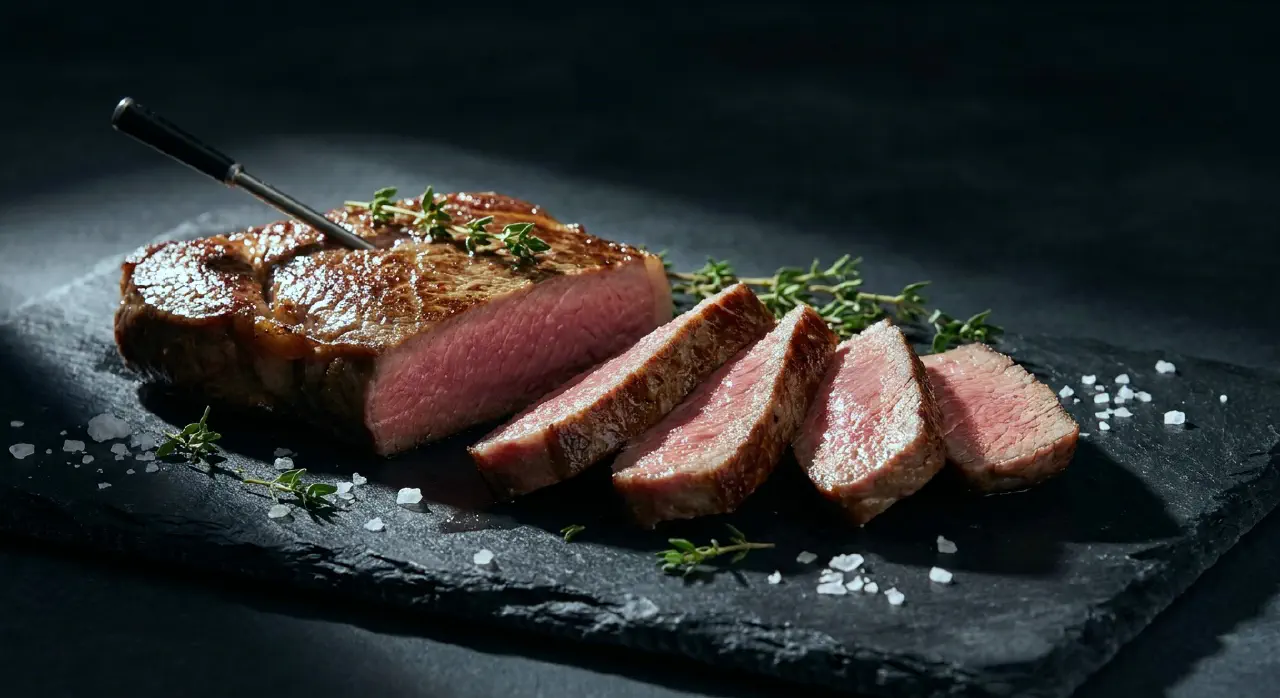
Precision cooking replaces guesswork with measured temperature control. The Arrhenius equation governs all cooking reactions exponentially - the same principle already captured in cooking-temperatures, but here applied practically to kitchen tools and techniques that eliminate the chaos of traditional heat sources.
The 10°C Rule Applied
Every 10°C roughly doubles reaction rate. A 5°C change ≈ 1.4–1.5× speed (noticeably faster). A 20°C increase = 4× acceleration, 30°C = 8×. This is why traditional hob swings of 20–40°C cause unpredictable browning and inconsistent results. Conversely, holding ±2°C allows precise control over when reactions occur.
Power vs Temperature
Traditional hobs use power settings (1–9) - a gas pedal approach that supplies constant energy regardless of pan contents. Temperature control uses feedback loops - a cruise control approach. The system detects temperature drops instantly and surges power to recover, maintaining a target throughout the cooking process.
A professional chef modulates heat 17 times during a single steak sear. Temperature control automates this entirely, applying high-frequency feedback to maintain stable conditions.
The First-Pancake Problem
Three interconnected failures plague traditional hobs:
- Preheat gap - You cannot see actual pan temperature, only guess based on droplet dance or timing.
- Heat-sink effect - Cold batter drops a 200°C pan by 40–60°C instantly.
- Recovery lag - The hob takes 2–5 minutes to climb back to temperature.
The second pancake succeeds because thermal mass is already saturated and recovery is faster. Temperature control eliminates all three: a sensor confirms preheat, an instant power surge responds to the temperature drop, and recovery happens in seconds instead of minutes.
Active Equilibrium
The temperature-control solution replaces manual modulation with automation. Once you set a target temperature, the system maintains it regardless of load. This active equilibrium is impossible with power-based heating.
Technical Applications
Where 3–5°C precision enables otherwise impossible outcomes:
- Clear stocks at 95°C - 5°C below boiling prevents fat emulsification that muddies the broth.
- Fresh-flavored jams at 85°C - Preserves volatile aromatic compounds that 100°C+ drives off.
- Quick thawing at 30°C - Fast enough to save time, cool enough to avoid cooking surface proteins.
- Yogurt fermentation at 41°C - ±3°C difference determines texture; 44°C produces grainy curds, 38°C produces thin runny yogurt.
- Bread proofing at 28–32°C - Doubles yeast speed compared to cold kitchen proofing.
See also
cooking-temperatures, heat-transfer, crust-engineering, maillard-reaction, precision-fermentation, precision-rice, precision-jam, quick-thawing