Barrel Aging
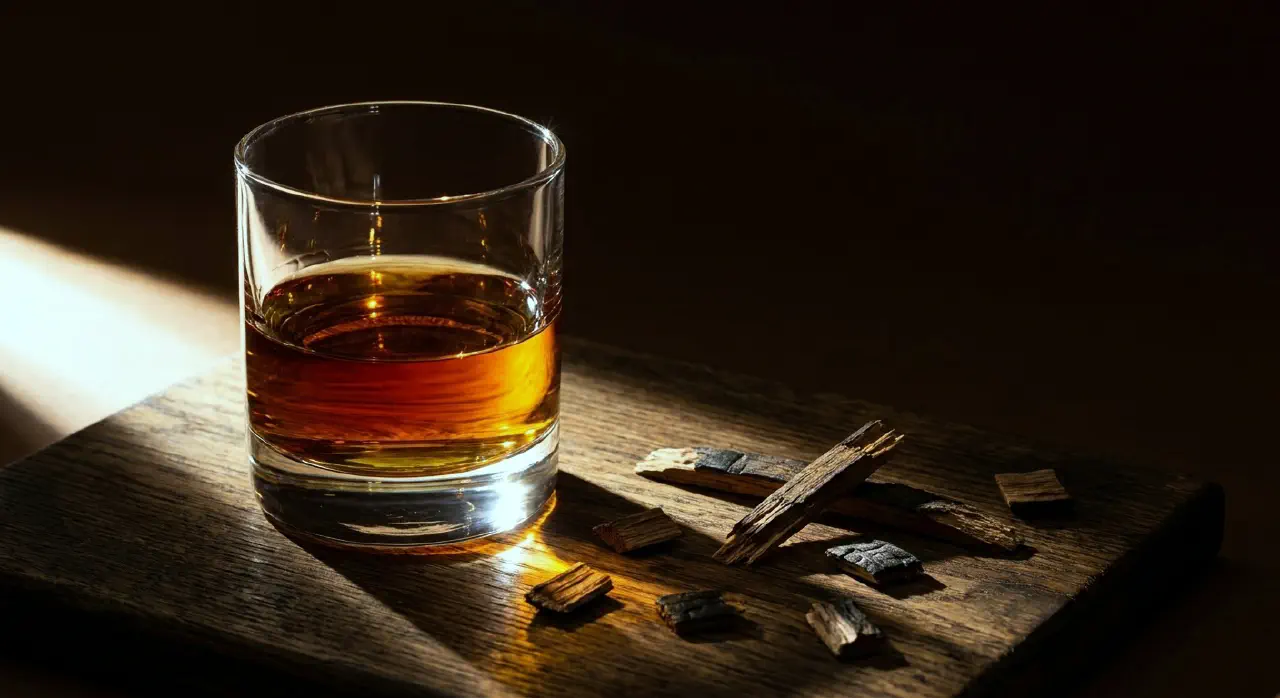
Oak barrels are not inert containers - they are active participants in the flavor of wine, spirits, and vinegar. The liquid extracts soluble compounds from the wood (tannins, vanillin, clove-like eugenol, coconut-and-peach oak lactones, sugars); absorbs limited oxygen through the wood’s pores; and undergoes slow chemical reactions that drive the contents toward a harmonious equilibrium. The barrel-making process - particularly toasting and charring - transforms the wood’s own cell-wall molecules into new aromatic compounds, making the cooper as much a flavor craftsman as the distiller or winemaker.
Why oak
Most barrels are oak, though chestnut, cedar, and redwood have been used historically. Oak heartwood (the older, inner wood of dead cells that support living layers) is filled with compounds that deter boring insects - and happen to include desirable aromatics. Some 90–95% of heartwood solids are cellulose, hemicellulose, and lignin; the remaining fraction contains the flavor-active molecules. Most are relatively insoluble in water, but strong alcohol can extract the lignins, which is why spirits extract more aggressively than wine.
Oak species
| Species | Region | Typical use | Character |
|---|---|---|---|
| Quercus robur, Q. sessilis | Europe | Wine barrels | Higher extractable tannins, subtler aromatics |
| Quercus alba (white oak) | North America | Spirit barrels | Lower tannins, higher oak lactones and vanillin |
American oak’s higher vanillin and oak lactone content explains the distinctive vanilla-forward character of bourbon and other American whiskeys aged in new American oak.
Making barrels: toasting and charring
The cooper splits heartwood into staves, dries the grain, and roughly hoops the staves together. Then heat transforms the wood:
European toasting - The barrel interior is heated with a small brazier of burning wood scraps to ~400°F/200°C to soften the staves for bending, then toasted further at 300–400°F/150–200°C for 5–20 minutes. Light toasting for wine, heavier for spirits. Heat breaks down cellulose and lignin, generating new aromatic compounds including vanillin, smoky volatiles, and browning-reaction products.
American charring - More extreme. Hooped staves are first steamed to soften, then the interior is charred with an open gas burner for 15–45 seconds. The carbonized surface acts as activated charcoal - it absorbs some undesirable compounds from the spirit while also accelerating maturation. This is why US law requires bourbon to age in new charred oak barrels: the charred layer is integral to the spirit’s character.
Flavor dynamics during aging
The barrel contributes flavor through several simultaneous processes: extraction of soluble tannins, oak and clove and vanilla aromas, and sugars; absorption of browning-reaction and smoky volatiles formed during barrel-making; limited oxygen exchange through wood pores driving slow oxidation reactions; and concentration through evaporation (the “angels’ share”).
New oak barrels give the most pronounced flavor - sometimes overwhelming for delicate wines. Producers control the oak contribution by limiting time in new barrels or using previously filled (“used”) barrels that have already yielded much of their extractable flavor.
Barrel-fermented character
Some wines and vinegars are fermented inside barrels and then aged there, developing a distinctive flavor not found in barrel-aged-only products. The unusual component is furfurylthiol - an aroma compound reminiscent of roasted coffee and roasted meat - produced by yeast enzyme action on compounds in toasted oak. This barrel-fermented character is a collaboration between living microbes and heated wood.
Alternatives to barrels
Oak barrels are expensive, so cost-effective alternatives have developed for less premium products: boisés (extracts made by boiling wood chips in water, a traditional finish for Cognac and Armagnac), oak chips or sawdust added to wines maturing in steel tanks, and barrel staves inserted into large vessels. These produce recognizable oak flavor at lower cost but with less nuance than traditional barrel aging.
See also
- distilled-spirits - brown spirits aged in barrels, maturation, angels’ share
- wine - barrel-fermented and barrel-aged wines
- vinegar - balsamic and sherry vinegar aged in wood
- alcohol-science - ethanol as solvent for wood extraction
- maillard-reaction - browning reactions during toasting
- sake - taruzake (cedar-aged sake)