Emulsion Sauces
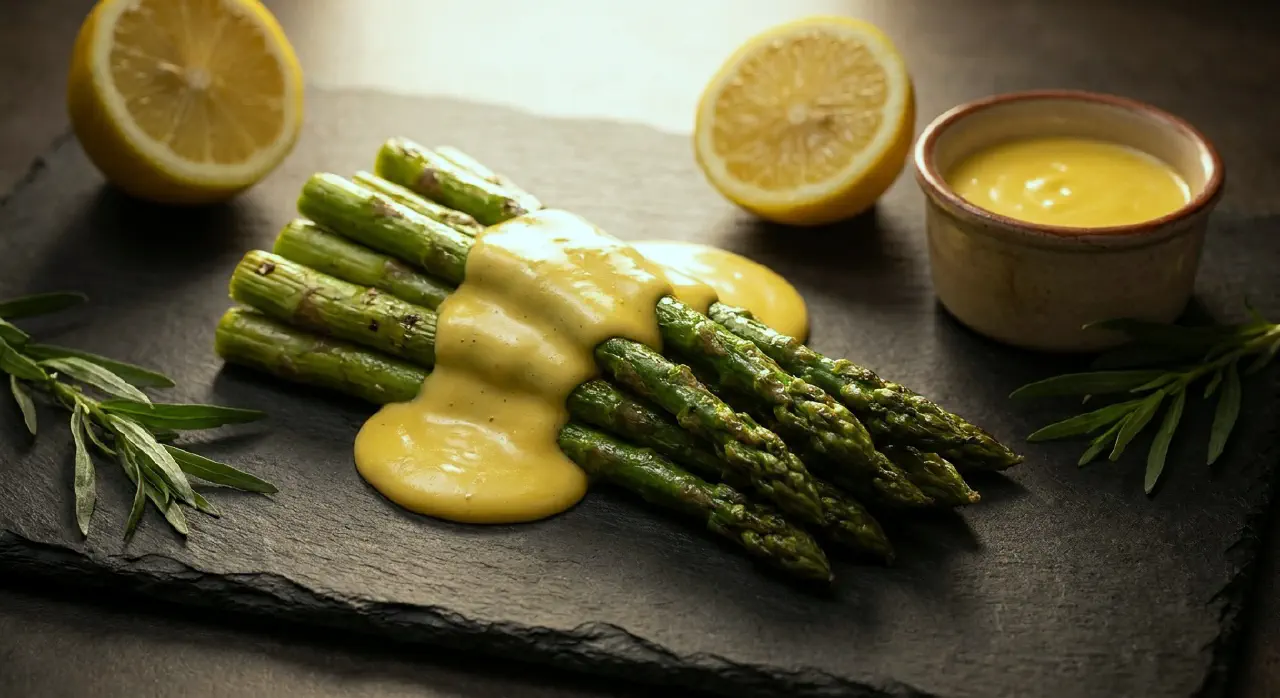
Emulsion sauces exploit the physics of emulsions to make oil and water coexist as a single, thick, creamy liquid. They divide into three families by temperature and emulsifier: cold egg sauces (mayonnaise), hot egg sauces (hollandaise, béarnaise), and butter sauces (beurre blanc). Each uses a different strategy to coat fat droplets in a water-based continuous phase, and each has a different fragility.
Mayonnaise: the cold emulsion
Mayonnaise is oil dispersed drop by drop into egg yolk and acid - the purest demonstration of emulsion building. The yolk’s phospholipids and proteins coat each oil droplet as it enters, creating a stable oil-in-water emulsion that can reach near-solid thickness.
Typical ratio: ~1 egg yolk emulsifies ~150 ml (5 oz) of oil. Exceeding this overwhelms the emulsifier supply and the sauce breaks.
Method: Whisk yolk with acid (vinegar or lemon juice) and seasonings. Add oil drop by drop at first - each drop must be coated before the next arrives. As the emulsion thickens and the continuous phase crowds with droplets, oil can be added faster. Mustard adds flavor and contributes its own emulsifying compounds.
Rémoulade is the best-known derivative: mayonnaise enriched with gherkins, capers, mustard, and anchovy paste.
Hollandaise and béarnaise: hot egg emulsions
These sauces combine the emulsifying power of egg yolk with gentle heat that partially coagulates yolk proteins, thickening the sauce while the proteins simultaneously coat melting butter droplets.
Method: Whisk egg yolks with acid over gentle heat (many cooks use a pot of hot water rather than direct flame). As the temperature rises through 120–140°F (50–60°C), yolk proteins unfold and begin bonding - the mixture thickens. Melted butter is then whisked in slowly, each addition emulsified by the unfolded proteins and phospholipids.
The temperature trap: Egg proteins thicken the sauce around 120°F but will coagulate into scrambled-egg lumps if pushed much above 140°F. The working range is narrow, which is why hot egg sauces have a reputation for difficulty.
Béarnaise replaces hollandaise’s lemon juice with a reduction of white wine, vinegar, shallots, and tarragon - the same emulsion physics, richer aromatic base. Mousseline folds whipped cream into hollandaise for a lighter texture.
Beurre blanc: reconstituted cream
Beurre blanc is the most elegant butter sauce - pieces of cold butter whisked into a flavored reduction of wine and/or vinegar. The result looks and feels like thick cream because that is essentially what it is: butter melting back into a fat-in-water emulsion. The phospholipids and protein remnants from cream’s original fat-globule membranes, still present in butter’s water phase, reassemble on the melting fat droplets and stabilize the new emulsion.
Emulsifier capacity: The phospholipids in butter’s water phase can emulsify 2–3 times the butterfat in which they’re embedded, which is why the sauce can absorb many pieces of butter once the initial emulsion forms. Clarified butter (water-free) can be added after the first few pieces establish the emulsion.
Fragility: The reformed emulsion breaks above ~135°F (58°C) because the reassembled phospholipid coatings are weaker than the original fat-globule membranes in cream. See pan-sauces for butter enrichment in the context of pan sauce finishing, where the same physics apply.
Vinaigrettes: the unstable emulsion
A vinaigrette is an emulsion with minimal emulsifier - oil whisked into vinegar (or other acid), relying mostly on mechanical agitation to disperse the droplets. It separates within minutes, which is by design: vinaigrettes are whisked fresh before serving.
Stabilizing aids: Mustard powder, garlic, and shallots contribute some emulsifying compounds. Prolonged whisking creates finer droplets and a better temporary emulsion. Most vinaigrettes are oil-in-water (water continuous phase), though some walnut oil vinaigrettes may invert to a fat-continuous phase.
Rescuing broken emulsion sauces
All emulsion sauces can break - the dispersed phase coalesces into pools and the sauce thins dramatically. Two rescue strategies:
Mechanical reemulsification (blender method): Pour the broken sauce into a blender and process vigorously. The mechanical energy re-breaks oil into fine droplets. Works if emulsifier and stabilizer molecules are still intact; fails if egg proteins have coagulated from overheating.
Gradual chemical rescue (more reliable): Start with a small amount of fresh continuous phase (water, acid) plus a new egg yolk for additional emulsifier. Gradually whisk the broken sauce into this fresh base - each addition incorporates into the new emulsion. For overheated sauces where proteins have coagulated, strain out lumps first; otherwise they leave a grainy texture.
For beurre blanc specifically, a splash of cool water and vigorous whisking often suffices because the phospholipids in butter’s water phase tolerate heat well and can reform their protective layer.
Prevention remains superior to rescue: add oil gradually, control temperature carefully, and don’t exceed emulsifier capacity.
See also
- emulsions - the physics of oil-in-water and water-in-oil systems
- sauce-making - the full thickening taxonomy and where emulsion sauces fit
- pan-sauces - butter enrichment as a finishing emulsion technique
- eggs - yolk phospholipids and proteins as the cook’s primary emulsifier
- butter - butter as emulsion, beurre blanc, compound butters
- cream - cream reduction as an alternative to emulsion sauces