Pan Sauces
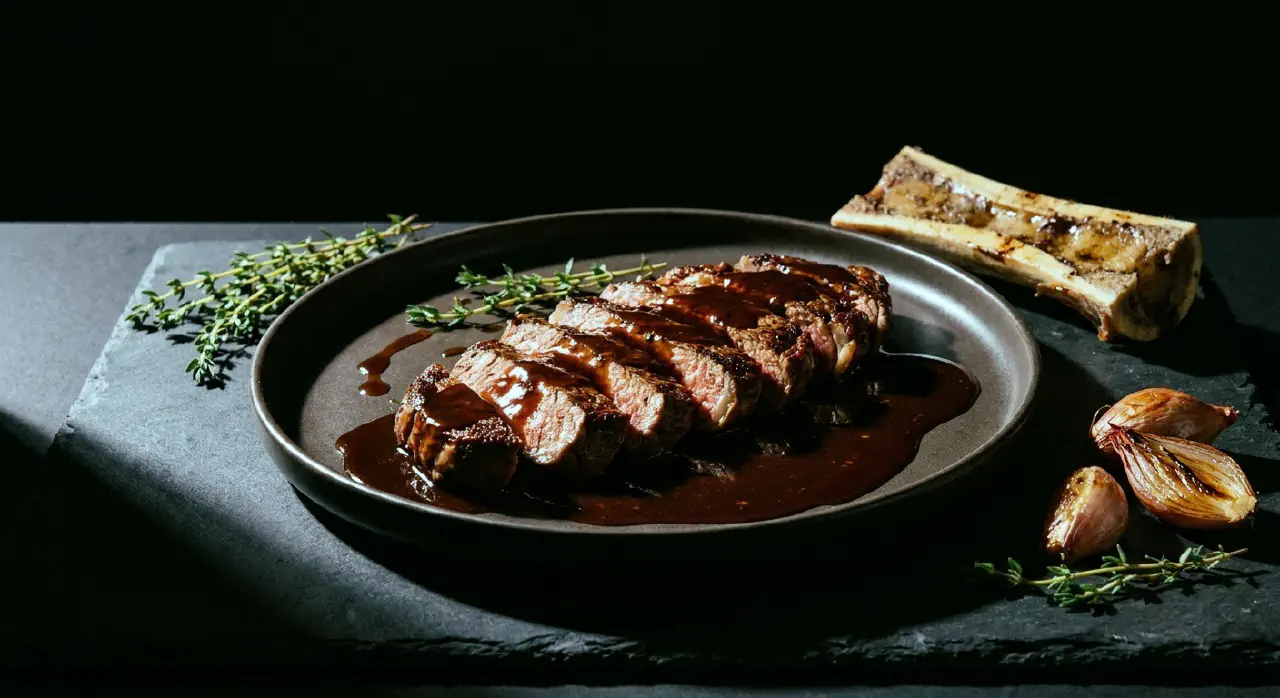
A pan sauce is the cook’s most immediate reward - flavor built in minutes from the concentrated residues of cooking, dissolved by a splash of liquid, and finished with butter or cream. Where classical sauces require hours of stock extraction and reduction, a pan sauce compresses the same flavor-building chemistry into a single pan at the moment of serving.
Fond: the flavor deposit
Fond (French: “bottom”) is the layer of browned residues stuck to the pan after searing or roasting - a concentrated deposit of Maillard reaction products, caramelized meat sugars, protein fragments, and dissolved minerals. This is the most flavor-dense material in the kitchen: every molecule has been through high-heat transformation. The entire pan sauce method exists to dissolve and distribute this material into a liquid.
The basic method
- Remove cooked food from pan (keep warm)
- Pour off excess fat if desired
- Deglaze: Add liquid - stock, wine, water, or fruit juice - and scrape the pan bottom vigorously to dissolve fond
- Reduce: Simmer to concentrate flavor and thicken through evaporation; gelatin from stock concentrates and provides body
- Season and balance: Taste for salt, acid, sweetness; adjust
- Finish: Swirl in butter, cream, or herbs off-heat
- Serve immediately
Deglazing liquids
Stock adds body (gelatin) and savory depth. Match stock to protein: beef stock for red meat, chicken for poultry, fish for seafood. See stocks-broths.
Wine adds acidity and complexity. Alcohol (boiling point 173°F/78°C) evaporates first; 5–10 minutes of simmering removes ~75% of alcohol. Tannins and bitter compounds concentrate during reduction - overly tannic wines become harsh. Red wine for red meats, white for fish and poultry; fortified wines (port, sherry, Madeira) add richness.
Water, broth, or fruit juice for lighter sauces. Pomegranate or cranberry juice adds tartness without alcohol.
Reduction science
Reducing concentrates everything - salt, acid, savory compounds, gelatin. This means:
- A sauce that’s perfectly seasoned at full volume becomes too salty if reduced further
- Gelatin molecules crowd together, increasing viscosity naturally
- Volatile aroma compounds may diminish (boiled off) while non-volatile savory compounds intensify
- Season last, after reaching target consistency
Temperature effects on gelatin: Prolonged high-heat reduction fragments gelatin into shorter chains, producing a smoother sauce that congeals more slowly when chilled. Gentle simmering preserves longer gelatin chains and more pronounced gel-like body.
Jus
Jus is the minimal pan sauce: deglazed pan juices reduced with a small amount of stock, unthickened by flour or starch. Thin, elegant, intensely flavored - relying entirely on concentrated gelatin and browning products for body. The modern restaurant default for meat dishes.
Finishing: butter enrichment
The most transformative finishing technique. Cold butter whisked into a hot sauce off-heat reforms into a fat-in-water emulsion - literally reconstituting cream. The physics: butter’s water phase contains phospholipid and protein remnants from the original cream; as butter melts into the sauce’s water, these molecules reassemble on the fat droplets, creating a stable emulsion.
Guideline ratio: 1 volume butter to 3 volumes sauce produces cream-like consistency and richness.
Temperature control: Keep below ~140°F (60°C) after adding butter - higher temperatures break the fragile reformed emulsion. For robust sauces already containing starch or abundant gelatin, butter can tolerate more heat because the other thickeners stabilize the droplets.
Finishing: cream and other enrichments
Heavy cream: Can be boiled and reduced (fat globule membranes are heat-stable). Reduced by ⅓ (~55% fat concentration) produces light sauce consistency; reduced by ½ (~75%) produces near-semisolid richness.
Light cream and sour cream: Cannot be cooked with acid present - casein proteins curdle. Add only as last-minute enrichment, off-heat.
Crème fraîche: The superior choice for hot sauces. Fermentation has already clustered most casein into a network, leaving low free casein that tolerates boiling even with acid. Adds tang and richness without curdling risk.
Fresh herbs: Add at the very end - heat destroys volatile aromatics. Finest-chopped parsley, tarragon, chervil.
Acid: A squeeze of lemon juice or splash of vinegar brightens a flat sauce. Add gradually, tasting as you go.
Gravy
Gravy is a pan sauce thickened with flour - the English domestic tradition rather than the French classical one. Because the starch cooks only briefly (minutes rather than hours), granules don’t fully disintegrate, producing a slightly coarser texture: hearty and almost bready when thick, rather than the suave refinement of long-simmered roux-based sauces.
Smooth paste method: Mix flour with a fraction of the deglazing liquid, heat until starch gelates into a thick paste, whisk vigorously to break granules into finer pieces, then combine with remaining liquid and simmer. Produces a smoother result than simply sprinkling flour into liquid.
See also
- sauce-making - the full thickening taxonomy and classical sauce families
- stocks-broths - the gelatin-rich liquid that gives pan sauces body
- maillard-reaction - the browning chemistry that creates fond
- emulsions - the physics of butter’s fat-in-water reformation
- butter - butter as emulsion, browned butter, compound butters
- cream - cream reduction, casein-acid problem, crème fraîche
- emulsion-sauces - beurre blanc as the purest expression of butter-into-sauce