Fish Flavor and Freshness
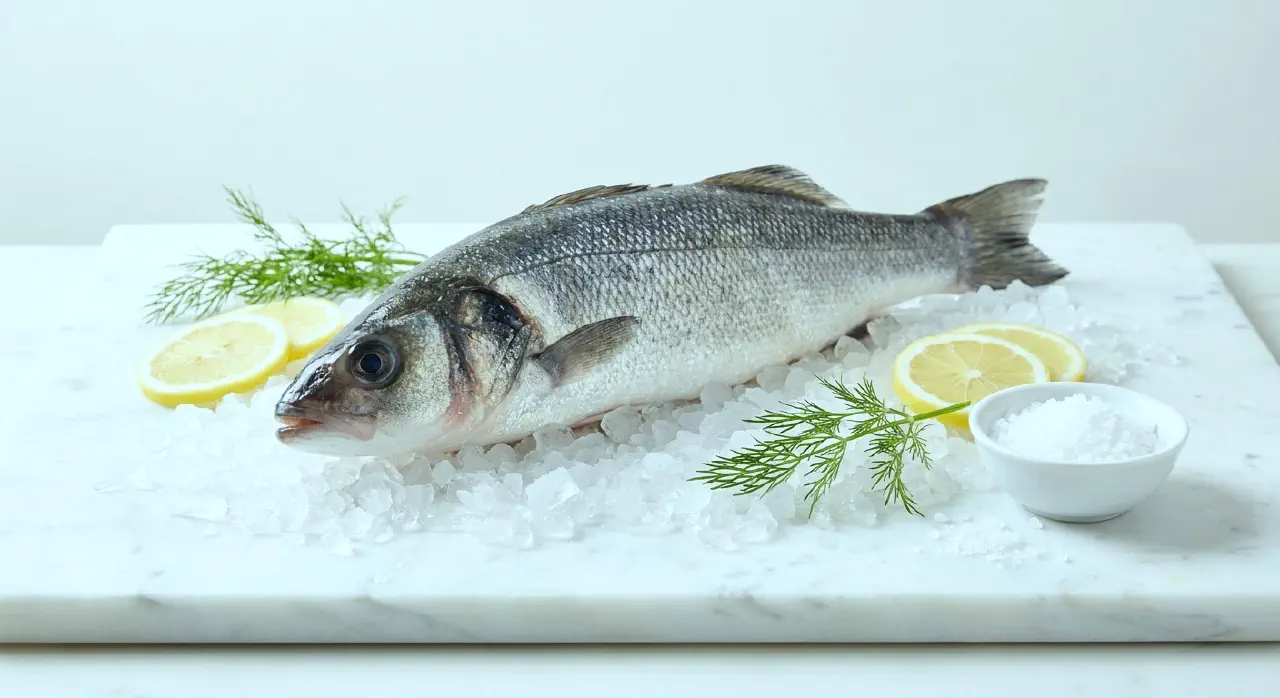
The flavor chemistry of fish is driven by an elegant adaptation: ocean fish must counterbalance the saltiness of seawater (about 3% salt) while their cells function optimally at ~0.8%. The molecules they accumulate for this osmotic balancing act are the same molecules that create their distinctive taste - and, eventually, their distinctive smell when they go off.
The Osmotic Strategy: Why Ocean Fish Taste Better
Ocean fish accumulate two main classes of osmolyte: amino acids (sweet glycine, savory glutamic acid) and TMAO (trimethylamine oxide, largely tasteless). Saltwater fish contain three to ten times more free amino acids than beef or freshwater fish, with shellfish especially rich. This explains the inherently savory, complex flavor of ocean seafood.
Freshwater fish face the opposite osmotic problem and accumulate far fewer of these taste molecules, resulting in milder flavor both fresh and aged. Flavor intensity scales with water salinity - open ocean fish are more flavorful than estuarine fish.
Sharks, skates, and rays use a different strategy: urea (slightly salty and bitter), which gives them a distinctive taste and a potential ammonia problem if not handled properly.
IMP: The Transient Umami Peak
When fish die, ATP breaks down through sequential steps, eventually producing IMP (inosine monophosphate) - a savory molecule similar to glutamate. IMP peaks then declines over hours. This means fish at prime quality (after rigor passes, typically 8–24 hours post-mortem) have an optimal balance of IMP and amino acids. The common wisdom that fish should be eaten immediately is slightly wrong - a brief aging period actually improves flavor.
Fresh Fish Smells Like Plants
Very fresh fish produces surprisingly green, plant-like aromas because both fish and plants contain lipoxygenase enzymes that break unsaturated fats into the same small aromatic fragments. The dominant 8-carbon compounds smell like crushed geranium leaves with a slightly metallic edge. Freshwater species also produce 6-carbon fragments (fresh-cut grass) and mushroom-like earthiness. Some migratory species like smelts produce melon and cucumber aromas.
Ocean fish additionally carry bromophenol compounds from algae, giving the characteristic seacoast aroma. Farmed saltwater fish lack this unless feed is supplemented.
Four Aroma Families of Cooked Fish
- Saltwater white fish: Mildest aroma
- Freshwater white fish: Stronger, with earthy notes; trout has sweet, mushroomy character
- Salmon and sea-run trout: Fruity, flowery aromas from carotenoid pigments (astaxanthin) accumulated from ocean crustaceans
- Tuna and mackerel: Meaty, beefy aroma from reactions between ribose sugar and cysteine amino acid - the same compounds found in cooked beef
TMAO → TMA: The Chemistry of Fishiness
This is the central spoilage reaction in fish. TMAO (trimethylamine oxide) is odorless in living fish. After death, bacteria on the surface and the fish’s own enzymes slowly convert TMAO to TMA (trimethylamine), which has the strong, characteristic “fishy” smell. The process is cumulative - fishiness increases with age as TMA accumulates.
Saltwater fish accumulate significant TMAO and can become very fishy. Freshwater fish do not accumulate TMAO and will never develop the same intensity of fishiness. Crustaceans accumulate relatively little TMAO.
As aging continues, unsaturated fats break down into stale, cheesy aldehydes that compound the fishiness. Frozen storage accelerates formation of DMA (dimethylamine), smelling weakly of ammonia. Fatty fish (herring, mackerel) are especially vulnerable to rancidity from oxygen attacking their highly unsaturated fats.
Controlling Fishiness
Acid is the most powerful tool, working two ways: it converts stale aldehyde fragments into nonvolatile forms that can’t reach the nose, and it bonds hydrogen ions to TMA, giving it a positive charge that locks it to water molecules. Lemon juice, vinegar, and tomatoes all work.
Rinsing removes TMA, bacteria, and oxidized fats from the surface. Enclosure during cooking (covered pan, parchment, poaching liquid) contains vapors. Aromatics (green tea, ginger, onion, bay, clove, cinnamon) may limit fatty-acid oxidation and mask odors. Cooling cooked fish before unwrapping reduces volatility.
For muddy freshwater fish (catfish, pond-raised carp), the culprits are geosmin and methylisoborneol from blue-green algae, concentrated in skin and dark muscle. Geosmin breaks down in acid, explaining traditional recipes pairing these fish with vinegar.
Freshness Assessment
For whole fish: glossy taut skin, transparent mucus coating, bright convex eyes, firm belly, and an aroma of fresh sea air or crushed green leaves. For cuts: full glossy surface without brown edges, mild sea-air smell. But appearances can deceive - post-spawning fish look fine but have depleted, mushy flesh, and microbial damage progresses faster than visible signs appear. The best protection is a reliable merchant with high turnover.
Storage
Temperature matters enormously because fish enzymes and spoilage bacteria evolved in cold water - a normal refrigerator (40–45°F) feels balmy to them. Fish on crushed ice (32°F) lasts nearly twice as long as in a refrigerator. Lean cold-water fish (cod, sole, tuna, trout) keep ~2 weeks on ice; fatty saltwater fish (salmon, herring, mackerel) ~1 week; lean warm-water fish (snapper, catfish, tilapia) ~3 weeks. Wrap fish to prevent direct contact with meltwater, which leaches flavor.
How Heat Transforms Flavor
Early moderate heat (up to 120°F) speeds enzyme activity, generating more amino acids and enhancing sweet-savory taste. Progressive cooking (120–160°F) mutes taste somewhat as amino acids combine into larger molecules, but aroma grows stronger and more complex. Surface temperatures above boiling produce maillard-reaction browning - the roasted, crusted exterior contrasting with moist interior.
See Also
- fish - Biology and muscle structure
- fish-cooking - Temperature targets and methods
- fish-safety - Spoilage-adjacent safety concerns
- preserved-fish - How preservation transforms fish flavor
- salt - Salt’s role in osmotic balance and preservation
- maillard-reaction - Browning chemistry on fish surfaces