Fish Safety
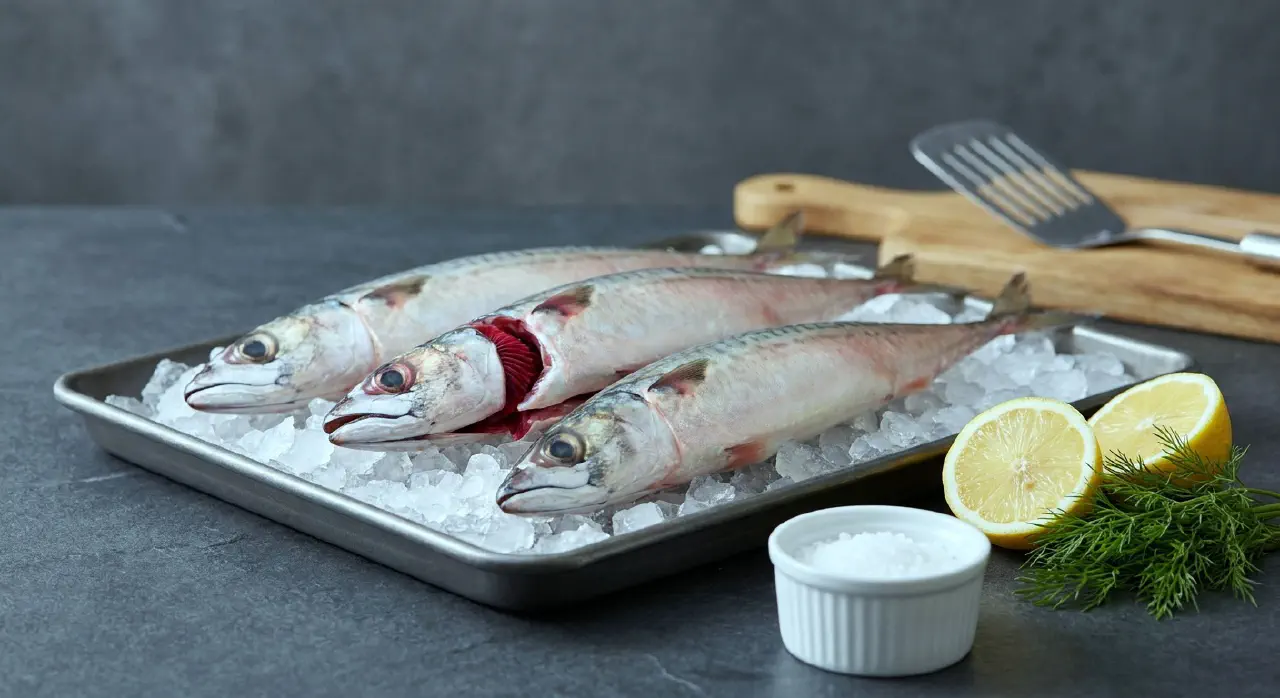
Fish presents a wider range of safety concerns than land animal meat, spanning industrial toxins that accumulate over years, biological pathogens, algal toxins that survive cooking, and parasites. The tradeoff is significant: fish also delivers unique health benefits - particularly omega-3 fatty acids - that make thoughtful consumption worthwhile.
Omega-3 Fatty Acids
Cold ocean water requires fish to maintain highly unsaturated fats that stay liquid at low temperatures. These omega-3 fatty acids (kinked at the third carbon from the end) are essential to human brain and retina development, and the body transforms them into anti-inflammatory immune signals (eicosanoids) that limit heart disease, reduce cancer risk from chronic inflammation, lower stroke incidence, and reduce blood cholesterol.
Ocean fish obtain omega-3s from oceanic phytoplankton. Farmed fish generally have lower levels due to formulated feed. Freshwater fish provide negligible omega-3s. Even lean fish have less saturated fat than meat, making them a useful dietary replacement.
Industrial Toxins: The Accumulation Problem
Heavy metals (mercury, lead, cadmium) and organic pollutants (PCBs, dioxins) accumulate in fish tissues through bioaccumulation - concentrations increase up the food chain. Cooking cannot eliminate them. Consumers cannot detect them.
Higher risk: Large, long-lived predatory fish - swordfish, shark, king mackerel, tilefish (mercury). Fish from contaminated waters like the Great Lakes (PCBs).
Lower risk: Small, short-lived open-ocean fish - Pacific salmon, sole, sardines, common mackerel. Farmed fish with controlled water (trout, catfish, tilapia).
Children and pregnant women should avoid the highest-risk species and limit overall fish consumption to 12 oz (335 g) weekly. Albacore tuna is increasingly suspect.
Scombroid Poisoning (Histamine)
A unique mechanism among seafood hazards. Active swimmers (tuna, mackerel, mahimahi, bluefish, herring, sardine, anchovy) contain baseline histamine. When improperly chilled after harvest, otherwise harmless bacteria convert amino acids to histamine toxin. Symptoms appear within 30 minutes of eating (even fully cooked fish): headache, rash, itching, nausea. Antihistamine drugs provide relief.
The only prevention is proper immediate chilling and buying from sources with excellent cold chain handling. Cooking does not destroy histamine.
Algal Toxins and Shellfish Poisoning
About 60 species of one-celled algae (dinoflagellates) produce defensive toxins. Bivalves (mussels, clams, scallops, oysters) concentrate these through filter-feeding. Five major poisoning types exist: diarrhetic, amnesic, neurotoxic, paralytic, and ciguatera. The toxins resist ordinary cooking - some become more toxic when heated.
Government monitoring of shellfish waters is the primary protection. The greatest risk comes from privately gathered shellfish.
Parasites
Over 50 species can transmit to humans through raw or undercooked fish. Common threats include anisakid worms (in herring, mackerel, cod, salmon, squid), tapeworms (in freshwater fish), and flukes (in Asian freshwater preparations).
Cooking to 140°F (60°C) kills all parasites. Freezing is also effective: FDA standards require –31°F (–35°C) for 15 hours or –10°F (–23°C) for 7 days. Home freezers rarely reach these temperatures. Tuna species commonly served in sushi are rarely infected with parasites and are often blast-frozen at sea. Farmed salmon carries much lower parasite risk than wild.
Biological Pathogens
Vibrio bacteria naturally inhabit warm estuary waters. V. vulnificus from raw oysters is the deadliest seafood-related disease (>50% fatality). Botulism bacteria can grow in the digestive system of unchilled fish, producing deadly nerve toxin - most cases involve improperly cold-smoked or salt-cured products. Hepatitis viruses can cause lasting liver damage.
Temperature protections: 140°F (60°C) kills bacteria and most pathogens. 185°F (83°C) kills viruses. Storage on ice prevents bacterial multiplication.
Carcinogen Formation
High, dry heat (grilling, broiling, frying) transforms fish proteins into DNA-damaging products. Risk reduction: prefer gentler methods (steam, braise, poach), marinate before high-heat cooking, use green tea and aromatics.
The Golden Rule
Buy from knowledgeable fish specialists with rapid stock turnover. Cook fish and shellfish promptly and thoroughly for maximum safety. Raw or lightly cooked preparations are best at established restaurants with expertise and premium fish access.
See Also
- fish - Fish biology and varieties
- fish-flavor-freshness - TMAO/TMA chemistry, freshness assessment
- fish-cooking - Temperature targets for safety
- preserved-fish - Safe preservation methods
- salt - Salt’s preservation role