Quick Thawing
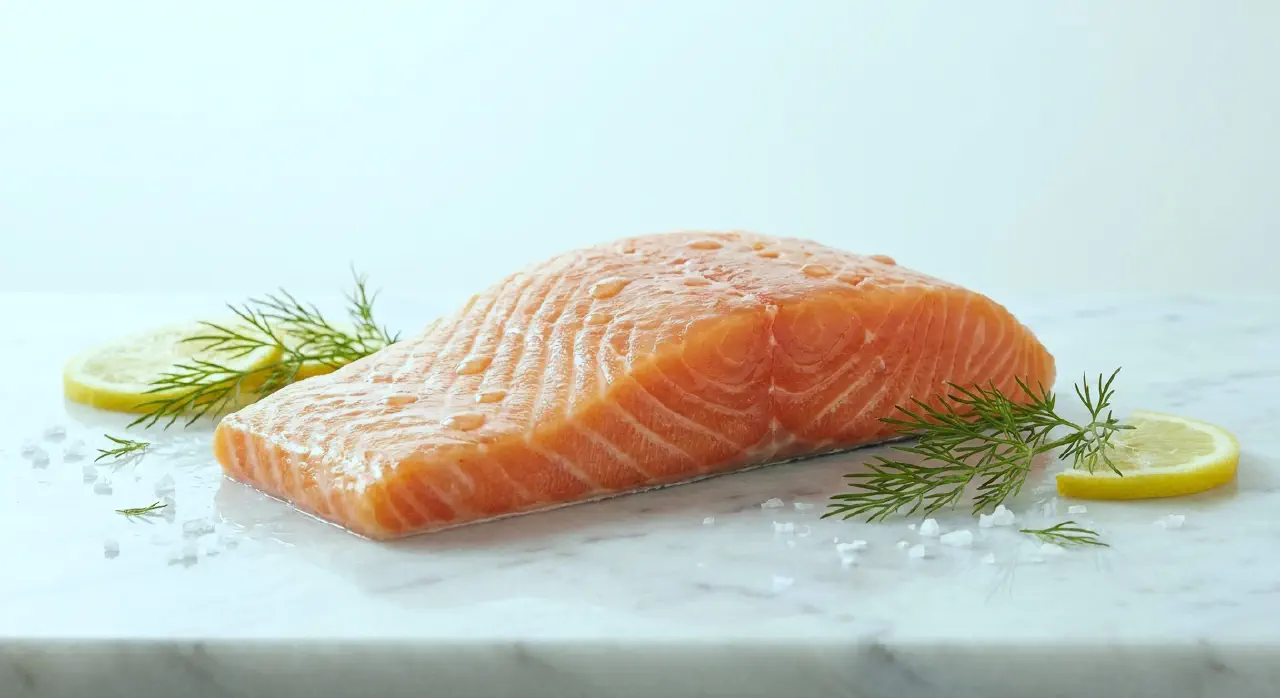
Room-temperature thawing feels intuitive but fails on every axis - slow, uneven, and dangerously long in the bacterial zone. The physics-based solution is a 30°C water bath: water is 24× more thermally conductive than air, and 30°C maximizes the temperature gradient without cooking the food’s surface.
The Conductivity Advantage
Water is roughly 24× more thermally conductive than air. Far more molecules collide with frozen surfaces per second, making even cold tap water (~10°C) faster than room-temperature air. At 30°C water, a 250g item thaws in 15-20 minutes versus 60-90 minutes in cold water or 3-4 hours on the kitchen counter - roughly 10-12× faster than air thawing.
This dramatic speed difference comes directly from physics. Thermal conductivity measures how efficiently heat transfers through a medium. Water’s denser molecular structure means exponentially more collisions with the ice surface, and hence faster heat transfer.
Why 30°C: The Temperature Sweet Spot
Fast thawing requires a large temperature gradient (ΔT) between frozen food (-18°C) and surrounding water, but you must avoid cooking the surface. Fish proteins denature from 40°C+, meat proteins from 55°C+, and vegetables at 82°C+.
At 30°C, you maintain a 30°C+ gradient (very fast thawing) while remaining safely below even the most temperature-sensitive fish proteins. At 50-60°C, the outer surface would cook (turning grey and firm) while the interior stays frozen - irreversible damage that cannot be undone.
30°C is the Goldilocks point: warm enough for speed, cold enough for safety.
Safety: Speed as Protection
Counter thawing parks food in the bacterial danger zone (5-60°C) for hours, giving pathogens ideal breeding conditions. At 30°C water, the brief 15-20 minute thaw minimizes total time in the danger zone. Speed itself is the safety mechanism - less time exposed = lower bacterial risk.
Traditional slow thawing in the refrigerator (24-48 hours) is safe because temperature stays below 5°C, but it sacrifices speed. The 30°C water bath achieves safety through speed rather than cold.
Standard Thawing Method
- Fill a pot with water and heat to precisely 30°C (use an instant-read thermometer).
- Bag the food in a vacuum-seal or zip-top freezer bag (improves thermal contact, prevents water absorption).
- Submerge completely and weight down with a plate if it floats.
- Check at 15-20 minutes for 250g items. Thawing is complete when the item is pliable throughout with no hard frozen core.
- Pat dry and use immediately or refrigerate.
Larger items (1kg+) may need 30-45 minutes. Check progress every 10 minutes and redistribute if one side thaws faster.
Premium Fish: The Brine Method
For sashimi-grade tuna or premium fish intended to be eaten raw, use a 4% salt brine (40g salt per 1L water) at 30°C. Salt serves dual purposes:
- Osmotic seasoning: Salt osmotically draws moisture out of the outer layer while seasoning the flesh, improving flavor throughout.
- Reduced drip loss: Salt lowers the water activity of the surface, minimizing weeping and wateriness as the fish thaws.
Brine-thaw protocol: Submerge fish in 30°C salt solution for 15-25 minutes until pliable. Rinse surface salt under cold running water. Pat dry thoroughly. Rest 10-15 minutes in the refrigerator before slicing.
Result: brighter color, firmer texture, significantly less wateriness, concentrated umami flavor - visibly superior to standard thawing.
See also
fish-cooking, fish, protein-denaturation, precision-cooking, water-science