Syrups
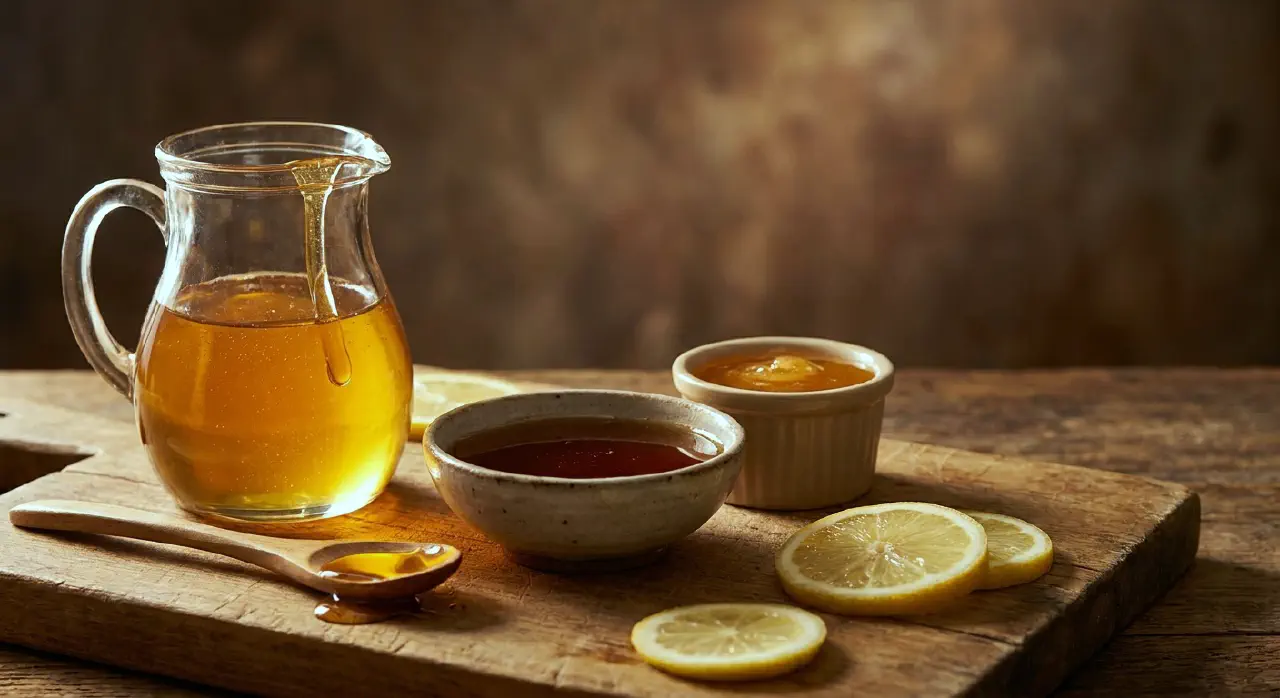
Syrups are concentrated sugar solutions that retain some or all of the flavor compounds, acids, and minerals from their source - unlike refined table sugar, which is pure sucrose. Each syrup has a distinctive chemical profile that determines its sweetness, viscosity, color, browning behavior, and crystallization tendency. Corn syrup dominates industrial confectionery because its long glucose chains physically prevent crystallization; maple syrup is prized for complex browning flavors; molasses carries the deepest mineral and caramel character.
Tree syrups
Maple syrup
North American natives developed maple sugaring long before European contact, using cold nights to freeze water out of sap (concentrating the sugar that remained). Modern collection taps sugar maples in early spring for a ~6-week season; ~40 parts sap yield 1 part syrup. Sap starts at ~3% sucrose and is concentrated - often after reverse osmosis removes ~75% of the water - by boiling to ~65% sugar at 7°F/4°C above water’s boiling point.
The flavor comes from caramelization and Maillard browning during boiling: vanillin (a common wood byproduct), caramel products, and sugar-amino acid reaction compounds. Longer, hotter boiling produces darker color and heavier taste - Grade A is lighter and more delicate; Grades B and C are stronger and preferred for cooking.
Maple sugar is syrup concentrated to the crystallization point. Cooled slowly, it forms coarse crystals; cooled rapidly in ice water and beaten continuously, it becomes “maple cream” - fine crystals dispersed in syrup, analogous to fondant.
Birch syrup
Made from birch sap in far-northern regions (Alaska, Scandinavia). Much more dilute than maple (~1% sugars, mainly equal glucose and fructose), requiring ~100 parts sap per part syrup. The different sugar profile (no sucrose dominance) produces a reddish-brown syrup with a more caramel-like, less vanillic character than maple.
Palm syrup and sugar
Tropical palms are the most generous sugar-giving trees. The Asian sugar palm can yield 15–25 quarts of sap daily at 12% sucrose - far more productive than any temperate tree. The sap is boiled to syrup (“palm honey”) or crystallized into unrefined sugar called gur (Hindi) or jaggery. Unrefined palm sugar has a distinctive winey aroma central to Indian, Thai, and Burmese cuisines.
Cane and beet syrups
Molasses
The end product of sugar refinement - the syrup remaining after sucrose crystals have been spun out. Light (Barbados) molasses retains 35% sucrose and 35% invert sugars with 2% minerals; blackstrap molasses has 10% minerals, darker color, and the strongest flavor: woody, green, sweet, caramel, and buttery. Molasses is the background flavor in gingerbread, barbecue sauce, baked beans, and licorice. Its acidity reacts with baking soda to produce leavening CO₂.
Golden syrup
A refinery syrup made from raw sugar, filtered through charcoal for a light, crystal-clear appearance and delicate butterscotch-caramel flavor. About 25–30% sucrose and 50% invert sugars.
Sorghum syrup
Made in the American South from sweet sorghum stalk juice. Mainly sucrose with a distinctive pungency.
Corn syrups and malt
Corn syrup
Made by breaking starch (long glucose chains) into shorter chains and individual glucose molecules using acids or enzymes. Consumer-grade corn syrup is ~20% water, 14% glucose, 11% maltose, and 55% longer glucose chains. Those long chains are the key: they tangle together, slowing molecular motion and producing viscosity unmatched by any other common sweetener at equivalent concentration.
As an interfering agent, corn syrup is indispensable in candy-making. The tangled chains physically block sucrose molecules from finding crystal surfaces, preventing grainy texture. Corn syrup also binds water (prolonging shelf life), is less sweet than sucrose (avoiding cloying sweetness), and is slightly acidic (reacting with baking soda for leavening).
High-fructose corn syrup (HFCS) is corn syrup treated with an enzyme that converts some glucose to fructose (~53% glucose, 42% fructose), matching sucrose’s sweetness at lower cost. It replaced cane sugar in most American soft drinks in the 1980s.
Malt syrup and extract
Among the most ancient sweeteners - China’s primary sweetener for 2,000 years before cane sugar. Made by a three-stage process: (1) malt whole grain (soak, germinate partially, dry - germination produces starch-digesting enzymes), (2) mix malted grain with cooked starch from rice, wheat, or barley (enzymes digest starch into sugars), (3) extract and concentrate the sweet liquid. The result is a syrup of maltose, glucose, and longer glucose chains - much less sweet than sucrose at equivalent concentration.
Malt extract (malted barley alone, no added grain) has a much stronger malt flavor. In Asian cooking, malt syrup provides the color and gloss painted onto Peking duck skin. In Western baking, it feeds yeast and contributes maltose for crust browning.
Other syrups
Agave syrup: From agave sap, ~70% fructose and 20% glucose - the sweetest common syrup due to its fructose dominance.
Fruit syrups: Made from surplus or damaged fruits (apples, pears, grapes), concentrated to ~75% sugars. Ancient Italian saba (grape must syrup) was Europe’s original sweet syrup before cane sugar arrived.
See also
- sugar-science - the chemistry of glucose, fructose, sucrose, and crystallization
- honey - nature’s invert syrup, the closest analog to tree syrups
- candy-making - corn syrup as the master interfering agent
- caramelization - browning reactions during syrup concentration
- maillard-reaction - sugar-amino acid reactions in maple syrup, malt, molasses
- starch-gelatinization - starch as the raw material for corn and malt syrups