Wood Smoke and Charred Wood
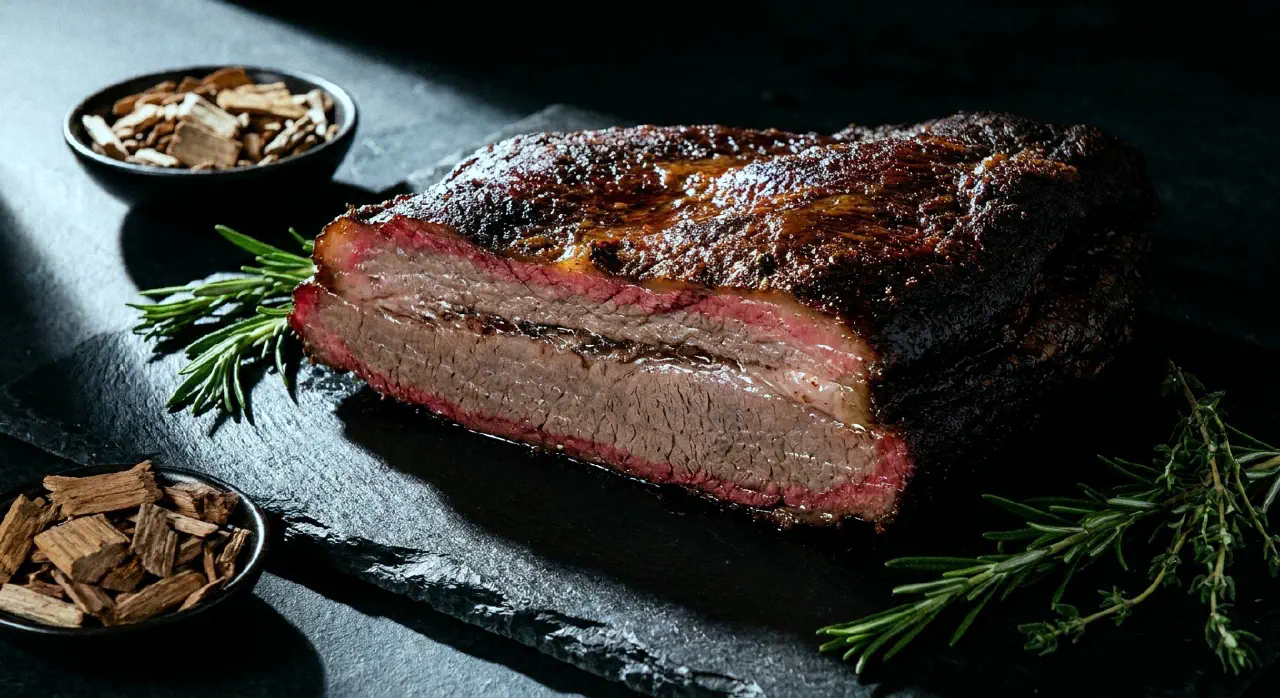
Wood smoke delivers phenolic flavors identical to those found in spices - vanillin (vanilla), eugenol (cloves), guaiacol (smoky warmth) - because wood’s structural lignin is itself a massive phenolic polymer. When heat breaks it apart, the fragments are the same small molecules that define clove and vanilla aroma. This shared chemistry explains why smoked foods pair so naturally with spice-heavy cuisines.
Wood composition
Wood is built from three primary materials, each contributing different flavor compounds when burned:
Cellulose and hemicellulose (60–80% of dry weight): The cell-wall framework and filler, both aggregates of sugar molecules. Hemicellulose combusts first (390–480°F / 200–250°C), producing acetic acid (vinegar tang) and diacetyl (buttery). Cellulose combusts higher (540–610°F / 280–320°C), producing furans (sweet, bready, floral), lactones (coconut, peach), and acetaldehyde (green apple).
Lignin (20–40%): The phenolic reinforcement binding cell walls together - among the most complex natural substances known. Combusts at ~750°F (400°C), producing guaiacol (smoky, spicy), vanillin (vanilla), phenol (pungent), isoeugenol (sweet, clove-like), and syringol (spicy, sausage-like). Higher lignin content means harder wood and hotter burning - mesquite is 64% lignin versus hickory’s 18%.
Protein and resin: Small amounts of protein support browning reactions generating roasted flavors. Evergreen resins (pine, fir, spruce) produce harsh soot when burned - these woods are generally avoided for food smoking.
Optimal smoking conditions
Flavor quality depends heavily on temperature. The sweet spot is relatively low smoldering at 570–750°F (300–400°C), where wood components break into flavorful fragments without further decomposition into harsh or flavorless molecules. Higher temperatures destroy the desirable phenolics. This is why pre-soaking wood chips before adding them to glowing charcoal is effective - the moisture cools the coals, and pure carbon charcoal at 1,800°F burns mostly smokelessly on its own.
Oak, hickory, and fruit-tree woods (cherry, apple, pear) have moderate, balanced component ratios producing the most pleasing smoke flavor. High-lignin woods like mesquite burn too hot unless airflow is restricted.
Smoke delivery
Direct smoking: Volatiles in the smoke vapor absorb into the food’s moist surface. Desirable phenolic compounds are reactive and largely dissipate over weeks to months - smoke flavor itself is less stable than the preservation it provides.
Barrel aging: Wine and spirits stored in barrels with charred interiors extract volatiles trapped in and just below the charred surface. The char layer acts as a controlled-release reservoir of phenolic flavor compounds, flavoring the liquid slowly over months or years.
Safety and carcinogens
Smoke was originally valued as a preservative: formaldehyde, acetic acid, and phenolic compounds are antimicrobial, and smoke’s pH of 2.5 is hostile to most microbes. Phenolics also act as antioxidants, slowing rancid flavor development in smoked meats and fish.
The concern is polycyclic aromatic hydrocarbons (PAHs) - proven carcinogens formed from all wood components in increasing amounts at higher temperatures. Hot-burning mesquite generates roughly double the PAHs of hickory. Minimization strategies: keep fire temperature low, position food far from the fire, ensure free air circulation to carry soot and PAH particles away. Commercial smokers use air filters and temperature control.
Liquid smoke
Smoke separates into two phases: visible microscopic droplets (tars, resins, heavier phenolics including PAHs) and invisible vapor (most flavor and preservative compounds). Since PAHs are largely water-insoluble while flavor compounds dissolve readily, condensing smoke vapor into water effectively separates the desirable from the dangerous. Toxicological studies confirm liquid smoke in normal culinary quantities is safe. Storage tip: PAH residues aggregate and sink over time - don’t shake the bottle.
See also
- flavor-chemistry - phenolic chemistry, the shared molecular basis of smoke and spice flavors
- warm-spices - eugenol in cloves, cinnamaldehyde in cinnamon - same phenolic class as smoke compounds
- aromatic-seeds - vanillin in vanilla parallels vanillin from lignin breakdown
- maillard-reaction - browning reactions from wood protein, barrel-aging chemistry
- spice-handling - phenolic extraction principles shared with smoke absorption
- tea - Lapsang souchong (pine-smoke dried), Chinese tea-smoked duck