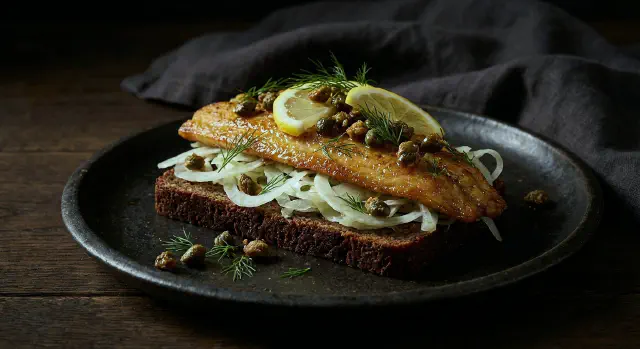
Sous Vide Halibut
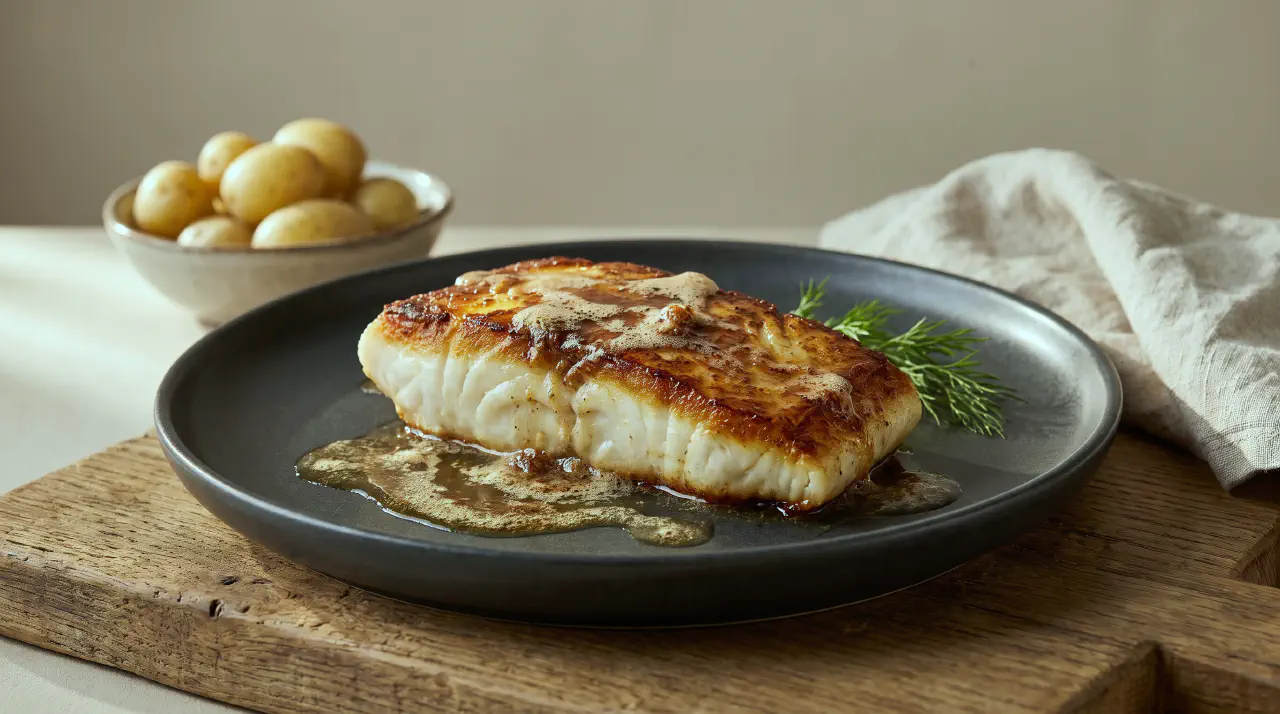
Sous Vide Halibut
Halibut is lean, mild, and notoriously easy to overcook - a few minutes too long in a hot pan or oven and it goes from moist to dry with almost no warning in between. Sous vide takes that risk out of the equation. The fish cooks in a precise, low-temperature water bath, well short of the point where it dries out, so it comes out evenly done from edge to edge. A short sear in butter afterward supplies the color and crust the water bath can’t.
This isn’t a heritage recipe with one traditional version behind it. Sous vide halibut is a technique, worked out and refined by home cooking labs and sous vide equipment makers rather than handed down through generations, and the “consensus” version reflects side-by-side testing rather than a single origin. What most of that testing agrees on is a short dry brine of at least 30 minutes to season the fish and firm its texture, a water bath around 130°F (54°C), and a fast butter baste to finish.
Because the fish never gets hot enough in the bath to pasteurize, quality matters more here than in most recipes. Start with the best halibut you can find - ideally fillets sold for raw or lightly cooked preparations - and keep the seasoning simple: salt, butter, and whatever herbs you like.
Serve it plain with the pan butter spooned over the top, or dress it up with a squeeze of lemon and something green on the side. A simple salad, steamed vegetables, or boiled potatoes all work without competing with the fish. It’s fast enough for a weeknight but precise enough to serve when you have guests.
Ingredients
Serves 4
- 4 skinless halibut fillets, about 170 g each, 2.5-4 cm thick (sashimi-grade quality recommended)
- kosher salt
- 55 g unsalted butter, divided
- fresh herbs, optional (thyme, parsley, or dill)
- shallot, thinly sliced, optional (or citrus zest, grated)
Directions
Season the halibut fillets on all sides with kosher salt, about ½ teaspoon per fillet. Lay them in a single layer in one or more zipper-lock bags with 2 tablespoons of the butter and any herbs, sliced shallot, or citrus zest you’re using. Seal the bags, pressing out as much air as you can, and refrigerate for at least 30 minutes and up to overnight. This short dry brine seasons the fish and firms its texture before it goes anywhere near the water bath.
Set a sous vide circulator to 130°F (54°C) and let the water come up to temperature. Take the bags straight from the refrigerator and lower them into the bath using the water displacement method - dip each one in slowly and seal it just before the top edge goes under, so water pressure pushes the trapped air out. Skip the vacuum sealer here; the suction it applies can dent and misshape the delicate flesh, so zipper-lock and displacement is the safer choice for raw fish.
Cook the halibut for 30 to 45 minutes, extending toward an hour only if your fillets run closer to 2 inches thick. Sous vide fish doesn’t get more tender with extra time the way a tough cut of meat does, so pull it as soon as its window is up.
Lift the fillets out of the bags and pat them dry thoroughly with paper towels - a dry surface is what lets the sear brown instead of steam. Heat the remaining 2 tablespoons of butter in a heavy skillet over medium-high heat until the foaming subsides, then lay the fish in presentation-side down. Let it color for 30 to 45 seconds, then tilt the pan and spoon the hot butter over the top for about another minute, until the first side is a deep golden brown, roughly 1½ minutes in total. Flip, brown the second side for 15 to 30 seconds, and transfer to a paper towel to blot off the excess butter before serving right away.
Notes
Treat the temperature as a dial, not a fixed rule. At 120°F (49°C), halibut comes out barely set and almost translucent in the center, closer to a sashimi texture. 130°F (54°C) is the setting most sources land on - moist and flaky, but still firm enough to survive a hard sear. Push it to 140°F (60°C) and you get a firmer, fully opaque piece of fish, the most “cooked” end of the range. None of these is more correct than another; it comes down to preference, not food safety.
Because the water bath at these temperatures never gets hot enough to pasteurize the fish, start with the best halibut you can source, ideally fillets sold for raw or lightly cooked preparations.
For a sauce-forward plate instead of a seared crust, skip the pan sear and serve the halibut straight from the bag under a lemon browned butter sauce: brown 4 tablespoons of butter, then stir in minced shallot, capers, chopped parsley, and lemon segments or juice, and season to taste.
If you only have a vacuum sealer, use its gentlest or “moist” setting rather than a full seal, so the fillets don’t get crushed.
See Also
Beef Cuvette - Red Meat Sous Vide
Beurre Blanc (White Butter Sauce)
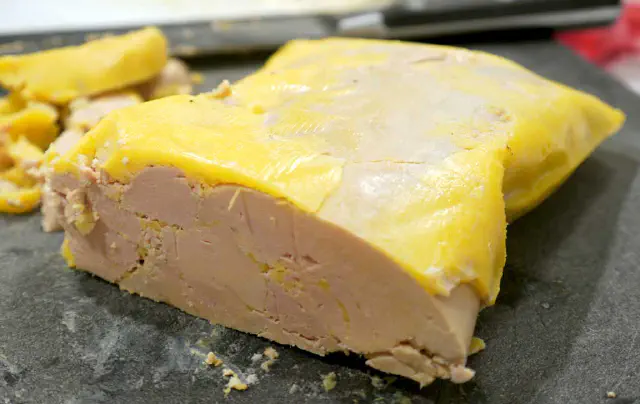
Foie gras terrine - made sous vide

Smoked halibut with rygeost cream and cucumber