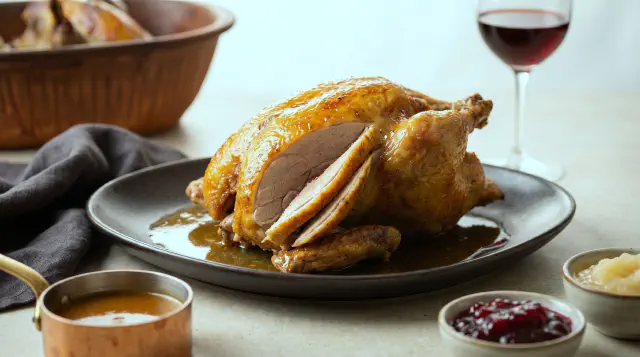
Sous Vide Pheasant Breast
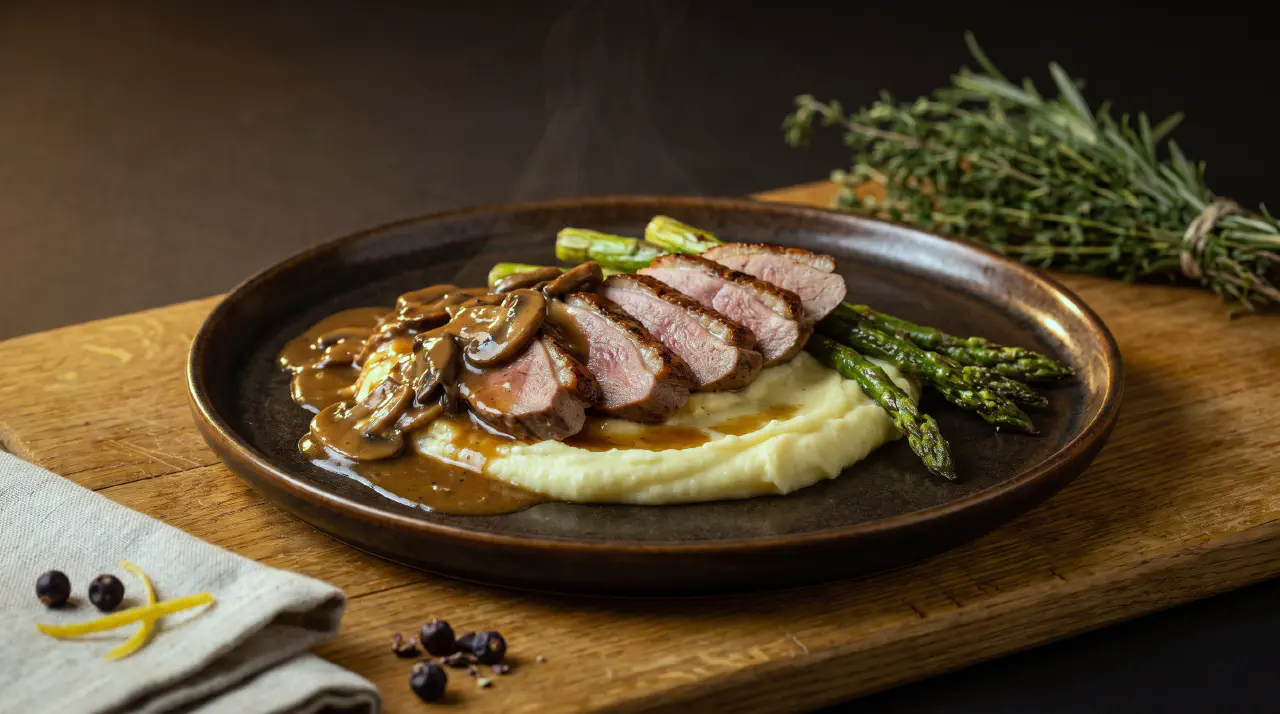
Sous Vide Pheasant Breast
Pheasant breast is some of the leanest game bird you can bring into the kitchen, and that’s exactly why it’s so easy to ruin in a hot pan. Without the layer of fat under the skin that a chicken or duck has to fall back on, the meat goes from juicy to dry and stringy in under a minute if the temperature isn’t precise. Sous vide solves the problem by holding the breasts at a steady, gentle temperature in a water bath, so the whole piece is evenly heated through without the outer edge overcooking while the center is still cold.
The breasts are lightly seasoned with salt and pepper and vacuum-sealed together with thyme, rosemary, a few crushed juniper berries, garlic, lemon zest and a knob of butter - a seasoning that recurs throughout most of the Danish game kitchen. The bag goes into a water bath at 133-136°F (56-58°C) for 1-2 hours, which strikes a safe middle ground: the meat has time to cook evenly through without coming anywhere near the dry zone that begins around 145°F (63°C). Once the time is up, the breasts are patted thoroughly dry and briefly seared in butter in a very hot pan, so they get a golden crust before they’re sliced.
The result is a breast that is lightly pink in the middle, tender and juicy all the way through, with a distinct but not overly wild flavor of feathered game. The brief searing afterward adds the crust and buttery flavor the meat would otherwise lack if it only came out of the bag.
Pheasant has been part of the Danish hunting kitchen for generations, traditionally cooked as a whole, roasted bird or as pan-fried breasts - both methods that easily overcook the tender meat. The sous vide technique is a more recent addition that has caught on among Danish hunters and food enthusiasts, precisely because it solves the pheasant’s biggest weakness without compromising on flavor.
Sous vide pheasant breast fits naturally into the autumn and winter dinners of the hunting season, when pheasant is increasingly found in Danish supermarkets too. Serve it with a reduced chicken-stock or cream sauce and a slaw of celeriac, apple, shallot and bacon, or more classically with mashed potatoes, mushroom sauce and asparagus.
Ingredients
Serves 4
- 4 boneless, skinless pheasant breasts, about 115-130 g each
- salt
- freshly ground pepper
- 4 sprigs fresh thyme
- 2 sprigs fresh rosemary
- 4 juniper berries, lightly crushed
- 2 garlic cloves, sliced
- 1 thin strip of lemon zest, from an unwaxed lemon
- 2 tbsp butter, for the bag
- 1 tbsp clarified butter (or oil), for searing
Directions
Trim the pheasant breasts of sinews and excess fat, and season them lightly with salt and freshly ground pepper.
Lay the breasts in a vacuum bag together with the thyme, rosemary, crushed juniper berries, garlic, lemon zest and butter, spread out in a single layer, and vacuum-seal the bag.
Lower the bag into a water bath at 133-136°F (56-58°C) and let the breasts cook for 1-2 hours. This is the temperature and time that determine the result: keep below 140°F (60°C), and under no circumstances go up toward 145°F (63°C) or above, since even a short time at that temperature is known to produce dry, stringy meat.
Take the bag out, cut it open, and pat the pheasant breasts thoroughly dry with paper towels. This is crucial for getting a proper sear in the next step.
Heat the clarified butter or oil in a pan over high heat, and sear the breasts for about 30 seconds to 1 minute per side, until they have a golden-brown crust.
Let the meat rest for 2-3 minutes, then slice it on the diagonal, and serve at once.
Notes
For a result closer to pink, “red” game bird with minimal cooking time, the temperature can be lowered to 129-131°F (54-55°C) for 30-45 minutes instead. In return, this calls for extra care with the size of the breasts, since thin breasts can end up undercooked and thick breasts aren’t necessarily pasteurized in such a short time.
Always avoid temperatures of 145°F (63°C) and above - it is known to produce dry meat, even with a relatively short cooking time.
Serve with a reduced chicken-stock or cream sauce and a slaw of celeriac, apple, shallot and bacon, or more classically with mashed potatoes, mushroom sauce and asparagus. Pheasant breast is increasingly found in Danish supermarkets during the hunting season, so there’s no need to seek out a specialist butcher.
See Also
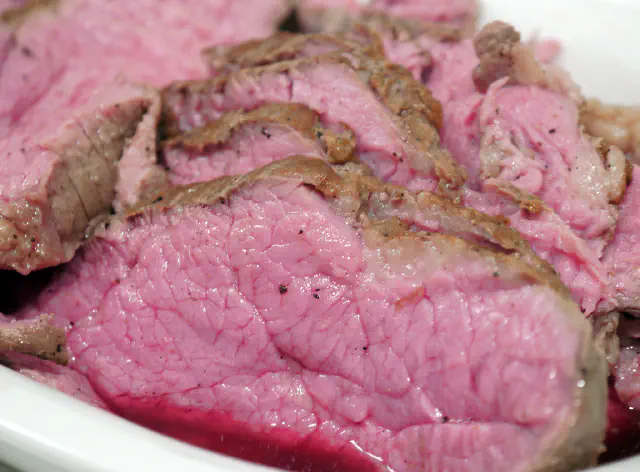
Beef Cuvette - Red Meat Sous Vide
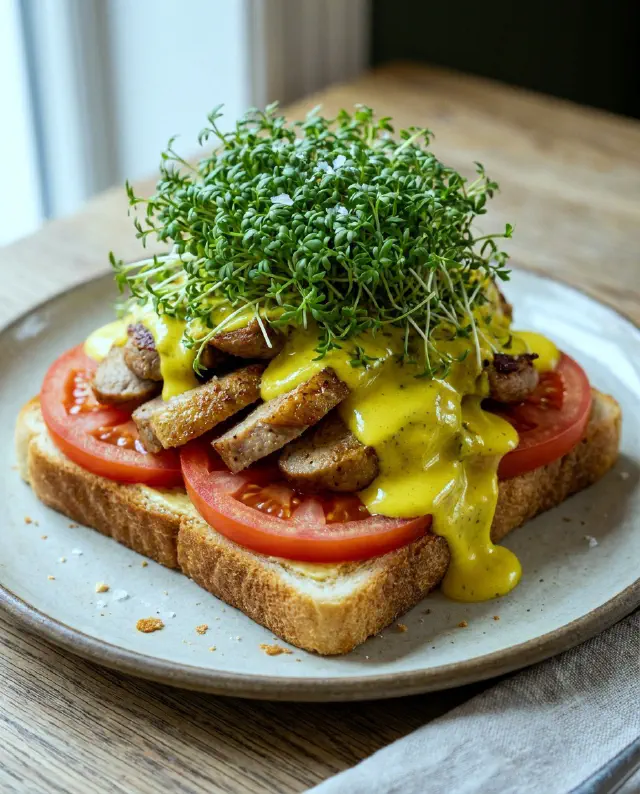
Smørrebrød with Roast Pheasant and Curry Dressing