Sous Vide Risotto
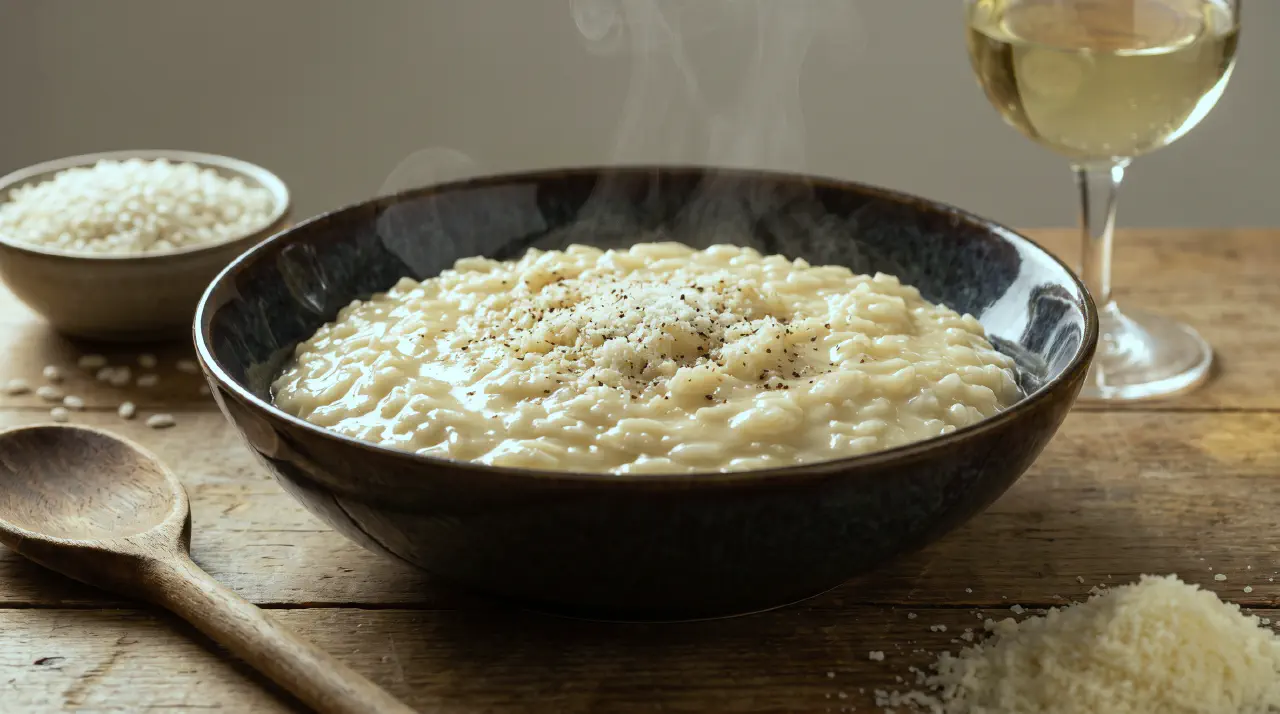
Sous Vide Risotto
Stovetop risotto asks for one thing above all: attention. Warm stock ladled in a little at a time, near-constant stirring to rub the starch loose from the Arborio grains, twenty-odd minutes standing at the stove without a break. A sealed bag in a water bath skips all of that. The rice and stock go in together, the bag goes under, and the water does the rest with no stirring, no ladling, and no risk of scorching the bottom of the pot.
The method is a modern one, built by sous vide cooks rather than handed down from an Italian kitchen, so there’s no single traditional version to match. What holds across the recipes that use it is the shape of the process: onion or leek and garlic softened in a little oil, the Arborio rice added and toasted until the edges turn glassy, then a splash of white wine stirred in until it’s nearly gone. Everything goes into a bag with stock at a tighter ratio than a ladled risotto would use, since none of the liquid can evaporate once it’s sealed, and the bag holds flat in the water bath at a steady 183-185°F (84-85°C) until the rice is tender with just a bit of bite left at the core.
The finish is what turns cooked rice into risotto: pulling the bag out, opening it, and stirring in cold butter and grated Parmesan while the rice is still hot, off the heat entirely. That vigorous stir-in, the mantecatura, is what a stovetop cook builds gradually through forty-odd stirs; here it happens all at once at the end, since the sealed bag never gets the agitation that knocks starch loose during the cook itself. Skip it and the rice is just cooked rice - do it properly and the dish turns glossy and creamy in under a minute.
It plates the same as any other risotto, so it fits the same table: a starter on its own, or a side next to roast chicken or a seared piece of fish. The technique’s only real weak spot is texture - held at a steady hydrating temperature for the full cook with no way to taste and pull it early, sous vide risotto can drift toward mushy if it goes too long. Checking at the low end of the time range and returning it to the bath in short bursts if it needs more time keeps that risk in check.
Ingredients
Serves 4
- 200 g Arborio rice
- 15 ml olive oil
- 70 g yellow onion, finely chopped (or 1 leek, white and light green parts, finely chopped)
- 2 garlic cloves, minced
- 120 ml dry white wine
- 600 ml chicken stock (or vegetable stock), at room temperature
- 3 g salt (less if using regular stock)
- 0.5 g black pepper, freshly ground
- 28 g unsalted butter, cold, cut into pieces
- 50 g Parmesan cheese, finely grated, plus extra to serve
Directions
Preheat the water bath to 184°F (85°C).
Heat the olive oil in a skillet over medium heat. Add the onion (or leek) and cook until softened, about 4 minutes, then stir in the garlic and cook 30 seconds more. Add the rice and stir to coat every grain in the fat, toasting for a minute or two until the edges turn translucent. Pour in the wine and stir until it’s almost fully absorbed.
Scrape the rice and aromatics into a large freezer bag or vacuum bag. Add the stock, salt, and pepper - about 1 part rice to 2 1/2 parts stock by volume, a tighter ratio than a stovetop risotto since nothing evaporates once the bag is sealed. Seal using the water-displacement method, or a vacuum sealer, and press the bag flat so the rice sits in an even layer rather than clumped in one spot.
Submerge the bag and cook for 40 to 45 minutes. Check at the 40-minute mark: the rice should be tender with a slight bite left at the core. If it’s still firm, reseal and give it another 5 minutes in the bath.
Lift the bag out and open it carefully - the contents will be hot - then pour the risotto into a warmed bowl. This is the mantecatura: stir in the cold butter and Parmesan a little at a time, working vigorously until the risotto turns glossy and creamy. Taste, adjust the salt and pepper, and serve right away in warmed bowls with extra Parmesan on the side.
Notes
184°F (85°C) sits at the tighter, better-tested end of the range this method is cooked at; anywhere from 183-185°F (84-85°C) works, and the exact number matters less than checking the rice at 40 minutes and giving it short extra stretches in the bath rather than a long one, since an oversealed bag has no room to correct for a rice that’s gone past done.
Because the bag holds in every bit of liquid, season lighter than a stovetop risotto recipe would suggest, and use a low-sodium stock if possible - there’s no reduction to concentrate the salt, so whatever goes in is what ends up on the plate.
This base method takes mix-ins well. Heartier additions, like sautéed mushrooms or diced pumpkin, can go into the bag before sealing so they cook alongside the rice; more delicate ones, like peas or fresh herbs, are better folded in at the mantecatura stage so they keep their color and bite.
See Also
Beef Cuvette - Red Meat Sous Vide
Foie gras terrine - made sous vide
Italian Fennel

Saffron Rice