Sous Vide Tuna
Sous Vide Tuna
Most sous vide cooking is about patience at a high temperature - a tough cut held for hours until it turns tender. Tuna flips that logic on its head. A thick ahi or yellowfin steak goes into the bath at a temperature barely above body heat, submerged in its own generous bath of olive oil, and comes out just barely cooked - still translucent, still rare in the center - before a hard, fast sear in a screaming-hot pan builds the only real crust it gets.
The steak is seasoned, bagged with three or four tablespoons of olive oil (enough to properly coat it, more confit than marinade) and a few aromatics if you want them - a thyme sprig, a slice or two of lemon - then held at 115°F (46°C) for 45 minutes. That number matters more than almost anything else in the recipe: at 115°F the tuna stays meaty and moist, but push the bath just five degrees higher, to 120°F (49°C), and the same fish turns firm and dry, closer to a well-done steak than to what most people want from a tuna dinner. Once it’s out of the bag, it gets patted completely dry and dropped into hot oil for well under a minute a side, sometimes pressed into sesame seeds first for a crust.
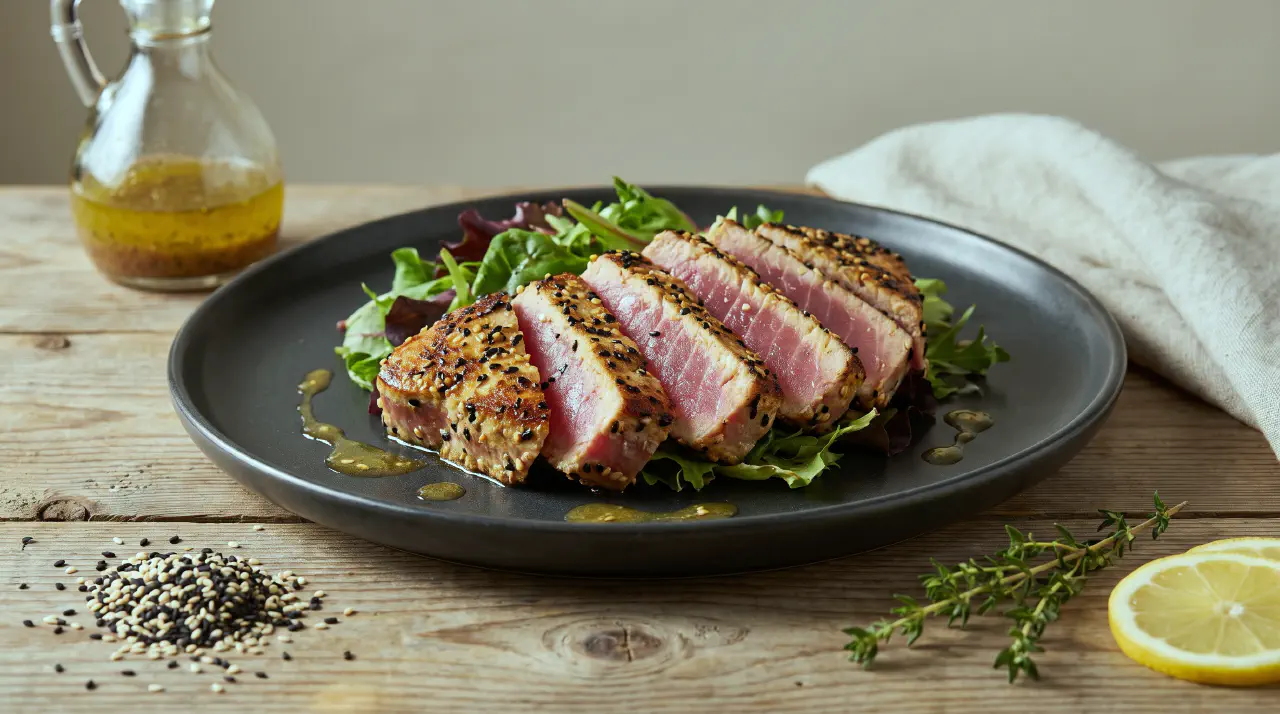
What comes off the stove is barely cooked at the edges and still rose-pink through the middle, warmed through without losing the silky, almost buttery texture raw tuna has to begin with. The oil bath does real work here beyond gentle heating - it bastes the fish the entire time it cooks, and the aromatics steep into both the tuna and the oil left behind in the bag.
There’s no old-world lineage to point to - this is a modern, equipment-driven dish that only exists because immersion circulators made this kind of temperature control practical at home. If anything, the technique borrows its instincts from sashimi rather than from any cooked tuna tradition: the entire point is to stay as close to raw as the pan will allow, which is the opposite of how sous vide usually gets used on meat and poultry. That’s also why the sourcing matters as much as the temperature - this only works with tuna that was fit to eat raw in the first place.
Serve it sliced over greens or alongside a simple niçoise-style salad, with the reserved, tuna-infused oil whisked into a quick vinaigrette. It’s a small, precise dinner rather than a weeknight one - good for when the fish itself is the occasion.
Ingredients
Serves 4
- 4 tuna steaks (ahi or yellowfin), sashimi-grade, 175-225 g each, 4-5 cm thick
- 1 tsp kosher salt, divided, plus more to taste
- ½ tsp black pepper, freshly ground, divided
- 4 tbsp extra-virgin olive oil, for the bag
- 1 tbsp neutral oil, for searing
- 4 sprigs fresh thyme (or tarragon), optional
- 4 slices lemon, thin, optional
- 70 g white sesame seeds, for a crust, optional
- 35 g black sesame seeds, for a crust, optional
Directions
Season the tuna steaks generously with the kosher salt and pepper on all sides. For deeper seasoning, dry-brine them uncovered on a rack in the refrigerator for 30 minutes up to overnight - it’s optional, and seasoning straight into the bag works fine too.
Preheat the water bath to 115°F (46°C). This is the single most load-bearing number in the recipe: at 115°F the tuna stays meaty and moist, but a mere 5°F higher, at 120°F (49°C), it turns firm and dry like a well-done steak. Drop to 105-110°F (41-43°C) instead for a more rare, sashimi-like center, or go as high as 120°F (49°C) for a firmer bite - don’t go past that.
Place each steak in its own bag with a generous portion of the olive oil, enough to coat the fish thoroughly, plus the thyme and lemon if using. Seal with the water displacement method rather than a vacuum sealer, which can crush the delicate raw flesh.
Submerge the bagged tuna in the bath, keeping it clear of the circulator’s intake, and cook for 45 minutes - 30 minutes is enough for steaks closer to an inch thick, and steaks nearer 2 inches can go up to an hour.
Lift the bags out of the bath, remove the tuna, and discard the aromatics, saving the infused oil if you want it for a vinaigrette. Pat the fish very dry with paper towels - any surface moisture will steam instead of sear.
Season lightly with more pepper, or press all sides into the combined sesame seeds for a crust. Heat a heavy or cast-iron skillet with the neutral oil over high heat until it’s just lightly smoking.
Sear the tuna 30 to 45 seconds per side without moving it - 1 to 1½ minutes per side if sesame-crusted, until the seeds turn golden - using tongs to briefly catch the edges too. Transfer to paper towels to blot any excess oil.
Slice against the grain and serve right away, or bring the steaks whole to the table with a knife and fork.
Notes
Use only sashimi-grade, very fresh tuna. The water bath never reaches a pasteurizing temperature at 115°F (46°C), so food safety here rests entirely on the quality of the raw fish, not on the cooking process.
The texture moves in a narrow band: 105-110°F (41-43°C) is nearly raw, sashimi-style; 115°F (46°C), the recipe above, is rare-to-medium and still moist; 120°F (49°C) is as far as this dish should go before it turns firm and dry. Don’t push toward 130°F (54°C) or beyond - that’s dry, crumbly, canned-tuna territory, not a rare-to-medium tuna dinner.
For a fully chilled, confit-style version with no sear - good sliced thin over a niçoise-style salad - cook at 120-122°F (49-50°C) for 1 hour in the same oil bath, then chill thoroughly before slicing.
Buy steaks at least 1½-2 inches thick. Thinner steaks are unforgiving in this narrow a temperature window and give a worse ratio of rare center to seared crust.
See Also
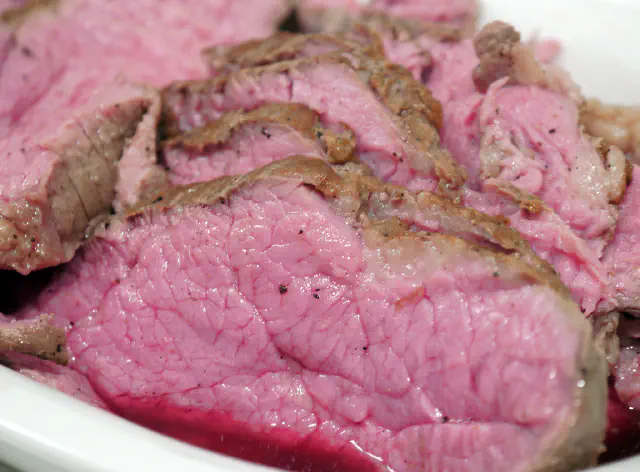
Beef Cuvette - Red Meat Sous Vide
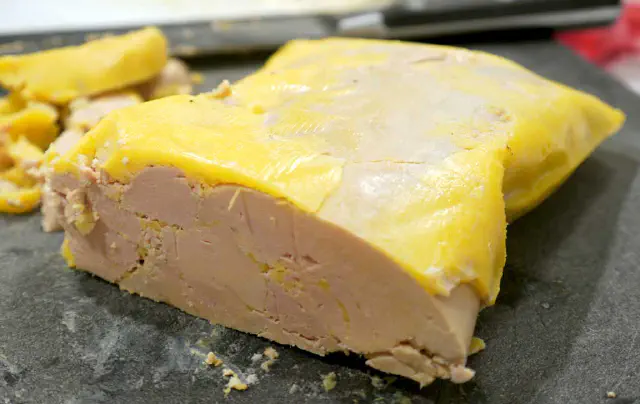
Foie gras terrine - made sous vide
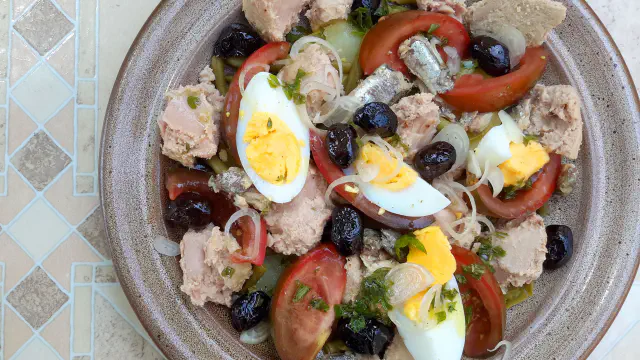
Nicoise salad (nicoise: olive species) - salad with tuna, olives, tomato, potato og eggs
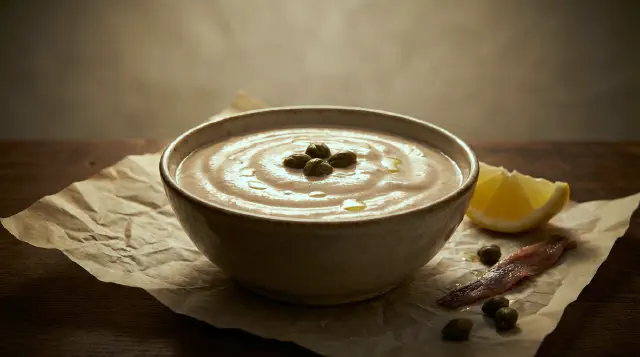
Salsa Tonnata